
Ruining a bulk order of premium merchandise because you guessed the laser settings is the fastest way to burn through your budget. If you are asking what materials can be laser engraved to achieve a professional, permanent finish, you need more than a basic list. You need to understand how different surfaces react under the beam to avoid melting expensive stock. We've spent over 25 years perfecting this craft. We know that the material always dictates the design.
It's natural to feel confused by the technical gap between laser marking and deep engraving. You might also worry about which plastics are safe to use without releasing toxic fumes. You want custom gear that stands out and lasts. This guide provides the expert clarity you need. We'll break down the best materials for elite results and identify the ones you must avoid at all costs. You'll leave with the confidence to start your next custom merch project with total precision. From durable metals to delicate glassware, we'll ensure your branding remains sharp for years to come.
Key Takeaways
- Learn why laser engraving offers a permanent branding solution that won't peel or fade like traditional screen printing.
- Discover which organic materials like wood and leather provide the best rustic aesthetic for high-end promotional merchandise.
- Master the technical differences between cast and extruded acrylic to ensure crystal-clear results for your custom keyrings.
- Get a definitive list of what materials can be laser engraved including a deep dive into safe metals and glassware.
- Identify the dangerous materials to avoid at all costs to protect your equipment and ensure workplace safety.
THE POWER OF PRECISION: WHY LASER ENGRAVING BEATS TRADITIONAL PRINTING
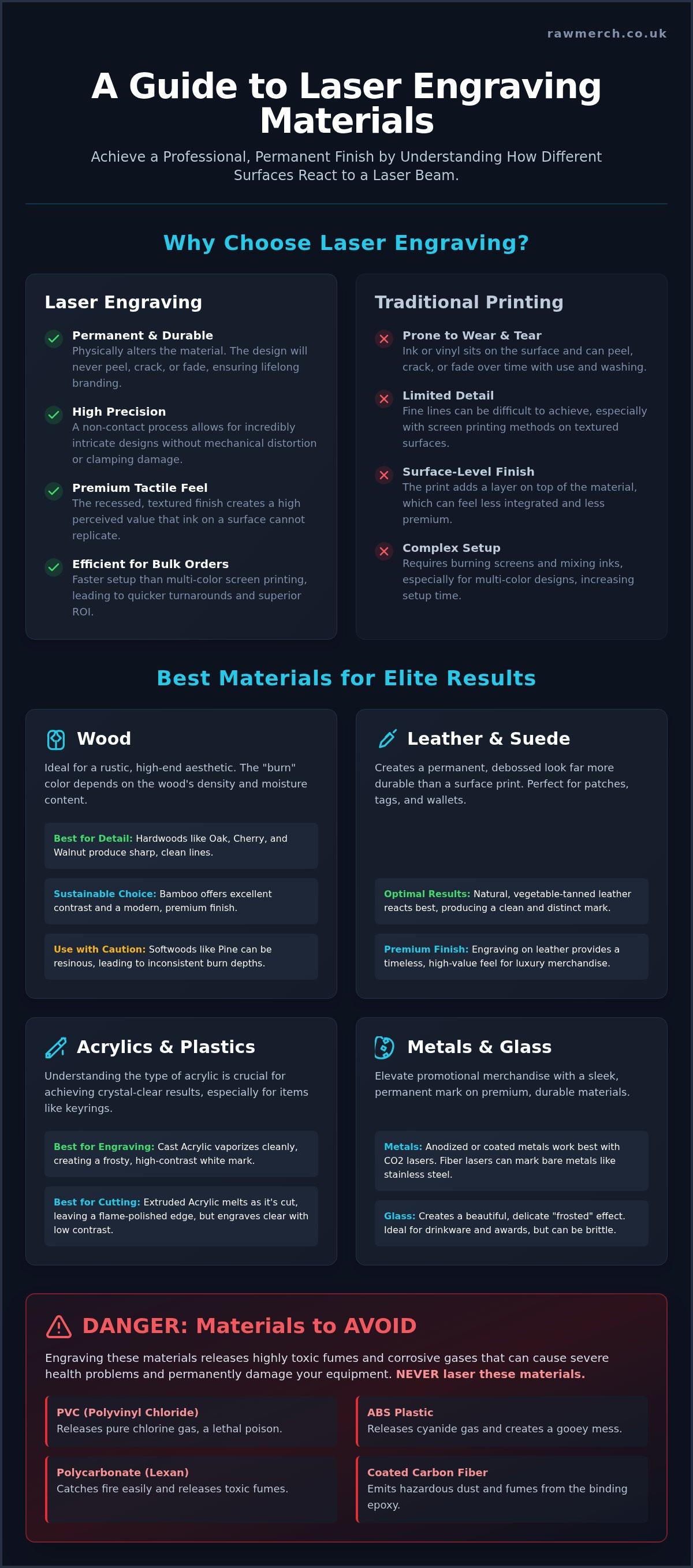
Laser engraving isn't just a decorative choice; it's a structural one. Unlike screen printing or vinyl transfers that sit on the surface, engraving physically alters the workpiece. This makes it the gold standard for durability. Determining what materials can be laser engraved is the first step toward creating high-end promotional items that last for years rather than months. When you choose engraving, you're choosing a finish that won't peel, crack, or fade, even under heavy use.
Laser engraving is a non-contact process that uses a concentrated beam of light to vaporise material. Because the tool never actually touches the surface, there's no risk of the mechanical distortion or "clamping" damage often seen with traditional rotary methods. This precision allows for incredibly intricate designs on a variety of surfaces. While we'll explore exactly what materials can be laser engraved in the following sections, the core benefit remains the same: permanence.
The tactile nature of engraving provides a premium feel that ink simply cannot match. When a customer runs their thumb over a recessed logo on a metal bar blade or a wooden coaster, they feel the quality. It creates a perceived value that justifies a higher price point for your merchandise. It's the difference between a throwaway giveaway and a kept keepsake.
How Laser Engraving Works for Custom Merch
The process works by focusing a high-powered laser beam onto the surface of the item. This intense heat vaporises the material, leaving behind a clean, permanent mark. For the best results, high-contrast logos are essential. The laser doesn't "print" colours; it creates shadows and textures. To achieve these sharp lines, you must provide what is a vector based image. Clean, mathematical lines ensure the laser path is smooth and precise. We also distinguish between three main techniques: marking (surface discolouration), engraving (deep material removal), and cutting (slicing through the material entirely).
Cost-Efficiency in Bulk Production
Engraving is remarkably efficient for large-scale promotional runs. With over 25 years of experience, we've seen how much time is saved by eliminating the complex setup required for multi-colour screen printing. There are no screens to burn and no inks to mix. Once the digital file is ready, the laser goes to work immediately. This reduced setup time translates to faster turnaround for your UK-based projects. Because the brand message is literally carved into the product, the longevity of the advertisement is unmatched, providing a superior return on investment for touring bands and businesses alike.
ORGANIC ALL-STARS: ENGRAVING WOOD, LEATHER, AND PAPER
Organic materials bring a tactile, sensory experience to your branding that synthetic products often lack. When considering what materials can be laser engraved, wood and leather are usually at the top of the list for high-end merchandise. The final "burn" colour depends heavily on the material's moisture content. Drier materials tend to produce a darker, charred finish, while higher moisture levels can result in a lighter, more subtle etch. Consistency is key for bulk runs, so sourcing high-quality organic stock is a non-negotiable step in the production process.
Safety is equally important when working with these materials. Burning organic fibres releases smoke and particulates that require industrial-grade extraction. We adhere to strict safety protocols, similar to those outlined by the Health and Safety Executive (HSE), to ensure our UK production facility remains clean and hazard-free. This commitment to safety protects our team and ensures your merch arrives without any lingering chemical odours.
Wood Varieties: From Bamboo to Oak
Wood is the most popular organic choice for a rustic aesthetic. Hardwoods like Oak, Cherry, and Walnut are ideal because they have high density, which allows for extremely sharp engraving lines. Softwoods like Pine are cheaper but can be resinous, sometimes leading to inconsistent burn depths. Bamboo has emerged as a powerhouse for sustainable merch. It offers incredible contrast and a clean finish that looks premium on everything from coasters to notebooks. To achieve a professional look, we carefully manage the "charred" residue. A light sanding or a specific power setting prevents soot from smudging the final design.
Leather and Suede Branding
Leather engraving creates a permanent, debossed look that is far more durable than a surface print. It's the perfect choice for wallets, luggage tags, or patches. Natural vegetable-tanned leather reacts best to the laser, turning a deep, rich brown. While synthetic leathers are available, you must be careful. Many contain PVC, which releases deadly chlorine gas when lasered. We specialise in using genuine leather patches to elevate custom bobble hats and other headwear. This technique gives your brand a high-street finish without the high-street price tag.
Paper and cardboard also offer unique opportunities for bespoke packaging. The laser can etch intricate patterns onto heavy cardstock or cut complex shapes that traditional dies can't reach. If you are looking for custom laser engraving solutions for your next project, these organic materials provide a timeless, high-quality foundation for your brand.
ACRYLICS AND PLASTICS: ACHIEVING CRYSTAL-CLEAR BRANDING
Acrylic is the undisputed king of plastics for high-quality merchandise. It is versatile, durable, and provides a polished look that rivals glass. When clients ask what materials can be laser engraved for event badges or point-of-sale displays, acrylic is always our first recommendation. It allows for incredible precision and a professional finish that stands up to daily wear. However, the world of plastics is a literal minefield. Choosing the wrong substrate can lead to poor results or even permanent machine damage.
Working with plastics requires a "safety first" mindset. Unlike wood or metal, many synthetic materials react violently to heat. We follow rigorous Laser Cutter Safety guidelines to ensure every bulk order is produced without risk. This expertise allows us to deliver crystal-clear branding on items like custom keyrings and industrial signage while keeping our UK production facility safe and efficient.
Cast vs. Extruded Acrylic
You must understand the difference between cast and extruded acrylic (PMMA) before you start. Cast acrylic is the gold standard for engraving. When the laser hits the surface, the material turns a bright, frosty white. This creates a stunning high-contrast look that is perfect for logos. Extruded acrylic is different. It is better for cutting shapes, but it tends to "gum up" during the engraving process. The edges can become sticky and the engraving often lacks that crisp, white finish. For most promotional items, we suggest a 3mm thickness to balance durability with a lightweight feel.
THE DANGER ZONE: Materials to Avoid
Some plastics are simply too dangerous to engrave. You must avoid PVC and vinyl at all costs. These materials release chlorine gas when heated by a laser. This gas is highly toxic to humans and will corrode the internal components of a laser machine within minutes. Polycarbonate is another material to skip. While it is impact-resistant, it burns with a messy black soot and produces thick, acrid smoke that clogs extraction systems instantly.
- PVC/Vinyl: Releases lethal chlorine gas and ruins machinery.
- Polycarbonate: Produces heavy smoke and a charred, ugly finish.
- ABS: Tends to melt and catch fire rather than vaporising cleanly.
Always check the Material Safety Data Sheet (MSDS) before committing to a new plastic. If you cannot verify the chemical composition, do not put it in the machine. Sticking to verified PMMA ensures your custom keyrings and badges look elite every time. Knowing exactly what materials can be laser engraved safely is what separates the amateurs from the seasoned experts.
METALS AND GLASS: ELEVATING YOUR PROMOTIONAL MERCHANDISE
Metals and glass are the heavyweights of the promotional world. They offer a weight and permanence that plastic can't replicate. When you're assessing what materials can be laser engraved to create a lasting impression, metalware is the definitive answer. Anodised aluminium is a standout performer in this category. The laser bleaches the dyed surface to reveal a crisp, white or silver finish. It provides incredible contrast and is virtually impossible to wear down through daily use.
Stainless steel is different and requires a more technical approach. It usually needs a fiber laser or a specialised marking compound when using a CO2 laser. These compounds fuse to the metal surface to create a permanent, high-contrast black mark. We also work extensively with coated metals. By engraving through a layer of paint or powder coating, we reveal the raw metal beneath. This technique is perfect for creating high-impact, multi-textured designs on premium flasks. Knowing exactly what materials can be laser engraved is vital for choosing the right metal for your specific project.
Branding Metal Bar Blades and Flasks
Laser engraving is the only logical choice for barware. These items face constant friction, moisture, and cleaning. A screen print would fail in weeks. Engraving ensures your logo remains sharp on a bar blade or bottle opener for the life of the product. We can achieve remarkably fine detail on these small surfaces. This durability makes metal items essential for band merchandise. If your gear needs to survive a 30-date tour and years of heavy use, metal engraving is the answer. It's a hardworking solution for hardworking brands.
Glass Etching Techniques
Glass engraving creates a sophisticated, frosted look that feels deeply etched into the surface. The process involves creating controlled micro-fractures in the glass. This requires precision to avoid cracking the entire piece. One professional secret we use is the "wet paper towel" trick. By placing a damp piece of paper over the glass during the process, we dissipate heat and ensure a smoother, cleaner finish. Engraving curved surfaces, like pint glasses or wine bottles, requires a rotary attachment. This keeps the laser in focus as the object spins. It's a technical process, but the results are worth the extra effort.
If you're ready to upgrade your brand with high-end metalware, order your custom laser engraving from our UK facility today.
BRING YOUR VISION TO LIFE: CUSTOM LASER ENGRAVING WITH RAW MERCH
Deciding what materials can be laser engraved for your specific campaign is only the first step. You also need a production partner who understands the nuances of promotional merchandise. We aren't just machine operators; we are merch specialists. With over 25 years of industry experience, we've seen every technical hurdle and design trend. Our UK-based facility uses state-of-the-art laser technology to deliver precision branding that doesn't just look good but survives the real world. While many guides focus on industrial manufacturing, we focus on what matters to you: your brand's physical presence and its impact on your audience.
To get the best results, your artwork needs to be ready for the beam. High-contrast vector files are mandatory for laser work. This ensures the laser follows a clean, mathematical path, resulting in the sharpest possible finish. Whether you are branding a batch of metal bar blades or intricate wooden coasters, clean files prevent blurred edges and ensure your logo pops. We take a direct, no-nonsense approach to production. We don't hide behind jargon. We provide clear, actionable advice to ensure your bulk orders are executed perfectly every time.
Why Partner with RAW Merch?
Choosing what materials can be laser engraved to best represent your brand requires expert insight. We help you select the right substrate to match your identity and budget. We also prioritise logistical punctuality. If you're a touring band or a business with a hard deadline, we ensure your merchandise arrives on schedule. Our end-to-end service covers everything from the initial design consultation to final distribution across the UK. You can trust us to handle the technical details while you focus on your business.
Get Started on Your Next Project
Starting a bulk order is straightforward and efficient. Request a quote through our platform to get accurate details tailored to your specific volume. We specialise in bulk production and fulfillment, meaning our processes are optimised for high-quality, large-scale runs. We provide clear information on minimum order quantities and lead times so you can plan your launch with confidence. Our team is ready to turn your creative vision into a tangible, durable reality. Let's create something legendary together.
MASTER YOUR MERCHANDISE TODAY
Mastering the technical side of branding ensures your promotional gear stands the test of time. You now know exactly what materials can be laser engraved to achieve that premium, tactile finish your audience expects. From the rustic charm of bamboo and leather to the industrial strength of anodised aluminium, your options are vast. Prioritise safety by avoiding toxic plastics and always use high-quality vector files for the sharpest results. These small details separate standard giveaways from elite brand assets.
With over 25 years of industry experience and reliable UK distribution, we provide the expert support you need for flawless bulk production. We take the guesswork out of material selection and logistical planning. It's time to turn your creative vision into a durable reality. GET A QUOTE FOR YOUR CUSTOM ENGRAVED MERCH and start your next project with total confidence. We are ready to help you build something that lasts.
Frequently Asked Questions
Can you laser engrave on any type of metal?
You cannot laser engrave every metal with the same equipment. Standard CO2 lasers used for most promotional items work best on anodised aluminium or powder-coated surfaces. To engrave bare metals like stainless steel or titanium, you typically need a fiber laser or a specialised marking compound. We select the specific method based on your chosen hardware to ensure the branding remains permanent and high-contrast throughout its lifespan.
Is laser engraving permanent on glass?
Laser engraving is completely permanent on glass because it physically fractures the surface at a microscopic level. Unlike printed designs that can scratch or wash off in a dishwasher, an engraved logo is part of the glass itself. It creates a sophisticated frosted appearance that won't fade over time. This makes it an ideal choice for high-end barware and commemorative awards that need to maintain a professional look for years.
What is the best material for high-contrast laser engraving?
Anodised aluminium and cast acrylic are the top choices for high-contrast results. When we look at what materials can be laser engraved for maximum visibility, these two stand out. Anodised aluminium reveals a bright silver or white mark against a dark background. Cast acrylic turns a brilliant, frosty white when processed. Both options ensure your logo is instantly recognisable and sharp, making them perfect for keyrings and industrial signage.
Can I engrave on PVC or vinyl stickers?
You should never laser engrave on PVC or vinyl. These materials release hydrogen chloride gas when heated by a laser beam. This gas is highly toxic to humans and causes rapid corrosion of the laser machine's internal components. For stickers and flexible branding, we recommend our dedicated clothing printing or traditional promotional item services. Always check the material composition before processing to avoid safety hazards and equipment damage.
Do I need a special file type for laser engraving?
You need a vector-based file for the best engraving results. Formats like .AI, .EPS, or .SVG are essential because they use mathematical paths rather than pixels. This allows the laser to follow a precise line without the jagged edges found in low-resolution JPEGs. Using clean vector artwork ensures that your branding remains sharp and professional, regardless of whether you are engraving a small bottle opener or a large wooden plaque.
What is the difference between laser etching and laser engraving?
The main difference is the depth of the mark. Laser etching is a surface-level process that typically removes less than 0.025mm of material. It's often used for marking metals. Laser engraving goes much deeper, physically carving a cavity into the substrate. This creates a more tactile feel and greater durability. We choose the technique based on your specific merchandise requirements and the level of detail needed for your logo.
Can you laser engrave on clothing or fabrics?
You can laser engrave on specific fabrics like fleece, denim, and microfiber. The laser slightly singes the top layer of the material to create a "tone-on-tone" look. This is a subtle and high-end alternative to traditional embroidery or screen printing. It's particularly effective on heavy hoodies or jackets where you want a unique, textured branding effect. However, it isn't suitable for thin or heat-sensitive synthetic materials that might melt or burn through.
How deep does laser engraving go into wood?
The depth of engraving in wood depends on the laser power, speed, and the wood's density. Typically, we aim for a depth between 0.1mm and 3mm for promotional items. Hardwoods like oak offer more resistance and cleaner lines, while softwoods like pine allow for deeper, darker burns. We calibrate our machines based on what materials can be laser engraved for your specific order to ensure the branding is visible without compromising structural integrity.