
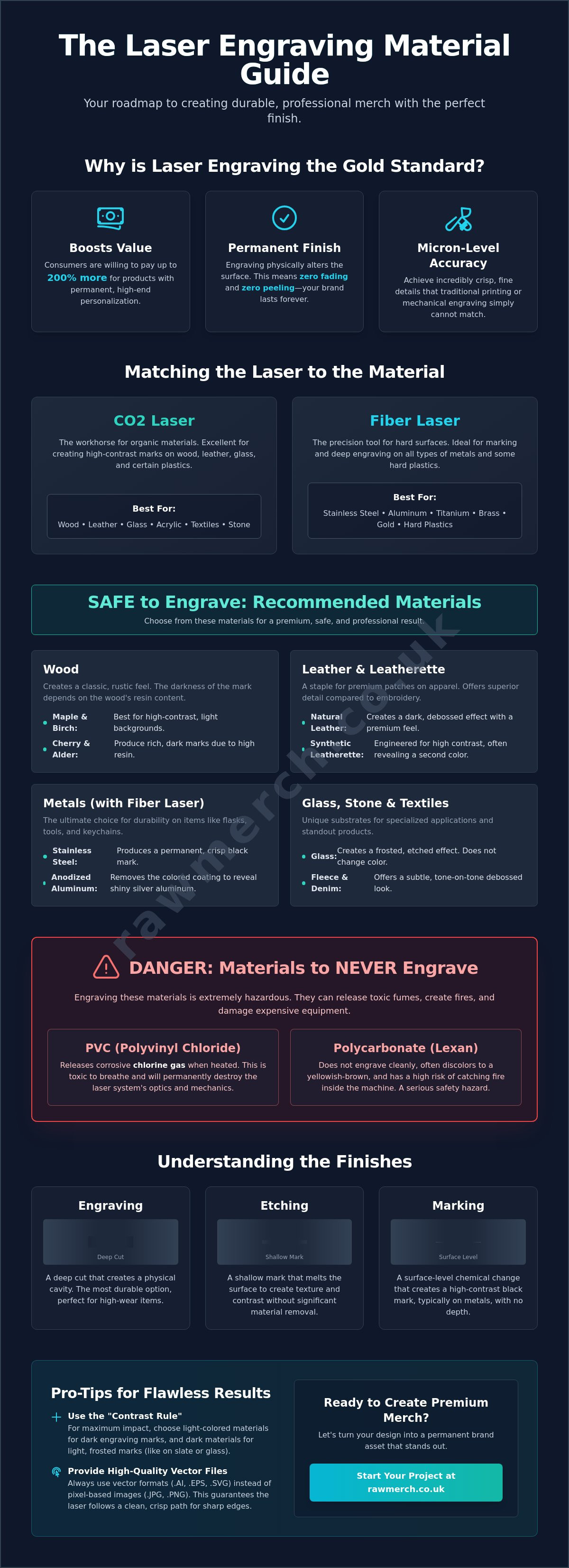
Did you know that consumers are often willing to pay up to 200% more for a product just because it features high-end, permanent personalization? Laser engraving is the pro-tier of custom merchandise. It transforms a simple item into a permanent brand asset that won't fade or peel. However, picking the wrong substrate is a fast way to waste your budget or even release toxic fumes. You need to know exactly what materials can be laser engraved before you commit to a bulk order of promotional gear.
We understand the fear of damaging expensive products or choosing a material that won't hold a crisp edge. That's why we've built this guide to give you total confidence in your production choices. You'll learn the definitive list of safe, high-impact materials and understand the critical differences between CO2 and Fiber laser results. We're also covering the latest 2026 safety regulations, including mandatory FDA pre-clearance for CO2 equipment and OSHA standards for industrial setups. From sleek metals to sustainable bamboo, this is your roadmap to creating durable, professional merch that delivers results.
Key Takeaways
- Discover why laser engraving is the gold standard for durability, offering a permanent finish that won't fade or peel like traditional printing.
- Get the definitive list of what materials can be laser engraved to ensure your custom merchandise looks premium and professional every time.
- Protect your brand and your gear by learning which dangerous materials, like PVC and polycarbonate, you must avoid at all costs.
- Learn how to use the "Contrast Rule" and high-quality vector files to guarantee crisp, high-impact results on your next bulk order.
Why Laser Engraving is the Gold Standard for Merch
Choosing laser work turns a standard giveaway into a permanent brand asset. If you want a logo that survives years of heavy use, engraving is your only real option. Before you decide what materials can be laser engraved for your next project, you must understand that this method is about more than just looks. It is about durability and perceived value. A printed logo might look good today, but an engraved logo looks good forever. This longevity ensures a much higher return on investment for your marketing spend.
How the Process Works
The Laser engraving process uses a concentrated light beam to vaporize the surface layer of a material. This is not a "burn" in the traditional sense. It is a controlled removal of matter. The machine follows your digital design with micron-level accuracy. We generally use two types of lasers to get the job done. CO2 lasers are the workhorses for organic materials like wood, leather, and glass. Fiber lasers are the specialized precision tools for metals. Both systems offer incredible detail that traditional mechanical engraving or printing methods simply cannot match. The result is a clean, sharp finish that stands out on any shelf.
Engraving vs. Etching vs. Marking
Not all laser work reaches the same depth. Engraving is a deep cut into the material surface. It creates a noticeable physical cavity that you can feel with your fingernail. This is the most durable option available. Etching is a shallower mark. It changes the surface texture to create contrast without removing a significant amount of material. Marking is a third option often used on industrial metals. It creates a chemical change on the surface to produce a high-contrast design without any deep removal. Each method has its place depending on your design and the specific substrate. Knowing these differences helps you determine what materials can be laser engraved to achieve your specific aesthetic goals.
Organic Materials: Wood, Leather, and Textiles
Organic substrates are often the first choice for brands asking what materials can be laser engraved. These surfaces react beautifully with a CO2 laser to create high-contrast, permanent marks that feel expensive. Wood, leather, and even certain textiles offer a tactile experience that plastic or metal simply cannot replicate. For brands aiming for a rustic or artisanal aesthetic, these are the top contenders. We use these materials to create everything from bespoke coasters to high-end retail packaging. Quality matters. Choosing the right organic base ensures your branding looks intentional rather than an afterthought.
Wood: The Best Species for Engraving
Selecting the right wood species is critical for a professional finish. We recommend lighter woods like maple or birch if you want the highest possible contrast. These species have a fine grain that allows for incredible detail. The resin content in the wood determines how dark the burn will be. High-resin woods like cherry or alder produce a rich, dark mark without needing extra passes. When you are designing custom bobble hats, adding a small engraved wooden tag can instantly elevate the perceived value of the headwear. It is a simple detail that signals premium quality to your customers. It works.
Leather Patches: A Merch Essential
Leather patches are a staple in modern branding. They are often superior to direct embroidery because they can hold much finer detail. Real natural leather creates a dark, debossed effect that carries a premium scent and feel. Synthetic leatherette is also a popular choice because it is engineered for high contrast. It often reveals a second colour underneath when engraved. The results are permanent. We use these patches for hoodies, beanies, and durable workwear. Because our facility follows strict OSHA laser hazard guidelines, we ensure every organic material is processed safely without compromising the structural integrity of the product.
Textiles like fleece and denim also work surprisingly well. Laser engraving on fleece creates a tone-on-tone look that is subtle and sophisticated. On denim, the laser strips away the indigo dye to reveal the white threads underneath. It is a great way to brand apparel without using heavy inks or threads. Even paper and cardstock are on the list of what materials can be laser engraved. We use this for intricate business cards and bespoke packaging that stands out in a crowded market. If you are ready to start your next project, our team at RAW Merch can help you select the perfect organic substrate for your brand.
Metals and Hard Surfaces: Built to Last
Hard surfaces represent the industrial-strength tier of custom branding. When clients ask what materials can be laser engraved for maximum longevity, metals and hard plastics are the definitive answer. These materials don't just hold a mark. They endure. Whether you are creating equipment for a high-traffic bar or awards for a corporate gala, these substrates offer a level of permanence that printing cannot match. The finish is crisp. The look is professional. Most importantly, the branding is indestructible. You want your logo to survive years of handling. Hard surfaces make that happen.
Anodised Aluminium and Bar Blades
Anodised aluminium is the undisputed king of high-contrast metal merch. The process is fascinating. Instead of cutting deep into the metal, the laser removes the thin, coloured anodic coating. This reveals the bright, natural silver aluminium beneath. The contrast is immediate and striking. It is the perfect method for band merchandise bar tools and bottle openers. These items take a beating. They are dropped, washed, and shoved into pockets. Anodised engraving won't scratch off or fade in a busy bar environment. It stays sharp. It stays visible.
Stainless steel offers a heavier, more industrial aesthetic. It is the ultimate choice for premium flasks and heavy-duty bar blades. While aluminium is about colour and contrast, steel is about weight and prestige. We often use fiber lasers to achieve a dark, permanent mark on steel surfaces. This technology is a market leader for a reason. Statistics from 2026 show that fiber laser machines now hold a 44.9% share of the global market. This dominance is driven by the demand for permanent, high-precision metal marking in the promotional industry. It is a proven solution for brands that value durability.
Acrylic: Clear vs. Coloured
Acrylic is a versatile plastic that provides a high-end look without the fragility of glass. It is a staple for event badges, custom keyrings, and corporate plaques. You have two main options here. Clear acrylic allows for a unique mirrored engraving technique. We engrave the design onto the back of the material in reverse. When viewed from the front, the logo appears to be floating inside the plastic. This creates a sophisticated 3D effect. Coloured acrylic is different. It is used for high-contrast signage where the laser frosts the surface to create a bright white mark against a dark background.
Glass remains a classic choice for personalised drinkware and trophies. The laser creates a frosted effect by causing micro-cracks in the surface. This results in a clean, white finish that looks etched by hand. When considering what materials can be laser engraved for your brand, don't overlook these hard-wearing options. They provide the durability needed for items that will be used daily. Your brand deserves a mark that lasts as long as the product itself. It is about making an impression that sticks.
Safety Alert: Materials You Must NEVER Engrave
Success in custom branding requires a deep understanding of what materials can be laser engraved safely. While previous sections focused on the high-impact results of wood and metal, this section covers the critical boundaries of the technology. Some substrates react violently to thermal stress. Others release invisible, lethal gases that can corrode a machine's internal optics in minutes. We take a no-nonsense approach to safety at our facility. If a material isn't certified as laser-safe, it doesn't go near our equipment. This is about protecting our team and ensuring every piece of merch we produce is safe for your brand to distribute.
PVC, or vinyl, is the most dangerous offender in the production industry. When a laser hits PVC, it releases hydrogen chlorine gas. This gas is highly toxic to humans and turns into hydrochloric acid when it contacts moisture in the air. It will destroy your machine and your health. Polycarbonate is another trap for the unwary. While it looks like acrylic, it absorbs infrared light poorly. Instead of vaporising cleanly, it often catches fire or produces heavy, black soot that ruins the product. Teflon is equally hazardous; it releases toxic fumes when heated by a high-intensity beam. Even leather has a catch. Chrome-tanned leather, common in cheap imported goods, can release harmful chemicals like hexavalent chromium if it isn't specifically laser-certified.
The Danger of Toxic Fumes
Cheap promotional items often hide their true material composition. You might buy a plastic keychain from an unverified supplier that is actually loaded with hidden PVC. This is a massive risk to your staff and your equipment. We only use laser-safe, certified materials for your safety and ours. Professional extraction and filtration systems are non-negotiable in a serious production environment. We don't cut corners on ventilation because we don't cut corners on quality. If you want a partner who prioritises safety as much as your logo's finish, book your laser engraving project with RAW Merch.
Materials That Just Look Bad
Sometimes a material is safe to engrave but produces a terrible aesthetic result. High-resin woods are a prime example. The heat of the laser draws out the sap, which then bleeds into the fine details of your design. This ruins the crispness of your branding and leaves a sticky residue. Soft, melty plastics are another headache. They tend to deform rather than vaporise, leaving you with a gooey, distorted mess instead of a sharp logo. For certain fabrics or highly complex designs, engraving might not be the best path. You may find that what is a vector based image printing delivers a cleaner finish on items like thin polyester. Knowing exactly what materials can be laser engraved effectively is the difference between a premium product and a wasted budget.
From Concept to Crate: Ordering Your Engraved Merch
You now know exactly what materials can be laser engraved to achieve a professional finish. Identifying the right substrate is the first step toward creating high-impact merchandise. However, the transition from a digital concept to a physical crate of products requires precision. Laser engraving is a permanent process. There is no "undo" button once the beam hits the surface. This is why we focus on a "right first time" approach. Personalized items can command a 50 to 200 percent price premium over standard goods. We ensure your investment delivers that value. High-quality execution turns a simple giveaway into a coveted brand asset.
The Contrast Rule is your most important design tool. You must consider how the engraved area will look against the original material. On anodised aluminium, the laser reveals a bright silver. On light woods like maple, it creates a dark, charred mark. If you choose a dark wood with high resin content, the contrast might be too low for complex logos to stand out. We help you navigate these choices. Our goal is to ensure your branding is legible from across a room. Sharp contrast is the secret to a premium look.
Bulk ordering engraved merch is surprisingly cost-effective. Unlike screen printing, which requires expensive setup for every color, laser engraving is a digital process. Once the file is ready, the machine can move from one item to the next with minimal downtime. This makes it ideal for large runs of promotional items like bar blades, flasks, or wooden coasters. You get industrial-grade durability without the massive setup fees associated with other permanent marking methods. It is efficient. It is reliable. It works.
Preparing Your Design
Vector files are non-negotiable for laser precision. A laser machine reads paths, not pixels. If you provide a standard image file, the edges will be jagged and unprofessional. We require high-quality vector files to ensure the laser follows your design with micron-level accuracy. Check out our guide on what is a vector based image to get your files ready for production. You should also avoid lines that are too thin. If a line is thinner than the laser beam itself, it may disappear or look faint on the final product. We review every design to prevent these issues before we hit start.
Why RAW Merch?
RAW Merch brings 25 years of industry experience to every project. We aren't just operators; we are specialists who prioritize scheduling and execution. As a UK-based expert, we understand the local market and the logistical needs of British brands. We provide an end-to-end service that includes design tweaks, fulfillment, and distribution. We handle the technical details so you can focus on growing your brand. Our reputation is built on dependability and deep industry knowledge. We don't do flashy. We do quality. Ready to level up your merch? GET A QUOTE TODAY.
BUILD YOUR LEGACY WITH PERMANENT BRANDING
You now have a clear roadmap for your next big project. Choosing the right substrate is about more than just aesthetics; it is about building a brand that lasts. From the industrial strength of stainless steel to the premium feel of natural leather, knowing exactly what materials can be laser engraved ensures you never waste your budget on subpar results. Safety remains our top priority. We strictly avoid hazardous materials like PVC and polycarbonate to protect our team and your reputation. Your merch should be high-impact, durable, and professional.
RAW Merch brings over 25 years of industry experience to your production line. We are specialists in band and corporate merch, operating a UK-based production and fulfillment center that prioritizes your schedule. We understand the technical nuances of vector files and material contrast so you don't have to. We are ready to turn your creative vision into a physical reality that your customers will keep for years. Don't settle for temporary prints when you can have permanent precision.
READY TO START YOUR ENGRAVING PROJECT? GET A BULK QUOTE NOW
Your brand deserves a finish that won't fade. Let's build something incredible together.
Frequently Asked Questions
Can you laser engrave on any type of metal?
No, different metals require specific laser technologies to achieve a permanent mark. Fiber lasers are the industry standard for bare metals like stainless steel, brass, and titanium because their wavelength is absorbed efficiently. CO2 lasers are better suited for anodised aluminium where the laser removes the coloured coating. We match the laser type to your specific metal choice to ensure the branding never wears off or fades.
Is laser engraving permanent on promotional items?
Yes, laser engraving is the most durable branding method available today. Unlike printing, which sits on the surface, engraving physically removes material or creates a permanent chemical change in the substrate. This means your logo cannot peel, crack, or wash away over time. It is the ideal choice for high-use items like bar blades and flasks that need to withstand heavy daily handling without losing their professional look.
What is the difference between CO2 and Fiber laser engraving?
The primary difference is the wavelength of the light beam and the materials it can process. CO2 lasers are the workhorses for organic materials like wood, leather, glass, and acrylic. Fiber lasers have a much smaller wavelength that is specifically designed for marking metals and hard plastics. Using the correct machine is vital for safety and quality when determining what materials can be laser engraved for your brand.
Can I engrave my own products if I send them to you?
We primarily engrave our own vetted, high-quality stock to guarantee a perfect finish every time. Using our own materials ensures they are laser-safe and free from hidden toxins like PVC. This consistency is how we maintain our reputation for reliability over 25 years. We can occasionally discuss custom projects for bulk orders of pre-tested items if they meet our strict safety and production standards.
Does laser engraving work on glass without cracking it?
Yes, we create a clean, frosted finish on glass by carefully managing the laser's thermal output. The beam creates tiny micro-fractures on the surface rather than cutting deep into the material. This produces a sophisticated white mark that looks etched by hand. We use specific speed and power settings to dissipate heat quickly, which prevents the glass from shattering or developing jagged, dangerous edges during the process.
What is the best material for high-detail logo engraving?
Anodised aluminium and tight-grained woods like maple offer the best clarity for intricate designs. Anodised aluminium provides incredible contrast because the laser reveals the bright silver metal beneath a dark coating. Maple wood has a very fine grain that prevents the "bleeding" effect seen in softer species. These substrates allow us to maintain micron-level precision, ensuring even the most complex logos remain sharp and legible on your merch.
Are there any fabrics that can be laser engraved?
Yes, fleece, denim, and certain microfibers react very well to laser processing. The laser strips away the top layer of dye or fibers to create a subtle, "tone-on-tone" branding effect. It is a sophisticated alternative to traditional embroidery or printing for hoodies and workwear. We always recommend testing the specific fabric first to ensure it doesn't melt or lose its structural integrity when exposed to the high-intensity light beam.
Why do some materials turn black when engraved while others don’t?
The final colour depends on how the material's chemistry reacts to intense heat. Wood turns dark because the laser chars the surface through carbonization. Some metals undergo a process called annealing, where the laser creates a dark oxide layer without removing any material. Other substrates like clear acrylic or glass simply turn white or frosted because the textured surface scatters light differently. Knowing what materials can be laser engraved helps you predict the final contrast.