

A merch stand needs more than a range of products to catch fans’ attention. The most effective tips for a successful merch stand are to use distinctive, recognisable designs, choose colours that stand out, connect each item to the brand’s identity and give fans a clear reason to buy now with a genuine limited-time offer. Keep the display simple so people can quickly see what makes the merchandise special.
It’s easy to assume that putting more stock on the table will attract more interest. But a focused display of products that mean something to fans is easier to browse and remember.
Learn how to shape brand-specific designs, use colour with purpose, strengthen the connection between merchandise and fans, and present limited-time offers clearly. You’ll also find practical ways to organise your stand so its products and message work together.
Key Takeaways
- Build merchandise around a genuine connection to the brand, using simple, recognisable designs that stay clear across different sizes and formats.
- Use colour with purpose to help products stand out while keeping the overall display easy to scan.
- Choose details that give fans a way to express their connection, rather than relying on a logo alone.
- Make limited-time offers clear and credible, so fans understand what makes the opportunity special.
1. Creating distinctive, brand-specific merchandise
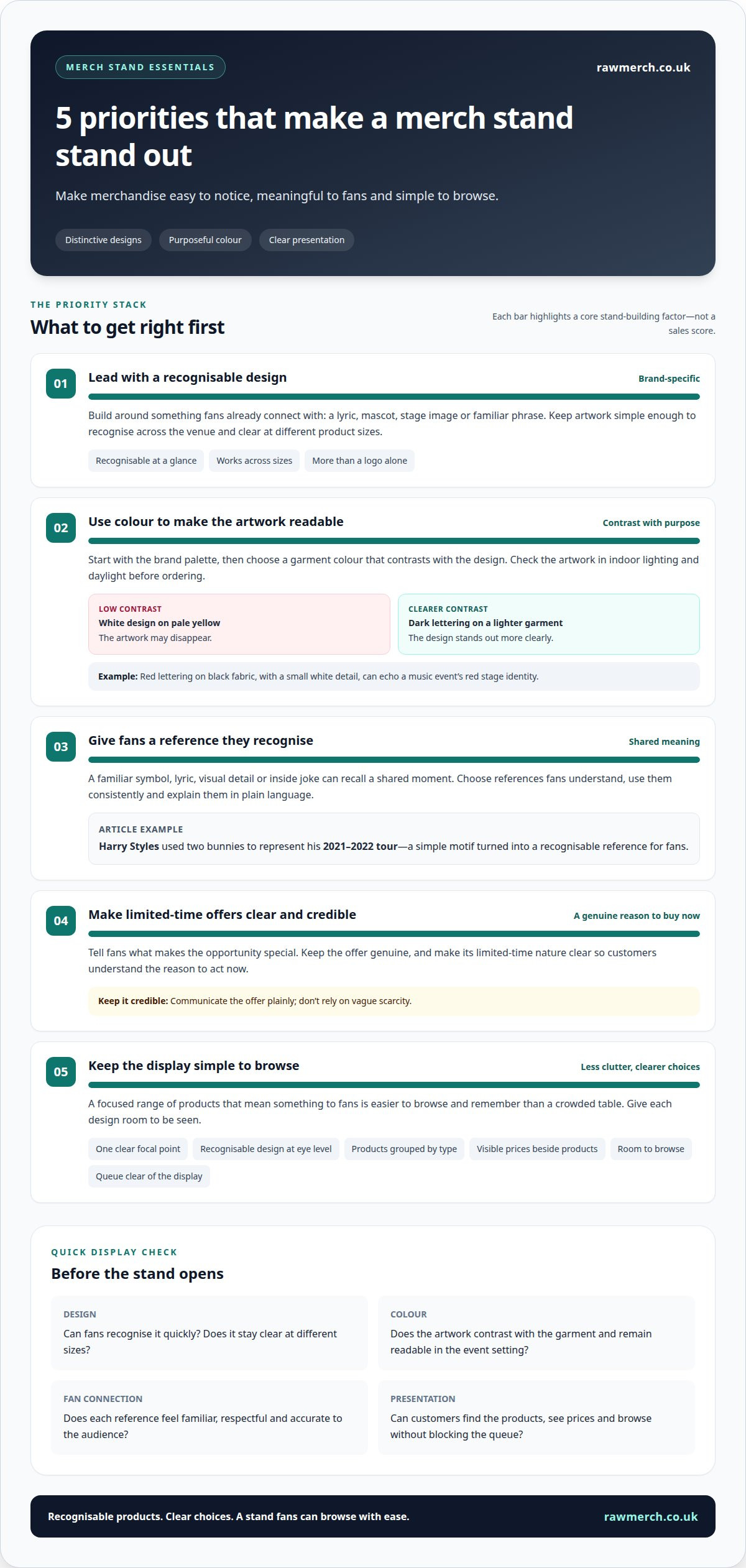
Build each design around something fans already connect with the act, event or organisation. A lyric, mascot, stage image or familiar phrase can make a T-shirt feel personal. Keep the artwork simple enough to recognise across a venue, and check how it looks at different product sizes. These tips for a successful merch stand start with merchandise that feels genuinely connected to its brand.
Set prices by adding production and other per-item costs, then comparing that total with the selling price. The difference is gross profit per item; dividing it by the selling price gives the gross margin as a percentage. Include event-related costs in your planning so the margin accounts for more than production alone.
Choose stock based on past event sales, expected attendance and audience preferences. Use previous clothing-size sales to guide quantities, and prioritise products suited to the event. Without sales history, start with a focused range and record what sells to guide your next order.
Arrange the layout around one clear focal point. Put a recognisable design at eye level, group products by type and place visible prices beside them. Leave room to browse, and keep the queue clear of the merchandise display.
Prepare a stock sheet, price signs, bags, hangers or event display stands from providers such as zodiacdisplays.com, and a secure cash box if you accept cash. For card and contactless payments in the UK, bring a compatible reader and the phone or tablet it requires. Test the connection before the event opens.
Show one sample of each design so customers can check its colour and print. Fold spare clothing by size, and have staff explain a design or suggest a practical gift. These tips for a successful merch stand make browsing easier and help customers choose with confidence.
Count stock before and after the event, keep reserve items behind the stand, and protect garments from spills or weather. Limit access to cash, and avoid over-ordering designs you haven’t tested. Review sales during the event so popular products stay visible and remaining stock is easier to manage.
2. Bright colours for event merchandise
Colour helps merchandise stand out in a busy venue. Start with the brand palette, then choose a contrasting garment colour that keeps the artwork readable. A white design on a pale yellow shirt may disappear, while dark lettering can stand out clearly. Check the design in indoor lighting and daylight before ordering, since the event setting affects how colours appear.
Use one strong colour as the visual anchor, then add supporting shades sparingly. For example, a music event with a red stage identity could use red lettering on black fabric, with a small white detail for contrast. Keep text legible from a short distance, and avoid putting several bright colours behind detailed artwork. A simple colour combination makes a design easier to recognise.
Think beyond clothing. A brightly coloured tote or cap gives fans who prefer practical merchandise another option. Keep the range visually connected by repeating a shade or motif across products. Before approving production, compare the artwork with the garment colour and check that small details remain visible at the finished size. This review can prevent an attractive design on screen from becoming difficult to read on fabric.
For UK event sales, plan prices with your VAT position in mind and display the amount customers must pay. Provide accurate product descriptions and a clear process for handling faulty goods or complaints under applicable consumer rights. Keep sales records so you can reconcile event takings with your accounts.
For a consistent look across products, explore colour-led event merchandise as part of your stand planning.
Keep the artwork simple and recognisable, without excessive detail or clutter competing with the colours. Check that the design works at different sizes and on different products without losing impact, so its key elements remain clear on clothing and practical merchandise.
3. Connecting merchandise to customer fandom
Fans value merchandise that recalls a shared moment, not just a name. Harry Styles used two bunnies to represent his 2021-2022 tour, turning a simple motif into a recognisable reference. A symbol, lyric or visual detail can help supporters feel part of the same story. Choose references fans understand, then use them consistently across the stand.
Start by identifying what your audience talks about and remembers. For a band, that could be a recurring stage image, a song title or an inside joke. For a sports club, it might be a familiar chant or emblem. Keep the reference respectful and accurate. A forced design can weaken the connection rather than strengthen it.
Give fans a choice of ways to show their support. One person may want a bold graphic T-shirt, while another prefers a subtle design or a practical promotional item. Use product descriptions to explain the reference in plain language. A short note beside an item can help newer fans understand its meaning without crowding the display.
Make the stand part of the fan experience. Invite visitors to share which designs they recognise, and listen for repeated comments about colours, symbols or products. One team member can explain a design’s story while another handles payments and stock. At a busy stand, assign clear roles, keep the queue moving in one direction, and give each customer a quick, friendly answer.
Small details can reinforce the connection. Use consistent artwork on signs and merchandise, and arrange related designs together so fans can compare them easily. If a tour motif appears on a hoodie and a tote, place the items nearby. This makes the link visible and helps supporters choose what suits them.
After the event, note which references sparked conversations and which products fans picked up. Compare those observations with remaining stock before planning the next stand. These notes help you build future merchandise around real audience interest rather than assumptions.
Merchandise should reflect an authentic connection to the brand. Keep that connection central when choosing references, so the finished range feels consistent with the identity fans already know and value.
4. Limited-time offers and scarcity
A clear deadline gives fans a reason to decide during the event, but the offer must be genuine. Set a real end point, such as the final concert date on a tour, and state it beside the product. Don’t say “last chance” if the same offer will continue afterwards. Honest limits protect trust and make the message easier to understand.
Scarcity can come from a short production run, an event-specific design or a product available only at a particular show. Chili’s Golf Club merchandise drop took place in late August, giving the campaign a timely hook. For your own stand, connect the limited item to a real moment, such as a tour stop or festival appearance. Explain what makes it distinct instead of relying on urgency alone.
Make the terms visible before customers reach the payment point. A small sign can identify the item, the event and when the offer ends. If stock is limited, describe the limit accurately and update the display as products sell. Don’t imply that an item is nearly gone unless that reflects the actual stock. Clear wording helps fans choose without feeling misled.
Keep the offer simple to run. Choose one featured item, decide when its availability ends, and brief every team member on the same details. If the offer includes a bundle or an event-only design, show exactly which products qualify. Avoid complicated conditions that slow the queue or cause confusion at checkout.
After the event, compare the featured item’s remaining stock with other merchandise. Use that record to decide whether the next offer should feature a different design, product or event moment. A limited-time promotion should support the fan experience, not pressure people into buying something they don’t want. For event-specific promotional merchandise, plan the product and offer together.
RAW Merch: Custom T-Shirts & Hoodies
RAW Merch produces custom clothing and branded items for events, helping fans wear their support beyond the venue. Choose Custom T-Shirts & Hoodies to put a tour, team or organisation’s identity front and centre. Headwear and Promotional Items offer other ways to create a coordinated range, while Laser Engraving adds a personalised touch to suitable merchandise.
Turn to RAW Merch when you’re ready to produce merchandise that reflects your brand and supports your event plans. Share the products and visual direction you have in mind, then choose options that suit your audience and stand.
To discuss your merchandise, contact RAW Merch.
Make your next merch stand a stronger reflection of your audience
Use the next event to learn what your fans connect with most. Choose one design or display detail to refine, then pay attention to the questions people ask and the products they browse. Those observations can shape a more focused merchandise plan for your next appearance.
Put these tips for a successful merch stand into practice by treating each event as a useful test, not just a sales opportunity. Note which ideas sparked conversations and which details customers understood easily. That feedback gives you a practical starting point for future decisions and helps your merchandise feel more connected to the people who support you.
When you’re ready to develop merchandise for an upcoming event, contact RAW Merch about your merch. Take the next step with a clear vision and build a stand that feels unmistakably yours.