
Sticking with screen printing for every bulk order might actually be costing your brand more than it saves in 2026. You probably worry about setup costs eating your margins or fear prints cracking after just three washes. It's frustrating to balance cost-effectiveness with the long-term durability your UK merch deserves. When comparing screen printing vs dtf uk, the winner is no longer about which technology is "better" in a general sense. It's about matching the print physics to your specific order volume and design complexity.
You need fast turnaround times and perfect colour accuracy without the headache of hidden fees. We understand the pressure of getting your custom t-shirts and hoodies exactly right for your audience. This guide provides the definitive breakdown of both methods so you can stop guessing and start ordering with confidence. We'll preview the exact break-even points, durability facts like the 40 to 50 wash standard for DTF, and the latest UK REACH alignment standards from February 2026 that will impact your production decisions this year.
Key Takeaways
- Identify the fundamental differences between traditional mesh stencils and digital film transfers to ensure your artwork prints perfectly.
- Master the cost dynamics of screen printing vs dtf uk to avoid high setup fees on small, multi-colour orders.
- Evaluate the "hand feel" and colour accuracy of each method to maintain your brand's premium standard.
- Pinpoint the exact volume where screen printing’s speed outpaces DTF’s rapid setup for maximum efficiency.
- Use our definitive checklists to choose the winning method for your specific fabric types and delivery timelines.
Understanding the Tech: What are Screen Printing and DTF?
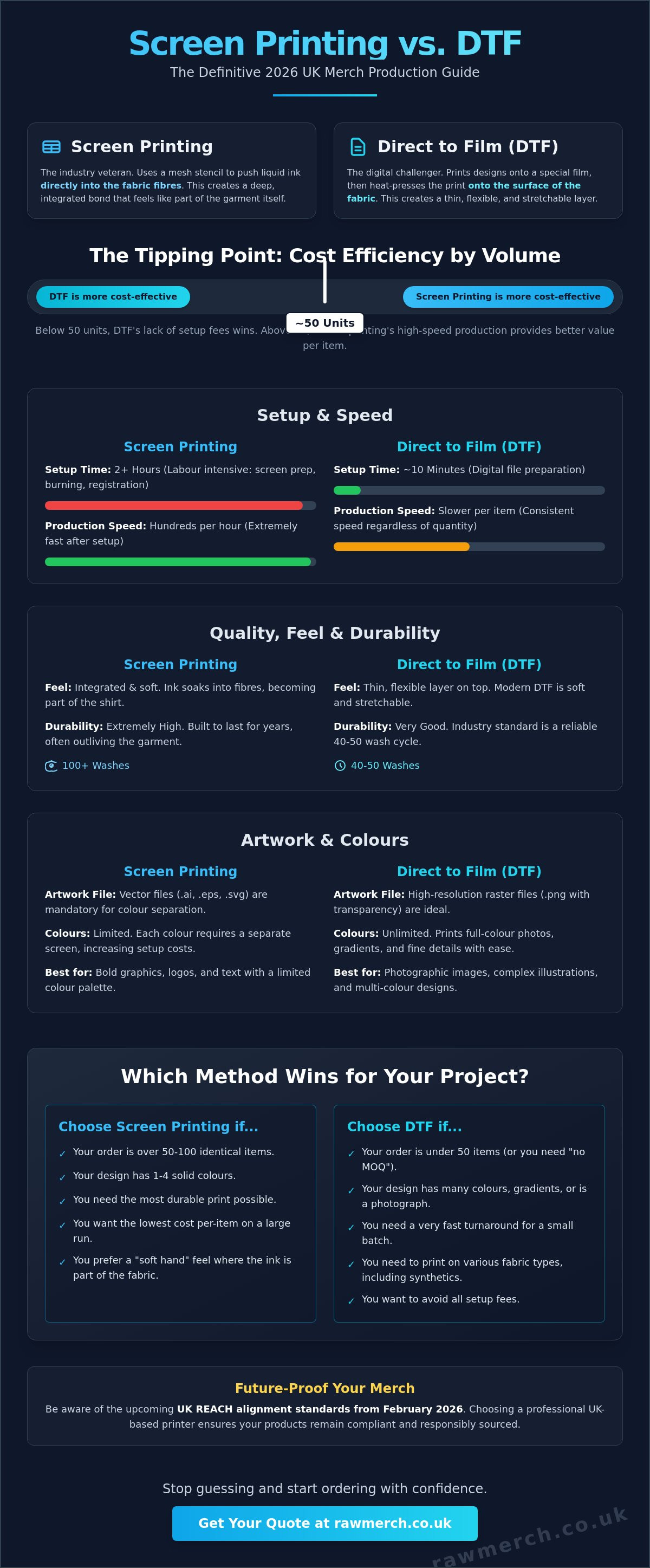
Choosing between screen printing vs dtf uk starts with understanding the physics of the print. These two methods aren't just different machines; they represent two entirely different ways of bonding ink to fabric. Screen printing is the industry veteran. It uses a mesh stencil to push liquid ink directly into the fabric. The ink absorbs into the fibres, creating a deep, integrated bond. This is why screen prints often feel like part of the shirt itself after a few washes.
Direct to Film (DTF) is the digital challenger that has transformed the UK market. Instead of printing directly onto the garment, we print your design onto a special PET film. We then apply a hot-melt adhesive powder and heat-press the film onto the clothing. Instead of absorbing, the print bonds to the surface. By 2026, the most successful UK brands have adopted a hybrid approach. They use screen printing for massive bulk orders with simple designs and DTF for complex, high-detail projects or smaller runs.
The Screen Printing Process: A 25-Year Staple
This method relies on "one colour per screen" logic. If your logo has five colours, we build five separate screens. It's a physical, mechanical process that requires serious artisanal skill. We use plastisol inks for vibrant, thick finishes or water-based inks for a premium, soft-hand feel. Artwork preparation is the biggest hurdle here. You must provide clean vector files so we can separate every colour before production begins. It's a labour-intensive setup, but the result is a professional finish that lasts for years.
The DTF Revolution: Digital Precision
DTF removes the screen hurdle entirely. A digital printer handles unlimited colours, shadows, and gradients in a single pass. Don't confuse this with the thick, "plasticky" heat transfers of the 90s. Modern DTF uses a unique adhesive powder that creates a thin, flexible, and stretchable print. It moves with the fabric rather than fighting against it. For artwork, you don't need colour separations. You just need high-resolution raster files with transparent backgrounds. It is about pixel density rather than vector paths, allowing for photographic detail that screen printing simply can't match on a small scale.
The real shift in 2026 is how we prepare the files. While screen printing demands rigid vector lines, DTF allows for soft edges and transparencies. Understanding this difference in artwork prep prevents delays and ensures your custom t-shirts look exactly like your digital mockups.
Speed, Setup, and Scalability: The Operational Differences
Comparing screen printing vs dtf uk means looking at the clock before the first shirt even touches the press. Screen printing requires a massive time investment upfront. We have to coat screens with emulsion, burn designs using UV light, wash them out, and dry them. Then comes the registration on the press to ensure every colour aligns perfectly. This setup often takes two hours or more for a multi-colour job. DTF skips the physical labour. File preparation takes about 10 minutes. The printer starts immediately. For a single hoodie or a dozen tees, DTF is the undisputed winner for speed.
Once the screens are locked in, screen printing becomes a high-speed beast. It can churn out hundreds of garments per hour with incredible consistency. This is where it leaves digital methods behind. For massive runs, that long setup time becomes a small fraction of the total job. In the UK market, 50 units is usually the tipping point. Below 50, the labour of screen prep makes the cost per item too high. Above 50, the sheer speed of the manual or automatic press makes it the most efficient choice for your brand.
Minimum Order Quantities (MOQs) Explained
Most UK printers set Minimum Order Quantities (MOQs) at 25 or 50 units for screen printing. It's simply not practical to spend hours setting up for a handful of shirts. DTF has completely changed this landscape. It enables "No MOQ" options or very short runs for small businesses and startups. You can order five units today to test the market and 500 next month once the design proves popular. If you are planning a large-scale project, check our clothing printing options to see which method fits your current volume best.
Turnaround Times for UK Tours and Events
UK-based production is essential for tight deadlines. If you are on tour and sell out of stock in Manchester, you need a fast restock before the London show. RAW Merch fulfillment specialises in these high-speed scenarios. DTF is the hero for last-minute event merch. It handles complex, multi-colour designs without the multi-day wait required in the screen room. While complex designs take longer to separate and burn onto screens, DTF prints them at the click of a button. This makes it the perfect choice for "Rush Orders" where you can't afford to wait 10 business days for a traditional setup.
Comparing Print Quality, Feel, and Durability
The "Hand Feel" test is the first thing your customers will notice when they pick up your merch. Screen printing remains the gold standard for a soft, integrated finish. Because the ink absorbs into the fibres, the design feels like part of the fabric itself. This is especially true with water-based inks. DTF has a slightly different profile. It sits on the surface, creating a very thin, slightly raised texture. While 2026 technology has made these transfers incredibly soft, you can still feel the print if you run your hand over the garment.
Colour vibrancy is where the debate between screen printing vs dtf uk gets technical. Screen printing allows for exact Pantone matching. We mix liquid inks to hit your brand's specific colour codes with 100% accuracy. This is vital for corporate logos. DTF uses a CMYK digital process. It produces stunning, vibrant results, but it can't always replicate hyper-specific spot colours or neon shades as effectively as a dedicated screen. However, DTF wins on fabric versatility. It bonds perfectly to polyester, nylon, and synthetic blends where screen printing often struggles with dye migration.
The Durability Myth: Is DTF Actually "Cheap"?
Don't believe the claim that digital transfers always crack. Modern industrial DTF transfers are built to pass the "stretch test" easily. They use a flexible adhesive powder that moves with the fabric. While screen printing is still the undisputed king for heavy-duty workwear that faces industrial cleaning, DTF is more than durable enough for high-street retail. Wash-fastness is defined as the print's ability to maintain its original colour and structural integrity during a standard UK 40-degree wash cycle across 50 or more repetitions. Both methods meet this high standard when produced by experts.
Detail and Complexity: Photographic Prints
Screen printing complex shading requires "halftones," which is a true artisanal skill. We use tiny dots of varying sizes to simulate gradients. It looks fantastic but requires expert setup. DTF handles high-resolution photography and intricate details effortlessly. It prints at 300dpi or higher without any extra labour. To get the best result from either method, you must start with a high-quality vector image or a high-resolution raster file. Clean artwork ensures your prints look sharp, professional, and expensive, regardless of the technology we use to apply them.
Cost Analysis: When Does Each Method Save You Money?
The "Screen Charge" is the first hurdle every UK brand faces. In traditional production, every single colour in your design requires its own physical screen. If you have a six colour logo, we have to prepare six separate screens. On a small run of twenty shirts, those setup fees will make your unit price skyrocket. This is the primary reason why the screen printing vs dtf uk debate usually ends with a digital win for small, complex orders. DTF doesn't care if your art has two colours or twenty. The setup time is the same, and the ink cost remains consistent regardless of design complexity.
Scalability changes the math completely. Screen printing is the undisputed king of the bulk discount. Once we've invested the time into burning and registering those screens, the cost to print each individual garment is very low. For massive orders of 500 units or more, screen printing will always be the most economical choice. The high initial setup cost is spread across so many items that the final price per shirt becomes unbeatable. If you are looking to maximize your margins on a large scale project, get a quote for your custom apparel today to see the volume benefits in action.
The "Hidden" Costs of Merchandise
Pre-production samples are a major factor in your total budget. Creating a single screen-printed sample is expensive and time-consuming because it requires a full production setup. DTF allows us to print a one-off sample quickly and cheaply. This lets you check the quality before committing to a larger run. Re-ordering is also more efficient with digital methods. We store your digital files, so there is no need to burn new screens if you need a small top-up of stock next month. This flexibility helps you keep your cash flow healthy.
Budgeting for Bands and Start-ups
Risk management is vital for new ventures. We always advise bands and start-ups to avoid "over-ordering" just to hit a lower unit price. It is better to have a slightly higher cost per shirt on a small DTF run than to have a garage full of unsold screen-printed stock. Start with a small, manageable batch of DTF prints to test your market. Once a specific design proves it is a bestseller, you can scale up to a high-volume screen printing run. This strategy ensures you only invest heavily in the designs your customers actually want to buy.
Making the Choice: Which Printing Method Wins for Your Project?
Deciding between screen printing vs dtf uk isn't about finding a "superior" technology. It is about matching the production method to your specific business goals. We don't push one method over the other because we own a specific machine. We offer both because your brand deserves the right finish for the right price. Use these checklists to find your winner immediately.
The Screen Printing Winner Checklist:
- Your order volume is 50 units or higher.
- Your design uses simple logos with 1 to 3 solid colours.
- You are printing on 100% cotton or high-cotton blends.
- You prioritse the classic, soft-hand feel of integrated ink.
The DTF Winner Checklist:
- You need a small run or "No MOQ" order.
- Your artwork features complex gradients, shadows, or photography.
- You are printing on polyester, nylon, or tricky synthetic blends.
- You have a tight deadline and need a "Rush Order" turnaround.
Many RAW Merch clients now choose a hybrid approach for their tours and events. They use high-volume screen printing for their primary tour t-shirts to keep the unit cost low. Simultaneously, they use DTF for limited edition designs or rapid restocks between show dates. This flexibility is perfect for seasonal event organizers or entertainment brands like Murder Mystery Host, who may need specialized merch for specific occasions. Talking to your printer saves more time and money than any Google search. We help you navigate these choices based on real-world production data, not marketing fluff.
Custom Clothing Printing: The RAW Merch Way
We bring over 25 years of industry experience to every project. We know exactly which tech will survive the tour bus and the washing machine. Durability is our baseline requirement for both independent bands and massive corporate clients. We also handle the "tough" fabrics that other printers refuse to touch. Whether it's heavy-duty workwear or technical sports gear, we ensure the bond is permanent. You don't have to worry about the technical details. We handle the physics so you can focus on the creative vision.
Final Verdict and Next Steps
The 2026 UK merch landscape is more flexible than ever. You are no longer trapped by high setup fees for complex art or poor durability on digital prints. The technology has caught up to your expectations. Empower your creative vision by choosing the method that fits your current scale. We are ready to help you execute your next project with precision and speed. Stop guessing and start creating with a partner who knows the industry inside out.
GET A NO-NONSENSE QUOTE FOR YOUR MERCH
Elevate Your Brand With The Right Print Tech
Choosing the right method for your project shouldn't be a gamble. We've shown that the screen printing vs dtf uk decision depends on your volume, design complexity, and deadline. Screen printing remains the heavyweight champion for massive bulk runs. DTF is the agile solution for complex, photorealistic art and smaller restocks. By 2026, the most successful brands don't pick a side. They use both to stay efficient and profitable.
We bring 25+ years of industry experience to every order. Our UK-based production and global distribution ensure your merch arrives on time. We are specialists in band, business, and promotional merch that stands up to the rigours of the real world. Much like the durable, UK-made products from Sleep Earthed, our garments are designed for longevity and performance. Stop wasting time on trial and error. Trust the experts to handle the technical details while you focus on your growth.
STOP GUESSING AND GET AN EXPERT MERCH QUOTE
Your creative vision deserves a professional finish. Let's build something iconic together.
Frequently Asked Questions
Is DTF printing better than screen printing?
Neither method is universally better. The right choice depends entirely on your specific order volume and design complexity. DTF is the superior option for small runs and complex artwork with many colours or gradients. Screen printing remains the industry leader for large bulk orders where driving down the cost per unit is your main priority. We select the technology that ensures your creative vision translates perfectly to the fabric.
How many washes does a DTF print last compared to screen printing?
Modern DTF transfers are built for longevity and can endure 40 to 50+ washes when you follow standard care instructions like cold washing inside out. Screen prints are incredibly durable and often last for over 50 washes, frequently outliving the garment itself. Both methods provide the long term reliability required for retail brands and promotional use. You can trust either method to maintain its integrity over time.
Why is screen printing so expensive for small orders?
The high cost for small batches comes from the extensive manual setup required for every colour in your design. We have to create physical screens, apply emulsion, and register the press before printing a single shirt. Spreading these labour costs over only a few items makes the price per unit very high. DTF skips these physical steps, making it the most affordable choice for short runs.
Can you screen print on 100% polyester sports kits?
Screen printing on polyester is difficult because the fabric dyes can bleed into the ink during the curing process. DTF is much better suited for 100% polyester and synthetic blends. The lower heat application and surface bonding prevent dye migration. This ensures your sports kits and performance gear look sharp and vibrant without any colour distortion or dulling of the print.
What is the minimum order for screen printing at RAW Merch?
Our minimum order quantity for screen printing is typically 25 to 50 units. This threshold allows us to justify the technical setup time while keeping your price per unit competitive. If you need a smaller batch or a one off sample, our high quality DTF service has no minimum order requirements. This flexibility allows you to test new designs without committing to a large stock investment.
Does DTF printing feel like plastic on the shirt?
Modern industrial DTF does not feel like the thick, stiff plastic transfers of the past. It is thin, flexible, and has a slight stretch that moves naturally with the fabric. While it sits on the surface rather than soaking into the fibres like ink, it provides a premium finish that is comfortable for daily wear. It is a professional grade solution that feels soft to the touch.
Which method is better for complex, multi-coloured band logos?
DTF is the undisputed winner for complex artwork with gradients, shadows, or many colours. It prints at high resolution and handles unlimited colours in a single pass. When comparing screen printing vs dtf uk for intricate band merch, DTF offers superior detail without the massive setup fees associated with multi-screen jobs. It allows you to maintain every pixel of your original digital artwork.
How fast can I get my custom t-shirts delivered in the UK?
DTF orders are built for speed and can often be fulfilled within 1 to 2 days for urgent requirements. Traditional screen printing jobs usually take between 3 and 10 business days because of the physical preparation and drying times involved. Our UK based production facility is designed for maximum efficiency. We prioritize your schedule to ensure your merch arrives exactly when you need it for your event.