

A softer T-shirt can start with a different spinning method, not a different kind of cotton. Ring-spun cotton is made by twisting aligned cotton fibres into yarn, creating a smoother, softer thread than open-end spinning typically produces.
That difference matters when you’re choosing fabric for a clothing brand, but ring-spun and combed aren’t interchangeable terms: combing prepares the fibres, while ring spinning turns them into yarn. This guide gets ring-spun cotton T-shirts explained in practical terms, so you can compare feel, durability, pilling and cost with combed and open-end cotton. The spinning method alone doesn’t tell the whole story: fabric weight and construction also affect how a shirt feels and performs. Understanding the trade-offs helps you choose the right option for your range.
Key Takeaways
- Separate the spinning method from fibre preparation: ring-spun describes how yarn is made, while combed describes how cotton fibres are prepared.
- Compare shirts at similar fabric weights to judge their feel and structure fairly.
- Weigh softness and intended wear against production cost when choosing fabric for your clothing range.
- Look beyond the cotton label when assessing durability and pilling, since yarn and fabric construction also shape performance.
What is the difference between ring-spun and combed cotton?
Ring-spun describes how yarn is produced, while combed describes how fibres are prepared. Comparing ring-spun cotton with combed options means looking at two distinct processes that can both affect the finished fabric.
Softness, durability and fabric texture
Ring-spun yarn is made by twisting and thinning aligned cotton fibres, producing a smoother, softer thread than regular cotton. It’s generally stronger too, though the spinning method alone can’t guarantee a longer-lasting garment. Combing removes shorter fibres and impurities, leaving a cleaner surface. These distinctions help when comparing softness for everyday apparel or evaluating fabric before choosing a T-shirt for your range.
Ring-spun describes how the yarn is made, not the environmental impact of the cotton or its production. The label alone can’t establish sustainability; sourcing and manufacturing practices matter too.
Fabric drape and texture
A smoother yarn can give fabric a softer surface than standard cotton. Ring-spun T-shirts are often lighter than regular cotton shirts, which can affect how the garment falls. Fabric construction and weight also influence drape, so compare samples of similar weights. Handling the fabric gives you a better sense of its feel and structure than relying on the word “ringspun” alone.
Breathability and fabric weight
Cotton fabric allows air circulation, while fabric weight affects how substantial a T-shirt feels. A lighter ring-spun option may suit a softer, less heavy style; a heavier fabric can create more structure. Neither spinning nor combing alone determines breathability. Consider the finished fabric and intended use, such as a lightweight fashion tee or a more substantial everyday garment.
For printing, ring-spun cotton’s generally smooth surface and fine weave can help reproduce detailed artwork. Combing removes impurities and shorter fibres, further smoothing the surface. Print results also depend on fabric preparation, ink and curing. Ring-spun cotton itself is 100% cotton, though a finished fabric can blend it with other fibres. For brands comparing options, ring-spun cotton T-shirts explained through their composition and processing offer a clearer basis for choosing a garment.
Is ring-spun cotton worth the extra cost for a clothing brand?
Ring-spun yarn takes an extra spinning step, so it generally costs more to manufacture than open-end yarn. That additional cost may suit a range where softness and lasting shape matter more than the lowest production cost.
Ring and rotor spinning processes
Ring spinning twists and thins aligned cotton fibres into long, smooth threads. In rotor spinning, also called open-end spinning, fibres collect and twist inside a rapidly rotating rotor. These manufacturing methods produce different yarn textures, helping explain why cotton T-shirts can feel different. Combing is a separate process: it prepares the fibres before spinning rather than describing how yarn is formed.
Ring-spun and open-end yarn production
Open-end spinning offers a lower-cost way to turn cotton into yarn, while ring-spun yarn is generally smoother and longer. Ring-spun yarn is also described as softer and stronger than regular cotton because its fibres are twisted and thinned. This extra production step may suit clothing intended for frequent wear, though fabric construction and care also affect durability. To identify combed cotton, look for “combed” in the product label or specification; “ring-spun” alone doesn’t mean the cotton was combed.
Ring-spun T-shirt product examples
Product specifications can make comparisons more useful than a brand name alone. Bella+Canvas 3001 and Comfort Colors 1717 are examples of named T-shirt blanks in the market. Compare their stated fibre composition and fabric details, then assess samples at similar weights. For a clothing brand, the extra cost is most relevant when a softer hand feel supports the product’s positioning. A basic promotional garment may place greater emphasis on manufacturing cost.
Shrinkage, fading and washing
Ring-spun cotton can shrink, but the spinning method alone doesn’t determine how much. Fibre composition, fabric construction, finishing and washing conditions all matter; hot water can contribute to cotton shrinkage. Follow the garment’s care label, and avoid hot-water washing if reducing shrinkage is a priority. The spinning label alone also doesn’t establish whether a dyed T-shirt will fade, so use its care instructions to guide washing and drying.
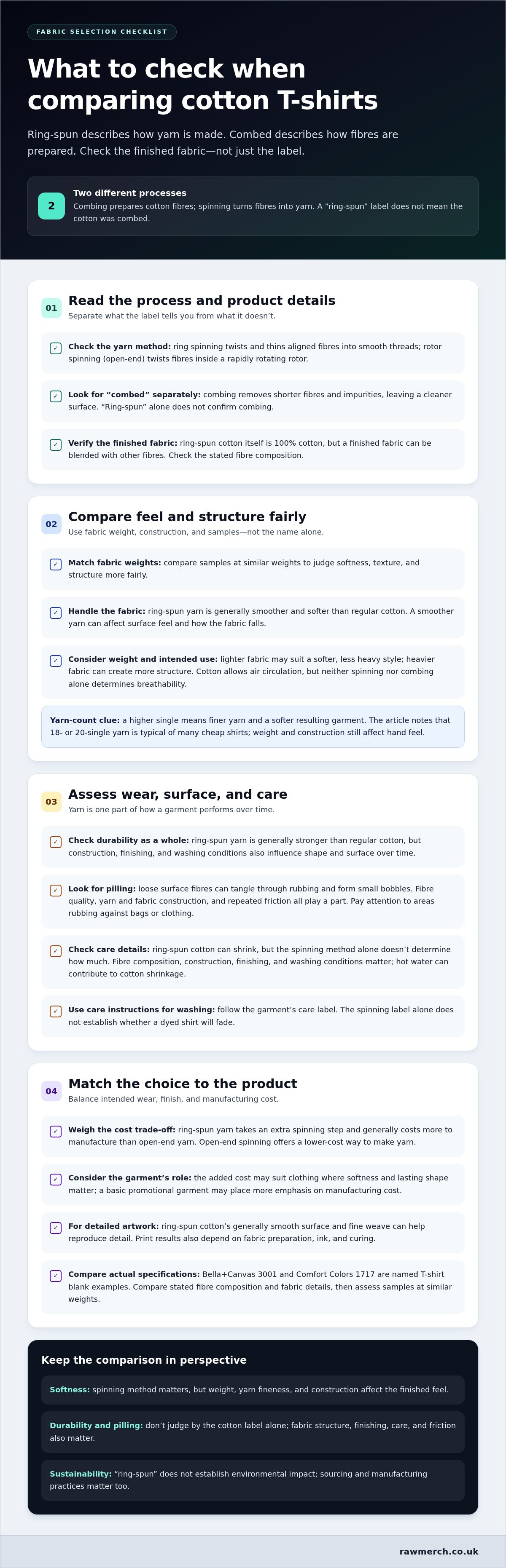
Cotton softness, durability and pilling
Yarn fineness, fibre alignment and fabric construction all shape how a cotton T-shirt feels and wears. Compare these details alongside the label when weighing softness against durability.
Softness and durability comparison
Ring-spun cotton is generally softer and stronger than regular cotton because its fibres are twisted and thinned during spinning. It can be useful for garments intended for repeated wear, where comfort matters alongside fabric strength. Still, yarn method alone doesn’t determine durability: fabric construction, finishing and washing conditions also influence how a T-shirt holds its shape and surface over time.
Texture and yarn fineness
Yarn count offers another clue to softness: a higher single means finer yarn and a softer resulting garment. By contrast, 18- or 20-single yarn is typical of many cheap shirts. A finer yarn can create a smoother texture, but the finished material’s weight and construction affect the hand feel too. Compare samples at similar weights to judge the difference directly.
Pilling forms when loose surface fibres tangle through rubbing, creating small bobbles on fabric. It can affect a shirt’s appearance, but the label “ring-spun” alone doesn’t predict how much pilling a garment will develop. Fibre quality, yarn construction, fabric structure and repeated friction all play a part. Check the surface after wear and washing, particularly in areas that rub against bags or other clothing.
For a clothing range, softness and durability serve different priorities. A softer T-shirt may suit close-to-skin apparel, while a firmer-feeling fabric may better match a structured design. Use the yarn specification as one comparison point, then assess the fabric’s surface, weight and recovery after handling. This gives you a clearer view than spinning terminology alone, especially when comparing samples from different manufacturers.
Differences between open-end, ring-spun and combed ring-spun cotton
These labels describe two stages of cotton processing: fibre preparation and yarn spinning. Understanding the difference helps you compare T-shirt feel and fabric choices more accurately.
Open-end and ring-spun cotton
Open-end, or rotor, spinning forms yarn by collecting and twisting fibres inside a rapidly rotating rotor. Ring spinning twists aligned fibres into yarn, producing smoother, longer threads than open-end yarn. Carded open-end cotton is a lower-cost way to make yarn, so it can suit retail ranges where production cost matters. Its texture may feel slightly rougher than ring-spun alternatives, making sample comparisons useful when choosing a fabric for your designs.
These methods affect the yarn, not the T-shirt’s entire construction. Fabric weight and finishing also shape how a garment feels. Compare examples at similar weights rather than treating “open-end” or “ring-spun” as a complete product specification.
Combed ring-spun cotton
Combed ring-spun cotton combines fibre preparation with ring spinning. Combing removes shorter fibres and impurities before the remaining cotton is spun. Ring spinning then twists the aligned fibres into yarn. The result is typically smoother and softer than heavyweight open-end fabric, making it a possible fit for apparel where surface feel matters. “Combed” and “ring-spun” describe separate processes, so using both terms gives a fuller description.
For a quick comparison, open-end yarn is the cost-conscious option, ring-spun yarn offers a smoother thread, and combed ring-spun adds fibre cleaning before spinning. None of these labels alone tells you whether a T-shirt feels sturdy or drapes lightly. Fabric weight and construction complete the picture. For printed designs, compare the actual surface and weight, since fabric preparation also affects the result.
Planning printed T-shirts? Explore custom clothing printing for your range.
RAW Merch: Custom T-Shirts & Hoodies
RAW Merch produces custom T-shirts and hoodies for clothing ranges, teams and events. Once you’ve weighed softness, fabric structure and printing needs, the next step is to match those priorities to the garment and finish you have in mind.
Choose this approach when planning apparel with a consistent look across printed garments, promotional items or headwear. RAW Merch also offers laser engraving for suitable merchandise. The right choice depends on your products’ purpose and the feel you want customers to experience, not on the cotton label alone.
Bring your project requirements together and contact RAW Merch to discuss your custom clothing plans.
Shape a Range That Fits Your Brand
With ring-spun cotton T-shirts explained in practical terms, you can make fabric choice part of a clear product plan. Decide how each item should feel, how it will be worn and how its finished design should represent your brand. A focused range can use different garments for different audiences rather than relying on one specification for every purpose.
Before settling on a range, consider the fabric and print together. This gives your team a practical basis for deciding whether the material suits the artwork and intended use. The right option is the one that fits your brand’s priorities, not simply the label with the strongest reputation.
RAW Merch offers custom T-shirts and hoodies, promotional items and headwear. If you’re shaping a new range or refining an existing one, contact RAW Merch about your cotton options. Take your next step with confidence.
Frequently Asked Questions
What is Ringspun Cotton?
Ringspun cotton is cotton yarn made by twisting cotton fibres into a smooth, strong thread. The term describes the spinning method, not whether the fibres were combed first. For example, a label may say “ring-spun” without saying “combed”. When comparing garments, read the full fabric description and composition rather than treating ringspun as a complete specification.
Is the extra cost justified by its benefits?
It can be worth the added cost when a brand’s product depends on a softer feel, smoother print surface or stronger yarn. For a giveaway or short-term event garment, a lower-cost open-end option may better fit the purpose. Consider the intended wearer, expected use and finished product’s price point. The extra manufacturing step matters most when customers will notice the fabric’s feel.
What do “carded” and “open-end” mean on a label?
“Carded” describes fibre preparation: cotton fibres are detangled and aligned before spinning. “Open-end” describes a yarn-making method, also called rotor spinning, where fibres collect and twist inside a rotating rotor. A label using both terms describes two stages, not two different fibre contents. If a shirt says “carded open-end cotton”, the terms describe its preparation and spinning method.
Which type can withstand more washes?
No spinning label alone tells you which shirt will withstand more washes. Wear life is affected by fibre composition, fabric construction, finishing and washing conditions, as well as the yarn. For a fair comparison, assess garments with similar fabric weight and construction, then follow each garment’s care label. Look at seam condition, shape retention and surface wear after use, not softness alone.
What is ring-spun cotton and how is it made?
Ring-spun cotton is yarn formed by continuously spinning, twisting and thinning aligned cotton fibres. The process creates longer, smoother threads than open-end spinning. This describes yarn production, not a garment style or a separate cotton plant variety. For a clothing specification, pair the spinning description with fibre content and fabric weight to make the finished shirt easier to assess.
How does ring-spun cotton differ from regular or open-end cotton?
Ring-spun cotton yarn is generally smoother and longer than open-end yarn, which is made using rotor spinning. These terms describe different aspects of cotton processing, and the fabric’s feel can vary. These terms describe processing, not every aspect of the finished T-shirt. Compare the composition, fabric weight and construction too, especially when choosing between a lightweight printed tee and a heavier garment.