
A garment that looks right isn’t automatically fit for purpose. Quality control for custom apparel means checking materials, measurements, construction, print quality and finished items against agreed requirements. Quality assurance helps prevent problems; quality control identifies them during production or before delivery.
It’s easy to focus on the final print or overall appearance, but quality is shaped at every stage. A fabric issue, inconsistent sizing or misplaced design can affect the whole order if it isn’t caught early.
This guide explains quality control and assurance, then follows the key checks from material selection through production, finishing and packing. It also explains why uniforms need particular attention to wash durability and consistent sizing, while fashion apparel may place more emphasis on fit, stitching and trims. You’ll see what to check at each stage and how requirements should reflect the garments’ intended use.
Key Takeaways
- Catch defects early to reduce rework and waste, and keep production resources focused.
- Use in-line inspections to spot sewing and construction issues before they recur across an order.
- Set clear checkpoints for cutting, finishing and packing so problems are found before garments are ready to ship.
- Match inspection priorities to the garment’s purpose: uniforms need attention to wash durability and sizing, while fashion apparel may call for closer checks on fit and details.
What is Quality Control?
Quality control for custom apparel checks garments against agreed requirements during production and before completion. An approved sample provides a reference for identifying differences in materials, measurements, construction and finish.
Early Defect Detection and Waste Reduction
Early defect detection means checking materials and garments at production checkpoints, rather than waiting until an order is finished. For example, inspecting fabric rolls before cutting can reveal shade variation or defects before they affect multiple panels. Catching a problem at this stage can reduce wasted material and prevent faulty work from being repeated across the order. In-line checks also help teams correct a process while production continues, using time and materials more efficiently.
Supplier Communication and Defect Prevention
Supplier communication means sharing clear product requirements and agreeing how defects will be identified. A checklist can describe the approved sample, measurements, acceptable tolerances, fabric, colour and construction details. Clear terms help prevent misunderstandings, especially when different teams handle cutting, sewing and finishing. Translating a garment checklist into the supplier’s language can also make instructions easier to follow. Shared expectations help production teams focus checks on the details that matter to the order.
Defect Sorting and Rework
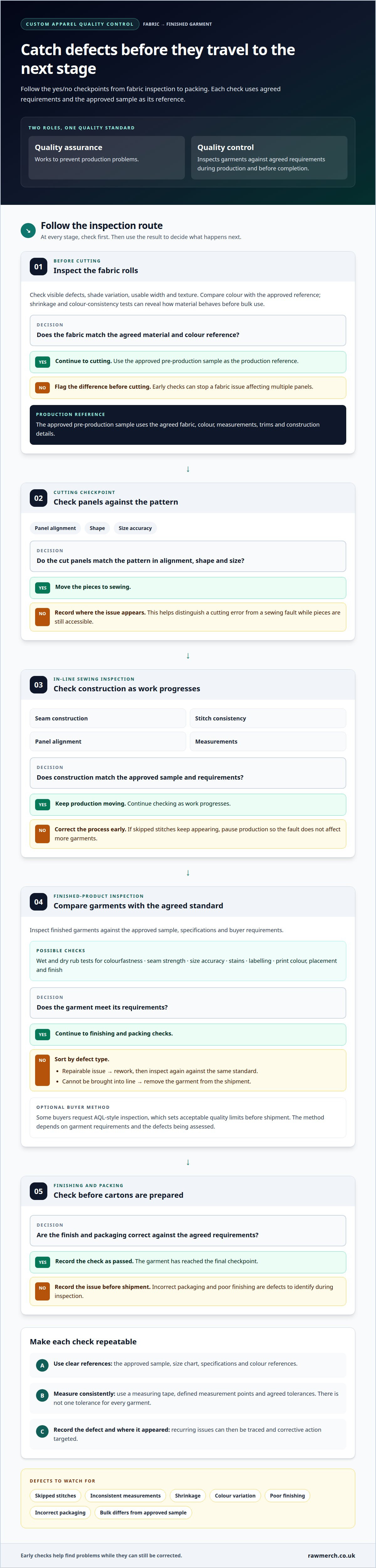
Defect sorting separates garments that meet requirements from those needing correction or removal. During inspection, a team can group items by issue, such as an incorrect measurement, loose seam or print positioned away from the approved location. Garments with repairable problems can be sent for rework, then inspected again against the same standard. Items that cannot be brought into line can be removed from the shipment. This process prevents identified defects from being treated as acceptable finished goods.
Common Garment Defects
Common garment defects include skipped stitches, inconsistent measurements, shrinkage, colour variation and poor finishing. Packaging can also be incorrect, and bulk production may differ from the approved sample. Each issue calls for a different check: review seams for workmanship, compare sizing with specifications, and check colour against the approved reference. Recording each defect and where it appeared helps teams spot recurring problems and target corrective action across the rest of the order.
What is Quality Assurance in Apparel?
Quality assurance aims to prevent production problems, while quality control inspects garments against agreed requirements. Third-party inspection fees depend on order size, inspection scope, testing requirements and location.
Fabric Inspection Before Cutting
Fabric inspection checks material condition and consistency before cutting. Inspectors review rolls for visible defects, shade variation, usable width and texture, then compare colours with the approved reference. Shrinkage and colour consistency tests can reveal how material behaves before it is used in bulk. A pre-production sample is made using the agreed fabric, colour, measurements, trims and construction details. Once approved, it becomes the production reference, helping keep garments aligned with the intended result.
In-Line Sewing and Construction Inspection
In-line inspection examines garments during sewing and construction, while there’s still time to correct the process. Inspectors review seam construction, stitch consistency, panel alignment and measurements as work progresses. If skipped stitches keep appearing, production can pause for correction before the fault affects more garments. Unlike final inspection, which finds issues after construction, in-line checks help keep workmanship consistent with the approved sample and construction requirements.
Product Inspection and On-Site Tests
Product inspection checks finished garments against the approved sample, specifications and buyer requirements. On-site tests can include wet and dry rub tests to assess colourfastness, along with checks for seam strength, size accuracy, stains and labelling. Some buyers request AQL-style inspection, which sets acceptable quality limits before shipment. The right method depends on the garment requirements and the defects being assessed. For printed clothing, checks can also compare colour, design placement and finish with the agreed reference.
Inspection Tools and Instruments
Inspection tools turn garment requirements into checks that can be repeated consistently. A measuring tape helps compare garment dimensions with the size chart, while the approved sample and colour references support visual comparisons. Measurement tolerances are the agreed permitted differences from specified dimensions; there isn’t one tolerance for every garment. Inspectors measure from defined points, such as a shoulder seam or garment hem, and record results against the specification. Clear reference points make comparisons more consistent across an order. For custom clothing printing, agreed artwork placement and colour references also guide finished-product checks.
Cutting, sewing, finishing, and packing checkpoints
Quality checkpoints follow the garment from fabric cutting through carton preparation. A clear checklist ties each inspection to product requirements and agreed standards.
Cutting and Sewing Checkpoints
Cutting and sewing checkpoints verify that panels match the pattern and are assembled correctly. At cutting, inspectors review panel alignment, shape and size accuracy before pieces move to sewing. Misaligned panels can affect fit or make it difficult to match garment parts. During sewing, checks focus on seam construction, stitch consistency and skipped stitches. These inspections help teams identify process problems while affected pieces are still accessible. Recording where an issue appears can also help distinguish a cutting error from a sewing fault.
Finishing Checkpoints and QC Checklists
Finishing checkpoints assess a garment’s appearance and details after construction. Inspectors can review loose threads, stains, seams, labels and required print or embroidery placement against the approved specification. A garment QC checklist brings product requirements, packaging requirements and on-site testing procedures into one working reference. It helps inspection teams apply consistent criteria at every checkpoint, rather than relying on memory. Clear records also make it easier to document defects and corrective action.
For example, the checklist can specify which measurements matter, which construction details must match, and how finished garments should be presented. This links production checks to the final inspection standard.
Packaging and Carton Checks
Packaging checks confirm that garments are prepared and labelled as required before shipment. Inspectors review folding, size stickers, barcodes, garment labels and packaging against the order details. They can also verify carton quantities, carton marks and shipment information. A mismatch between a size sticker and the garment inside can cause fulfilment problems, even when the garment itself meets specifications. Final random checks of labels and carton quality can catch such errors before cartons leave the production site.
Recording results against the checklist gives the team a clear record of packing checks. It also helps show whether an issue concerns one garment, a carton or the wider packing process.
Quality requirements for uniforms and fashion apparel
Uniforms and fashion garments need different quality priorities because they serve different purposes. A useful specification connects each garment’s intended use with the checks that matter most.
Uniforms: durability and consistency
For uniforms, quality assurance should consider how fabric withstands repeated washing. A garment worn regularly at work needs materials and construction suited to frequent wear and laundering. Quality control should also check sizing consistency across the order, so staff receive garments that fit consistently. For example, inspectors can compare measurements across sizes and review seams for stable construction. These checks help assess both day-to-day wear and consistency between garments.
Fashion apparel: fit and finish
Fashion apparel often places greater emphasis on intended fit, appearance and detail. Quality assurance checks that patterns reflect the planned shape, while product inspection reviews stitching, embroidery and trims against the approved sample. A misplaced trim or uneven seam can change a garment’s appearance, even when its measurements are accurate. Specifications should connect fit expectations with visible finishing details, giving production and inspection teams a shared reference.
Printed garments and clear specifications
For custom printed clothing, inspection focuses on colour, design placement and the finished print. A clear colour reference, such as a Pantone specification, can help identify the required shade. Screen printing checks should also assess colour matching and consistency through the print run. The specification can record artwork placement and the approved garment sample, helping inspectors compare production with the intended result. Explore custom clothing printing options for garments where print quality is central.
UK labelling and product safety
Custom clothing sold in the UK should meet applicable consumer product requirements, including relevant labelling requirements. Keep labels accurate and aligned with the product and its specifications, and avoid unsupported product claims. Uniform and fashion orders alike benefit from treating labelling as a quality checkpoint alongside construction and appearance.
The key is to set checks according to intended use: assess wash durability and size consistency for uniforms, and fit, stitching and trims for fashion. In high-performance athletic wear, technical brands like Pulco Studios similarly demand rigorous standards for fabric breathability, movement, and seam resilience. Include colour, placement and labelling requirements wherever they apply.
RAW Merch: Custom T-Shirts & Hoodies
RAW Merch can turn your quality requirements into custom clothing and merchandise. For branded teamwear, event clothing or promotional use, Custom T-Shirts & Hoodies bring your chosen garment and artwork together in a finished item. Clear specifications, such as colour, print placement and intended use, help define what the order should deliver.
RAW Merch also offers headwear, promotional items and laser engraving. These options suit projects that extend beyond clothing while keeping the focus on custom-branded merchandise. Share the product type and the requirements that matter to your order. Contact RAW Merch to discuss your custom apparel project.
Set Your Next Apparel Project Up for Success
Turn your quality requirements into a clear brief for your next order. Define how the garments will be used, which details matter most and what the finished items should look like. This gives production and inspection teams a practical reference, whether your priority is consistent workwear or branded clothing for an event. A focused approach to quality control for custom apparel keeps decisions tied to the finished product, not just the original idea.
RAW Merch offers Custom T-Shirts & Hoodies, Promotional Items and Headwear for branded apparel and merchandise projects. If you’re ready to discuss what you need, contact RAW Merch about your apparel. Bring your garment choice and key requirements into the conversation, then shape a project that fits its purpose. Your next custom apparel order can start with a clear plan.
Frequently Asked Questions
What Is Checked?
Inspectors check whether materials, construction and finished details match the order requirements. This can include fabric condition, garment measurements, seam workmanship, colour, print or embroidery placement, labels and packaging. The emphasis depends on the product: a team uniform may need particular attention to consistent sizing, while a printed event T-shirt needs accurate artwork placement. Checks should use the same agreed references throughout production. For those repurposing commemorative event apparel into keepsakes, specialists like Just T-Shirt Quilts similarly apply clear specifications and quality checks when crafting custom quilts from shirts.
What quality checks should be done for custom apparel before production, during production and before dispatch?
Before production, align the approved sample with the fabric, colour, size specifications, trims and artwork requirements. During production, inspect fabric and cut panels, then review sewing or printing as work progresses. Before dispatch, assess finished garments against the sample and requirements, including measurements, labels and packing details. This sequence can catch an incorrect colour reference before printing and a carton labelling error before shipment.
How do you assess fabric quality, stitching, colour consistency and print or embroidery durability?
Assess fabric by checking visible defects, shade consistency, usable width, texture and performance in relevant tests. Review stitching for skipped or uneven seams, and compare garment measurements with the specification. Check fabric and print colours against the agreed reference. For prints, rub tests can assess colourfastness; for embroidery, inspect stitch coverage, placement and loose threads. Use a sample made with the intended materials and decoration to evaluate the complete result.
What defects are common in custom apparel and how can they be prevented?
Common issues include skipped stitches, inconsistent sizing, shrinkage, colour variation, poor finishing and incorrect packing. Prevention starts with clear specifications and a sample that represents the intended garment. Checks during cutting, sewing and decoration can reveal whether a fault is isolated or recurring. For example, repeated measurement differences may point to a pattern or cutting issue. Recording defects and corrective action helps teams address the cause, not just sort affected garments.
How do you test custom apparel for colourfastness, shrinkage and wash durability?
Use fabric or garment samples to assess performance before committing to bulk production. Wet and dry rub tests can show whether colour transfers through rubbing. To assess shrinkage, compare key measurements before and after washing under the intended care conditions. Inspect colour, seams, print and embroidery after washing, too. Recording the sample’s fabric, test conditions and results makes comparisons useful when reviewing materials or production changes.
What should a quality control checklist for custom apparel include?
A useful checklist records the garment specification, approved sample, materials, colours, measurements and permitted tolerances. Include construction and decoration details, inspection points, test procedures and criteria for recording defects. Add packing requirements such as garment labels, size identification, carton quantities and shipment marks. A practical extra is a results field showing whether an item passed, needs rework or must be removed. This creates a clear record throughout production and final packing.