

The surprising part of puff print vs screen print? Puff print isn’t a wholly separate method. It’s a raised finish created through screen printing, while standard screen printing leaves a smooth, flat result. That difference affects how the artwork looks and feels on a T-shirt or hoodie.
If you’re planning band merch, branded clothing or a promotional run, consider whether a raised effect will draw attention to the design or compete with it. The right choice depends on the artwork, garment and intended look, not simply on which finish feels more eye-catching.
This guide compares how the finishes look and feel, which designs they tend to suit, and what to include in a custom apparel brief. Bold lettering and simple shapes can work well with puff, while intricate artwork may call for a flatter print. RAW Merch has more than 25 years of experience in custom clothing and merchandise printing, helping customers plan print choices as part of a wider merch or promotional project.
Key Takeaways
- Understand why puff print vs screen print isn’t a choice between two entirely separate methods: puff is a raised screen-print finish.
- See how artwork scale, fine detail and placement can influence whether a raised effect reads clearly.
- Compare the finishes by texture, visual impact, design fit and project needs before settling on a look.
- Use a practical checklist to match the finish to your graphic, garment and intended use.
- Learn how RAW Merch’s screen-printing experience can support custom clothing and merchandise projects.
Puff Print vs Screen Print: What Is the Difference?
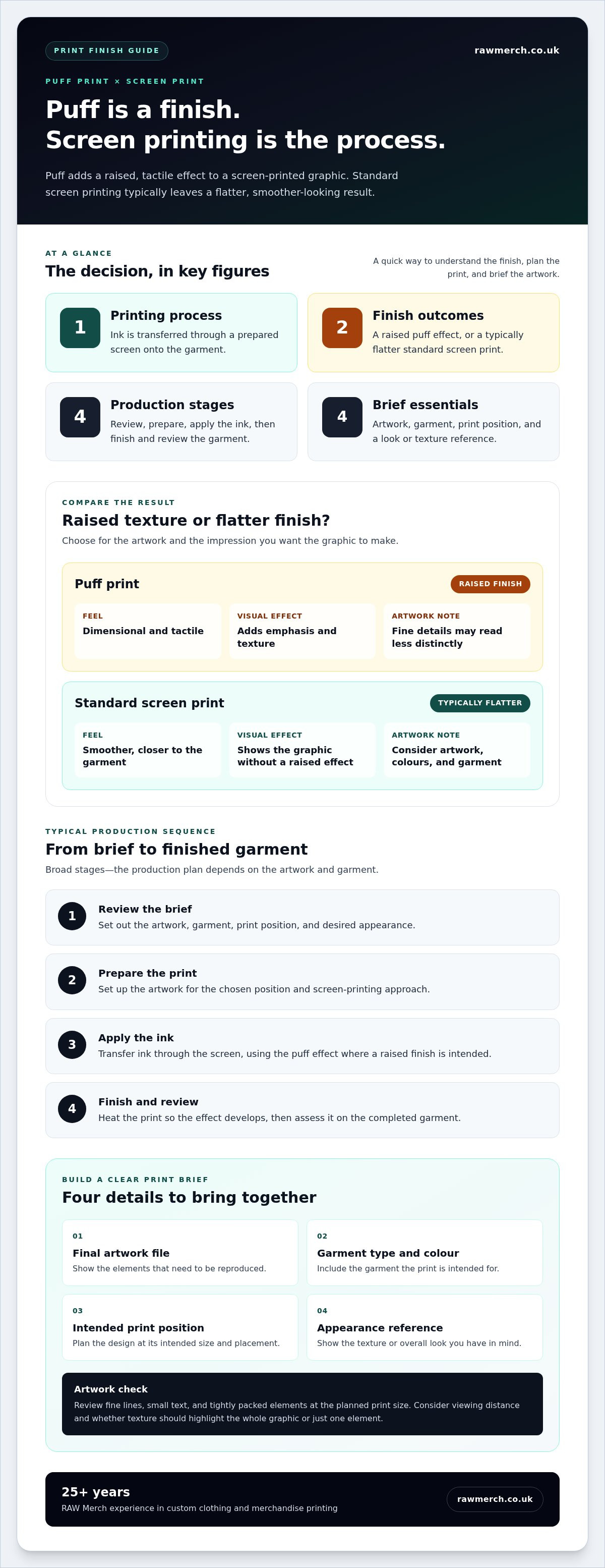
Puff print creates a raised finish; screen printing applies ink through a prepared screen onto a garment. The terms aren’t exact opposites. Puff is a specialised effect that can be produced using screen printing, while standard screen printing usually describes a flatter result.
Quotable definition: Screen printing is the process of transferring ink through a screen; puff print is a raised finish that can be created as part of that process.
What does puff print look and feel like?
A puff print has a dimensional surface that sits slightly proud of the fabric. You can see and feel the texture, which can give lettering or a logo more prominence than the garment’s surface. It adds a tactile quality as well as a distinct visual effect.
The result varies with the artwork, garment and production choices. A simple, bold mark may read differently from a fine or intricate graphic. Consider the design at its intended size and whether the added texture will support its overall look.
What does standard screen printing mean?
In screen printing, ink passes through open areas of a prepared screen and onto the garment. The screen is a mesh stencil that controls where the ink lands. For a broader overview of the process and its applications, see Screen printing.
Standard screen printing typically creates a flatter, smoother-looking result than a puff finish. The appearance can still vary with the artwork, ink and garment, so “flat” doesn’t mean every print has the same look or feel.
In the puff print vs screen print comparison, the key distinction is process versus finish. Puff describes the raised effect; screen printing describes how ink is applied. A puff effect can add texture to a screen-printed graphic, while a standard screen print generally keeps the surface more level.
| Consideration | Puff print | Standard screen print |
|---|---|---|
| Finish | Raised and textured | Typically flatter and smoother |
| Visual impact | Adds dimension and tactile emphasis | Shows the graphic without the raised effect |
| Design considerations | Texture may affect how fine details read | Consider the artwork, colours and garment for the desired result |
Use the table as a starting point, not as a promise of the same outcome on every garment. Choose a finish based on the artwork and the impression you want the printed graphic to make.
How Puff Screen Printing Works, and What the Artwork Needs
A raised print starts with a plan for how the artwork should look on the garment. Puff printing uses a screen-printing approach with an effect that expands during heating to create texture. Artwork, garment and print position all influence how clearly that texture reads, so plan them together rather than treating the artwork file as the only decision.
A typical production sequence looks like this:
- Review the brief. Set out the artwork, garment, print position and desired appearance.
- Prepare the print. Set up the artwork for the chosen position and screen-printing approach.
- Apply the ink. Transfer ink through the screen, using the puff effect where a raised finish is intended.
- Finish and review. Heat the print so the effect develops, then assess it as part of the completed garment.
These are broad stages, not a fixed specification for every job. Production planning depends on the artwork and garment, and RAW Merch tailors its planning to the needs of each project.
Which artwork details suit a raised print effect?
Bold shapes, clear lettering and open spacing can help a raised detail stand out, but they aren’t universal rules. Review fine lines, small text and tightly packed elements at the intended print size. As the raised effect develops, intricate details may not read as distinctly as they do in a flat digital file.
Consider viewing distance and placement, too. A small chest graphic and a larger back design have different visual roles. Check the artwork at its planned size, then decide whether texture should highlight the whole graphic or just one element.
How should you prepare artwork for a print brief?
Bring together the final artwork file, garment type and colour, intended print position, and a reference showing the texture or overall appearance you want. This gives the production team a clear picture of how the design should work on the finished item. If you’re unsure whether your file is suitable for print, RAW Merch’s guide to vector images for merch printing explains the format in straightforward terms.
For a puff print vs screen print brief, identify which parts should stand out and which details need to remain clear. Use a reference image to show the look you have in mind, and include the actual artwork so the elements to reproduce are clear. RAW Merch has more than 25 years of custom clothing and merchandise printing experience. For a custom clothing print brief, explore RAW Merch printing services.
Puff Print vs Screen Print: Compare the Look, Feel and Use
The practical difference is the impression the graphic makes on the garment. A raised puff detail adds texture and draws the eye; a flatter screen print keeps attention on the artwork itself. Neither is automatically the better choice. Match the finish to your design, garment and production requirements.
| Consideration | Puff print | Standard screen print |
|---|---|---|
| Texture | Raised and tactile, with the exact feel shaped by the design and production. | Typically flatter, so the graphic sits closer to the garment’s surface. |
| Visual impact | Adds dimension and can make chosen elements stand out. | Keeps the emphasis on the graphic’s colour, shape and composition. |
| Design fit | Can suit a prominent logo, lettering or selected graphic detail. | Can suit artwork where a smooth, flatter appearance is preferred. |
| Project considerations | Consider how the raised area works with the garment, placement and intended look. | Consider how the printed design works with the garment and overall brief. |
In short, puff print adds a raised, tactile dimension to selected artwork, while standard screen printing gives the garment a typically flatter printed finish.
Which finish suits bold graphics and statement merch?
A raised effect can give a bold logo, short phrase or selected part of a graphic more presence. For a band or creator releasing merch, that texture may suit a design intended to feel tactile and distinctive. It’s a style choice, not a guarantee of stronger sales or audience appeal.
If the artwork depends on a flatter appearance or works best without added texture, standard screen printing may be a closer match. Decide what should catch the eye first: the raised feel of a focal detail or the overall graphic as a smooth print.
How do garment and intended use affect the decision?
Choose the garment alongside the finish. The same artwork can look different on a T-shirt, hoodie or other apparel item because of the fabric, colour and shape. Print position matters too: a chest logo and a larger back graphic play different roles in the design.
Think about who’ll wear the item and where. A staff uniform, promotional garment and piece of creator merch may each call for a different balance of visibility and style. Include the garment, artwork and intended use in your brief so production planning reflects the full project, not just the puff print vs screen print choice.
How to Choose Between Puff Print and Screen Printing for Your Project
Start with what you want people to notice, then consider how the artwork and garment can deliver it. Use this checklist to turn the puff print vs screen print decision into a practical brief:
- Texture: Should the graphic feel raised and tactile, or sit flatter against the garment?
- Graphic style: Is there a clear element that would benefit from extra emphasis, or should the full design read as one smooth print?
- Garment: What item, fabric and colour will carry the design?
- Placement and use: Where will the print sit, who will wear it, and how should it look in that context?
These points work together. A finish that suits a logo on one garment may not create the same impression on a larger graphic or a different item. Build the brief around the artwork, garment and intended use rather than choosing by technique name alone. Include the final artwork, print position and a visual reference to make the desired result clear.
Choose puff print when texture is central to the design
Choose a raised effect if texture is part of the idea, not simply an extra feature. It can bring a selected logo, word or bold graphic element forward on band merch, creator apparel or a branded garment. Ask whether the artwork has a clear focal point that can carry the emphasis. Then consider how the raised look fits the garment and wider brand style.
If texture competes with the design or feels out of step with the identity you want to convey, it may not be the right direction. The aim is a deliberate finish, not texture for its own sake.
Choose a flatter screen-print result when clarity leads
A flatter screen-printed appearance may better suit artwork that depends on an even, smooth presentation across several graphic elements. Consider how the design balances on the garment and whether added texture would draw attention away from the overall composition. Standard screen printing is not automatically better for detail or larger projects. The artwork and production requirements still matter.
RAW Merch brings more than 25 years of experience in custom clothing and merchandise printing, including screen printing for band, business and promotional projects. Explore custom clothing printing and shape your brief around the look you want to achieve.
From Print Choice to Finished Merch with RAW Merch
Choose the look first, then align the production method and finish with your artwork and garment. In the puff print vs screen print decision, you’re choosing between a raised effect and a typically flatter result, while remembering that puff can be produced as a screen-print effect. A clear brief helps turn that creative choice into custom apparel that fits your project.
What to include in a custom apparel brief
Give the production team the details that shape the finished item. Include:
- The garment type and colour
- The final artwork and intended print position
- The intended quantity and desired finish
- The project context, such as a band release, business clothing or promotion
- Visual references that show the look and texture you have in mind
These details connect the artwork to its real use. A band release, for example, may need merchandise that works as part of a wider launch, while business clothing may need to align with an established brand identity. If you’re planning a music release, RAW Merch’s guide to creating and selling band merchandise offers more context for the project.
How RAW Merch supports custom clothing projects
RAW Merch brings more than 25 years of experience in custom clothing and merchandise printing. Its screen-printing service supports projects for bands, businesses and promotions, with production planning tailored to the artwork, garment and intended finish. RAW Merch also offers DTF and sublimation as other printing methods. These are part of the wider production mix, not alternative names for a puff-print finish.
For merchandise projects that need to reach customers or supporters, fulfilment and distribution can form part of the wider plan. Considering production and distribution together helps you brief the project as a complete merch run, rather than treating the print choice in isolation.
Ready to turn your artwork and finish choice into custom merchandise? Discuss your custom merch project with RAW Merch.
Turn Your Print Choice into Merch That Fits
The key to puff print vs screen print is choosing the look before settling on the production approach. Puff adds a raised, tactile effect; a standard screen print typically gives a flatter result. Let the artwork, garment and intended use guide the decision, and include those details in your project brief.
RAW Merch brings more than 25 years of experience in custom apparel printing for bands, businesses and promotional projects. Its printing capabilities include screen printing, DTF and sublimation. For merchandise projects, fulfilment and distribution support can help connect production with getting your merch to its audience.
Whether you’re planning band merchandise, branded clothing or a promotion, a clear brief gives your project a strong starting point. Discuss your custom merch project with RAW Merch and take the next step towards apparel that reflects your vision.
Frequently Asked Questions
Is puff print the same as screen printing?
Not exactly. Screen printing is a method for applying ink through a screen, while puff print describes a raised finish. Puff can be created as a screen-print effect, so the terms aren’t always alternatives. When comparing options, distinguish between a raised effect and a flatter screen-printed result. This helps you describe the look you want and brief your custom clothing project clearly.
Can puff print be screen printed?
Yes. Puff print can be produced as a raised screen-print effect. Screen printing describes how ink is applied, while puff describes the intended surface finish. The final appearance depends on the artwork and production requirements. In your brief, identify where you want texture and share the artwork at its intended size. This gives the production team useful context for planning the print around the design and garment.
Which is better, puff print or screen print?
Neither is universally better. In the puff print vs screen print choice, consider a raised finish when texture is central to the design. A flatter screen-printed result may fit better when a smoother appearance is the priority. Compare the graphic style, garment and intended use before deciding. Ask whether a raised detail should draw focus or whether the full design should read as a flatter, unified print.
Does puff print last as long as screen printing?
There isn’t one lifespan that applies to every puff print or screen print. How a print performs can depend on production, garment, care and how often the item is worn. Don’t assume that one finish will always outlast the other. Consider how the garment will be used alongside the look and texture you want, and follow the care guidance provided for the finished item.
Can you use puff print on any design?
Not every design will read equally clearly with a raised effect. Scale, spacing, detail and placement can all influence the result. Fine elements need particular attention at the intended print size, while a clear focal point can help the texture feel deliberate. Share your artwork and garment, then explain which parts you want to emphasise so the design can be considered in context.
Is puff print suitable for band merchandise?
Yes, it can suit band merchandise when raised texture supports the band’s visual identity. The finish is one design decision, not a guarantee that an item will appeal more to fans. Consider how it works with the artwork, garment and wider merch range. A visual reference can help communicate the intended effect, especially if you want texture on a particular word, logo or graphic element.
What should I send when requesting custom printed clothing?
Prepare the final artwork, garment type and colour, intended print position and project quantity. Include a reference that shows the finish you want, particularly if texture matters. It also helps to explain how the clothing will be used, such as for a band release, team clothing or a promotion. With these details in one brief, the production discussion can focus on matching the design and garment to your intended result.