
Most custom t-shirts end up as rags after just ten washes because the print cracks and peels. You shouldn't have to settle for low-quality merch that fails your brand and disappears in the laundry. If you're investing in custom gear, you need a long-lasting print on clothing that stands up to the real world. You want your team or customers to wear your logo with pride; they shouldn't have to hide it because the colors turned dull. We agree that a wasted budget on poor printing is a mistake you cannot afford to make.
Discover the most durable printing techniques for 2026 to ensure your custom merch stays vibrant for years. With new EU Ecodesign regulations setting mandatory benchmarks for textile durability this year, choosing the right method is more critical than ever. We'll show you how to achieve results that look brand new after 50 washes. This guide provides a clear understanding of modern print technology and professional curing secrets. Get the confidence you need for your next bulk order of custom hoodies, headwear, or uniforms. We are breaking down everything from the legendary resilience of screen printing to the high-performance versatility of Direct-to-Film (DTF) technology.
Key Takeaways
- Learn why deep ink penetration is the secret to a long-lasting print on clothing and which modern methods bond best with fabric fibers.
- Identify the specific strengths of Screen Printing for high-volume workwear compared to the versatility of DTF for complex, colorful designs.
- Discover why fabric weight and material composition are just as important as the ink itself for long-term print stability.
- Master the essential aftercare rules, including the inside-out technique and optimal wash temperatures, to preserve your custom merch.
- Understand how industrial-grade curing and precision registration provide a level of durability that DIY alternatives cannot match.
What Makes a Long-Lasting Print on Clothing?
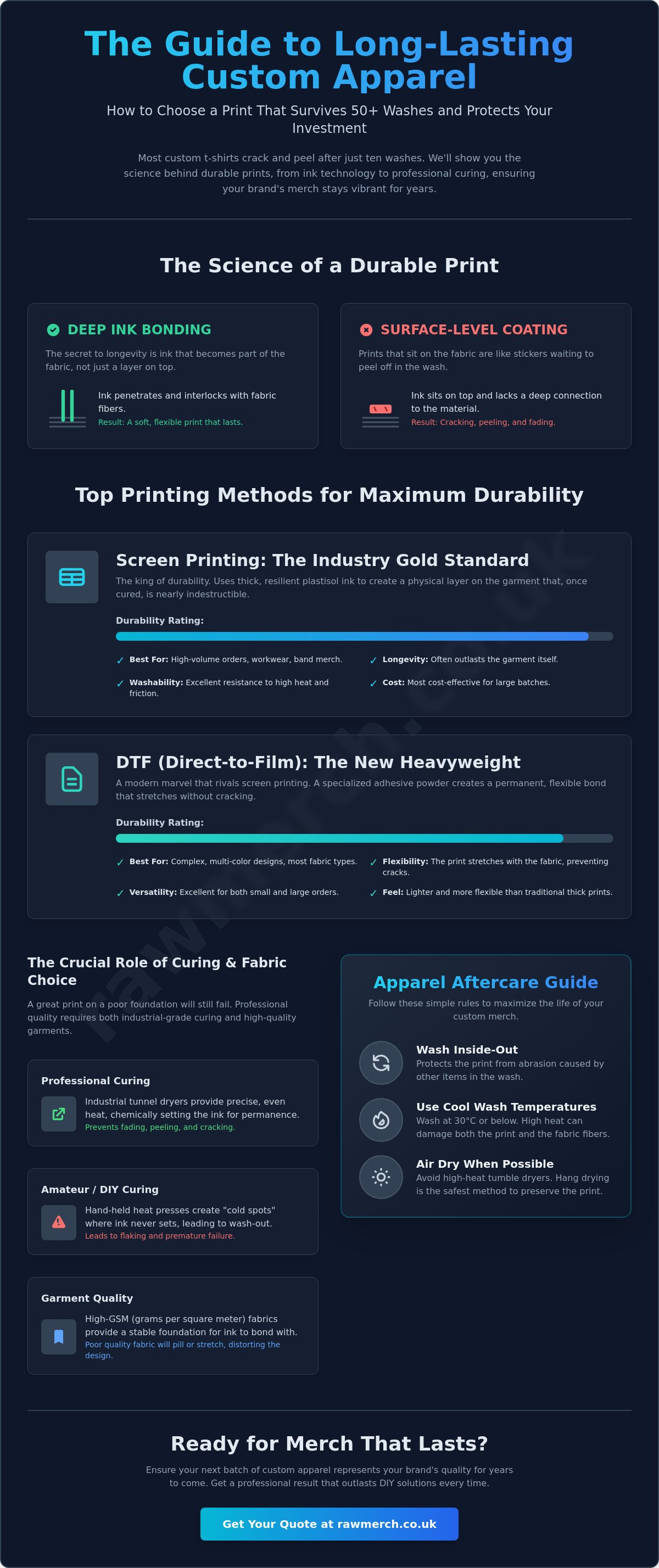
Longevity in the world of custom merch isn't a mystery. It is a science. A high-quality finish must resist cracking, peeling, and fading throughout its entire lifecycle. If a print fails after the first wash, the printing method wasn't the only problem. The failure usually lies in the chemistry between the ink and the fabric. Achieving a long-lasting print on clothing requires a perfect balance of ink penetration, garment quality, and industrial-grade curing. We don't just put ink on a shirt; we engineer a product that survives the daily grind.
Ink Bonding vs. Surface Coating
The type of ink you choose determines how the design survives the friction of a washing machine. Plastisol ink is a plastic-based medium that traditionally sits on top of the fabric. It is incredibly durable but prone to cracking if applied too thick or cured poorly. Water-based inks work differently by soaking into the fibers, creating a softer feel that lasts as long as the garment itself. Film-based inks used in modern DTF (Direct-to-Film) processes create a flexible, thin layer that stretches without snapping.
Surface-level prints often fail because they lack a deep connection to the material. To understand how these techniques have evolved to meet modern standards, you can explore the history and methods of textile printing to see how bonding has improved over centuries. In modern production, we aim for a mechanical bond. This is defined as the physical interlocking of ink particles within the gaps and pores of the fabric fibers. Without this bond, the print is just a sticker waiting to fall off after a few cycles in the dryer.
The Crucial Role of Professional Curing
Heat is the catalyst for permanence. Curing is the process of using controlled temperature and pressure to chemically set the ink into the fabric. Amateur setups often use hand-held heat presses that provide uneven heat distribution. This leads to "cold spots" where the ink never fully sets, causing it to wash out or flake during the first laundry cycle.
We use industrial tunnel dryers to ensure every square inch of your design receives the exact temperature required for a long-lasting print on clothing. These machines move garments through a heated chamber at a precise speed. Our 25 years of industry experience has taught us that even a five-degree deviation can ruin a batch. Professional curing prevents several common issues:
- Fading during high-temperature washes.
- Peeling at the edges of complex designs.
- Ink migration on polyester or synthetic blends.
- Cracking when the fabric is stretched.
Durability isn't just about the print. If the garment's structural integrity is poor, the fabric will pill or stretch, distorting the design regardless of the ink quality. We prioritize high-GSM (grams per square meter) fabrics because they provide a stable foundation for the ink to grab onto. When you combine a premium garment with professional-grade curing, the result is merch that looks as good on wash fifty as it did on day one.
Top Printing Methods for Maximum Durability
Not all printing methods are created equal. Choosing the wrong technique for your project leads to cracked logos and wasted budgets. In 2026, clients demand more than just a good-looking shirt. They want a long-lasting print on clothing that survives the daily grind. We have tested every method in the industry to find the true winners for resilience and vibrance. Whether you are ordering heavy-duty workwear or high-end retail merch, the method you choose determines how long your brand stays visible.
Screen Printing: The Industry Gold Standard
Screen printing remains the king of durability for a reason. It uses thick plastisol ink that creates a physical layer on the garment. Once this ink is professionally cured, it is nearly impossible to remove without destroying the fabric. This resilience makes it the primary choice for heavy-duty workwear and high-quality band merchandise. In most cases, a screen-printed design will outlast the garment itself. It handles high-temperature washes and heavy friction without losing its edge. If you are placing a high-volume order, this is the most cost-effective way to ensure your design stays sharp for years.
DTF (Direct to Film): The New Heavyweight
Many competitors still overlook DTF as a serious durability contender. They are making a mistake. Direct to Film technology has evolved rapidly to rival the longevity of screen printing. This method uses a specialized adhesive powder that creates a permanent, flexible bond with most textiles. The biggest advantage of DTF is its incredible stretchability. The print moves with the fabric instead of snapping or cracking under tension. We frequently recommend DTF for complex, high-detail designs that need a long-lasting print on clothing. It provides a smooth finish that feels integrated into the shirt, making it perfect for custom hoodies and modern uniforms.
Sublimation: Zero-Feel Longevity
Sublimation is the only method that offers "immortal" print life. The science involves a gas-to-solid ink transfer that happens at a molecular level. Instead of sitting on the surface, the ink bonds directly with polyester fibers. This means the print can never crack, peel, or fade away. It is physically impossible. This technique is the best choice for performance sportswear and high-poly blends. The only limitation is the fabric; sublimation requires at least 65% synthetic content to work effectively. If your project involves technical gear, this is the ultimate solution for zero-feel longevity.
Direct to Garment (DTG): Detail Over Durability?
DTG is the best option for photorealistic detail and small batches. It works like an inkjet printer for clothes, spraying water-based ink directly into the cotton fibers. While it produces stunning visuals, it requires more care than screen printing. Academic research on fabric and print longevity confirms that the specific type of fabric used significantly impacts how well DTG ink stays vibrant after multiple washes. It is a fantastic choice for 100% cotton garments, but you must follow strict aftercare instructions to maintain the original color depth.
Are you ready to build merch that lasts? Explore our full range of clothing printing services to find the perfect match for your next project.
Choosing the Right Garment for Print Longevity
The best ink in the world cannot save a low-quality shirt. If the fabric fails, your design fails with it. You need a stable foundation to achieve a long-lasting print on clothing. Different materials react uniquely to heat, pressure, and ink chemistry. We help you match the right textile to your specific creative vision. Choosing the wrong base leads to pilling, shrinking, and distorted graphics that ruin your investment. Durability is a partnership between the machine and the material.
Natural Fibres vs. Synthetic Blends
Cotton is the traditional king of comfort, but it is not a universal solution. Its high absorbency makes it a perfect canvas for screen printing and DTG. We specifically recommend ring-spun cotton for high-end merch. This material goes through a thinning process that removes impurities and creates a smoother, tighter weave. This surface allows for better ink adhesion and a sharper finish. When the surface is flat, the ink bonds more evenly across the design.
For those moving into performance gear or sportswear, polyester is the only way forward. The Clemson University research on sublimation printing highlights how synthetic fibres allow ink to move from a solid to a gas state for permanent molecular bonding. Without high-poly content, you lose that "immortal" print quality. If you want a balance of soft feel and high durability, 50/50 poly-cotton blends are a smart choice. They resist shrinking while holding onto a long-lasting print on clothing through dozens of industrial wash cycles.
Fabric Weight and Surface Texture
GSM stands for Grams per Square Metre. It is the most reliable indicator of fabric thickness and durability. Lightweight shirts might feel nice in summer, but they offer less stability for heavy ink deposits. We suggest choosing heavyweight garments (180+ GSM) for workwear or bold, multi-colour graphics. Thicker fabric resists the stretching and warping that causes prints to crack over time. A heavy base keeps the design stable and aligned.
Watch out for pill-prone fabrics. When cheap fibres break and form small balls on the surface, they literally lift the print off the shirt. This ruins the crisp edges of your logo and makes the merch look aged. Whether you are looking for fleece, hoodies, or standard tees, picking the right base is essential. You can browse our custom t-shirt range to find products specifically selected for their print-ready surface. Hoodies and fleece require extra attention because of their deep textures. We adjust our curing times and pressure settings to ensure the ink reaches deep into the pile for a permanent finish.
- 100% Cotton: Best for breathability and standard screen prints.
- Polyester: Essential for sublimation and moisture-wicking gear.
- Tri-Blends: Great for a vintage look but requires specialized ink handling.
- Heavyweight Fleece: Ideal for high-durability hoodies and winter uniforms.
The RAW Merch Guide to Apparel Aftercare
You have invested in high-quality gear. You have selected the right fabric and the perfect printing method. Now, you must protect that investment. Even the most durable long-lasting print on clothing can be destroyed by poor laundry habits. We have seen vibrant designs turn into cracked messes because of simple mistakes in the laundry room. Proper aftercare is not just a suggestion; it is the final stage of the production process. If you want your merch to survive fifty washes and still look retail-ready, you must follow these professional guidelines.
The Golden Rules of Washing
The first rule is non-negotiable: always turn your garments inside out before they hit the machine. This simple action creates a physical barrier between your design and the rest of the load. Friction is a silent killer for custom prints. When zippers, buttons, and rough fabrics rub against your logo at high speeds, they cause micro-abrasions that eventually lead to peeling. By washing inside out, you ensure the fabric takes the hit instead of the ink.
Heat is the second major threat. While industrial curing uses high temperatures to set the ink, household heat works differently. Constant exposure to hot water softens the bond between the ink and the fibers. We recommend 30 degrees as the absolute sweet spot for all custom apparel. It is warm enough to clean the garment but cool enough to keep the mechanical bond intact. Use mild detergents and avoid anything containing bleach or harsh biological enzymes. These chemicals are designed to break down organic matter; unfortunately, they can also break down the pigments in your design. Skip the fabric softeners too. They often contain silicone which can coat the fibers and cause certain inks to lose their grip over time.
Drying and Ironing Dos and Don'ts
Tumble dryers are the enemy of longevity. The intense, dry heat inside a dryer causes the fabric to shrink and expand rapidly. This movement puts immense stress on the print, leading to the dreaded "heat-cracking" effect. Air drying is the only way to guarantee a long-lasting print on clothing. Hang your shirts in a shaded area; direct sunlight can bleach the colors just as fast as a bottle of chemicals. If you must use a dryer, use the lowest possible heat setting and remove the garment while it is still slightly damp.
Ironing requires extreme caution. Never let a hot iron touch the printed area directly. Doing so will likely melt the ink or cause it to smear across the fabric. If the garment is wrinkled, iron it on the reverse side using a cool setting. For storage, we recommend folding your custom hoodies and heavy t-shirts. Hanging them for long periods can cause the fabric to stretch under its own weight, which distorts the design over time. Following these steps ensures your team looks sharp every single day.
Ready to start your next project with a team that understands quality? Order your professional clothing printing from the experts who care about the details.
Why Professional Printing Outlasts DIY Solutions
DIY kits and craft store transfers are fine for a quick hobby project. They are not suitable for building a brand. A true long-lasting print on clothing depends on industrial chemistry and mechanical force that household tools simply cannot replicate. Price is often the first thing people look at, but a cheap print that peels after three washes is actually more expensive than a professional one that lasts for years. We focus on results that endure the rigors of modern life while maintaining their original impact. Hobbyist equipment cannot reach the consistent temperatures or pressures required to create a permanent, industrial bond.
Commercial Grade Equipment and Inks
Our MHM screen presses and specialized DTF systems represent the peak of modern printing technology. These machines don't just "press" ink; they drive it into the fabric with surgical precision. Consistent pressure and heat are the only ways to ensure every item in a thousand-unit bulk order remains identical. We use eco-friendly, high-pigment inks that offer superior vibrance without the toxic chemicals found in cheaper alternatives. These professional inks are formulated to resist the micro-abrasions we discussed in our aftercare guide. While craft store inks sit loosely on the surface, our systems ensure the ink becomes part of the garment's DNA.
25 Years of Technical Expertise
Experience is our greatest tool in the production room. We've spent over two decades printing for everyone from local startups to international touring bands. This tenure has given us a no-nonsense understanding of material science. Our team knows exactly which ink to pair with which fabric to prevent migration, bleeding, and cracking. We don't guess; we execute based on twenty-five years of hard-earned data. This expertise ensures your staff and fans receive merch they will actually wear for years. We prioritize execution and scheduling so your project is delivered on time and built to last.
Longevity actually starts before the ink even touches the screen. It begins with your artwork. A sharp, long-lasting print on clothing requires high-resolution source files to ensure every edge is crisp. We always recommend using vector image files to avoid the blurred lines and pixelation that lead to poor ink adhesion. Professional registration ensures that multi-color designs don't shift or overlap incorrectly during the production run. Trusting a seasoned expert means your creative vision is protected by industrial quality control at every stage. We deliver results that stand up to the wash, the sun, and the street.
BUILD MERCH THAT STANDS THE TEST OF TIME
Quality isn't accidental. It's the result of technical precision and the right material choices. You now know that achieving a long-lasting print on clothing requires a perfect match between ink chemistry and fabric weight. Whether you choose the legendary durability of screen printing or the flexible resilience of modern DTF, your decisions today determine how your brand looks in two years. Don't let your creative vision fade away in the first wash cycle. Professional equipment and industrial-grade curing are the only ways to guarantee a retail-ready finish that lasts.
We are here to ensure your investment pays off. Our team brings 25+ years of industry experience to every order. We are the durable DTF and screen printing specialists trusted by UK bands and businesses to deliver results that endure. Trust our seasoned, no-nonsense experts to handle your next project with the expertise it deserves. It's time to create apparel that your team and fans will wear with pride for years to come.
Get a quote for long-lasting custom merch from the experts at RAW Merch
Let's build something exceptional together. Your brand deserves a finish that lasts as long as your ambition.
Frequently Asked Questions
Which t-shirt printing method lasts the longest?
Sublimation printing creates the most permanent bond because the ink actually becomes part of the polyester fibers. It cannot crack or peel because there is no surface layer. For cotton garments, screen printing remains the most reliable choice for high-volume durability. Professional curing ensures these methods provide a long-lasting print on clothing that survives years of heavy use and industrial washing cycles.
Will my custom print crack after washing?
Your print will not crack if it has been professionally cured using industrial-grade tunnel dryers. Cracking usually occurs when the ink hasn't reached the correct temperature to set fully during production. We use precision temperature control to ensure every batch is stable and flexible. Avoid cheap heat transfers and always wash your garments inside out to minimize the physical stress that leads to surface damage.
How many washes do custom printed t-shirts last?
High-quality screen prints and DTF transfers typically last for 50 or more washes without significant degradation. Sublimation prints on polyester are designed to last for the entire life of the garment. The exact lifespan depends on your aftercare habits. Using cool wash settings and avoiding the tumble dryer will significantly extend the life of your custom merch and keep the colors looking sharp.
Is screen printing more durable than DTF?
Screen printing and modern DTF are now very comparable in terms of durability. Screen printing uses a thicker ink layer that is excellent for simple, high-contrast designs on workwear. DTF offers superior stretchability, which prevents cracking on flexible fabrics and high-detail graphics. Both methods provide a long-lasting print on clothing when applied with commercial-grade adhesive and professional heat systems. The best choice depends on your specific design.
Can I tumble dry printed clothing?
You should avoid tumble drying any printed apparel if you want it to last. The high, dry heat in a machine causes fibers to shrink and expand rapidly, which puts immense pressure on the ink bond. This is the primary cause of premature peeling and cracking. Always air dry your custom hoodies and t-shirts in a shaded area to maintain the print's integrity and prevent heat damage.
What is the best fabric for long-lasting prints?
Heavyweight garments with a high GSM of 180 or more provide the most stable base for any printing method. Ring-spun cotton offers a smooth surface that allows ink to adhere more effectively than standard open-end cotton. For the ultimate in longevity, high-poly blends are best for sublimation techniques. Choosing a stable, high-quality fabric prevents the pilling that can eventually lift the print away from the shirt.
How do I stop my printed shirt from fading?
Prevent fading by washing your garments inside out at 30 degrees or lower. Use mild detergents and skip the bleach or harsh enzymes that strip color from the ink pigments. Direct sunlight is also a major cause of fading, so hang your clothes to dry in a cool, shaded spot. Following these professional aftercare steps ensures your custom uniforms and promotional items stay vibrant for as long as possible.
Do professional prints last longer than DIY heat transfers?
Professional prints far outlast DIY heat transfers because of the industrial-grade equipment used in the process. We use specialized MHM screen presses and high-pressure curing systems that hobbyist kits cannot match. Commercial inks are formulated for deep fiber penetration and a permanent mechanical bond. DIY solutions often sit loosely on the surface and typically begin to fail or peel after just a few laundry cycles.