

A cracked print isn't just a laundry mishap; it's a failure of the curing process and fabric selection. You've likely felt the frustration of watching a fresh batch of custom t-shirts or uniforms lose their edge after just a few cycles. It's a waste of your budget and a massive headache when customers or fans start to complain about poor quality. This guide shows you exactly how to prevent prints from cracking by using professional-grade techniques and the latest 2026 industry standards.
We agree that quality should never be a guessing game. You deserve merch that looks as sharp on the fiftieth wash as it did on the first. We'll share the professional secrets to achieving maximum durability, from the technical requirements of Direct-to-Film (DTF) transfers to the science of ink bonding. Whether you are inspired by the bold statement pieces of Warklar or need durable workwear, you'll learn the specific questions to ask your printing partner and get a clear checklist for maintaining your clothing properly. Let's dive into the expert methods that keep your designs bonded, flexible, and flawless for the long haul.
Key Takeaways
- Understand how fabric choice dictates ink performance and why 100% cotton remains the gold standard for maximum adhesion.
- Learn how to prevent prints from cracking by selecting printing partners who use specialised ink additives and precise curing temperatures.
- Master pro-grade laundry habits that preserve your merch, including the shift toward cold water cycles and air-drying techniques.
- Discover why 25+ years of industry experience matters when balancing ink elasticity with fabric stretch to ensure your designs never peel.
- Gain a clear checklist for your next order of custom t-shirts or uniforms to guarantee professional, long-lasting results.
The Science of Stress: Why T-Shirt Prints Crack and Peel
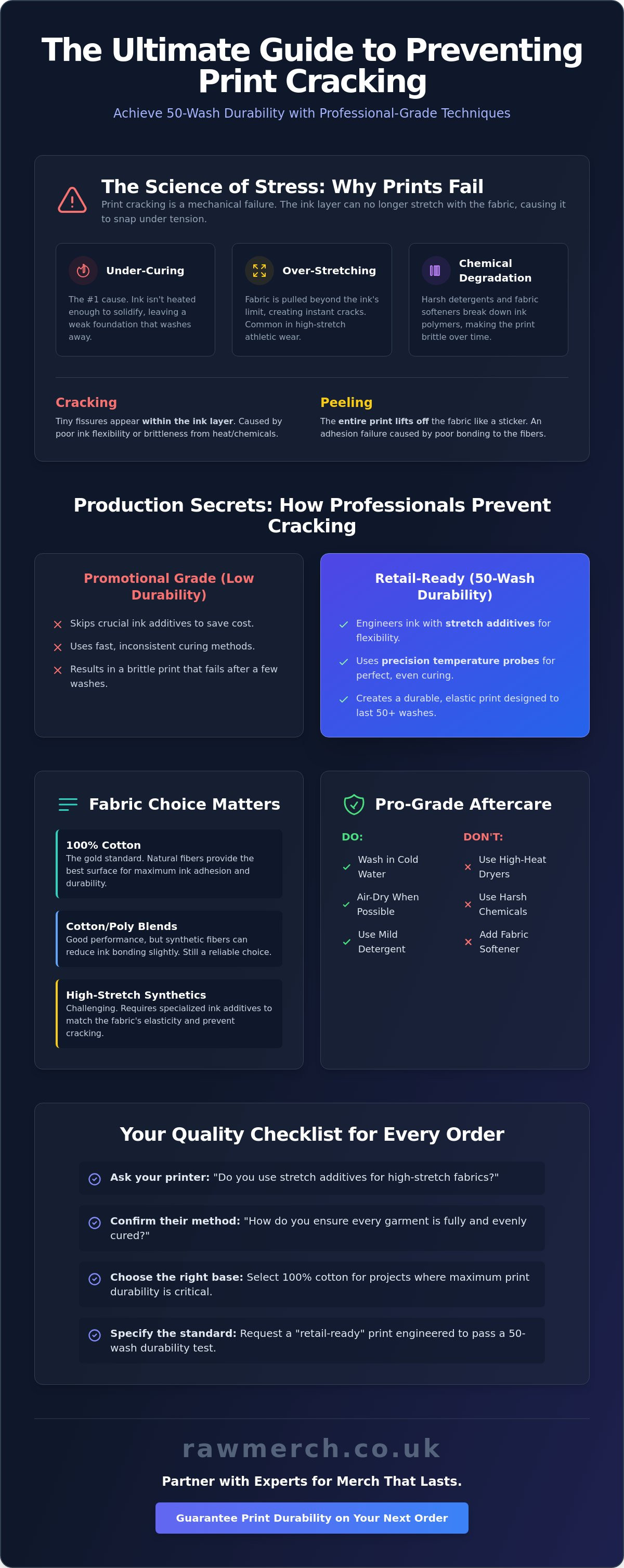
Print cracking is the mechanical failure of the ink layer. It happens when the ink can no longer move in sync with the fabric. When you stretch a t-shirt, the fibres expand. If the ink is too brittle or hasn't bonded correctly, it snaps under the tension. Understanding this physical stress is the first step in learning how to prevent prints from cracking. High-quality screen printing relies on a perfect balance between ink elasticity and the natural stretch of the garment.
We identify three primary culprits behind this failure, known as the "Big Three" of print degradation:
- Under-curing: This is the most common cause of failure. The ink never reached the required temperature to turn into a solid film, leaving the base unstable and "wet" at its core.
- Over-stretching: Pulling the fabric beyond the ink's physical limit creates immediate fissures. This is often seen in tight-fitting rib-knit garments or high-stretch athletic wear.
- Chemical degradation: Harsh laundry chemicals break down the polymer chains within the ink. Over time, this makes the print brittle and prone to snapping during normal wear.
It's vital to distinguish between cracking and peeling. Cracking occurs within the ink layer itself, showing up as tiny fissures across the design. Peeling is a bonding failure where the entire print lifts off the fabric like a sticker. Both ruin your merch, but they stem from different production errors. Cracking is usually a result of poor flexibility, while peeling indicates a failure in the initial adhesion to the garment fibres.
The Role of Curing in Print Longevity
Plastisol and water-based inks don't just air dry; they require specific, consistent temperatures to set. If the dryer temperature is too low or the belt speed is too fast, the core of the ink layer remains uncured. While the surface might feel dry to the touch, the foundation is weak and will wash away. Curing is the chemical transformation of ink into a solid plastic film. Without this total transformation, the print will inevitably fail during its first encounter with a washing machine. We use precision temperature probes to ensure every batch of clothing printing meets these strict requirements.
Environmental Stressors: Heat and Friction
Your laundry room is often where the most damage happens. High-heat tumble dryers are the primary enemy of print longevity. Extreme heat causes cured ink to become brittle and lose its essential flexibility. Once the ink is brittle, any movement causes it to snap. Mechanical agitation in heavy-duty washing cycles adds further physical stress, literally pulling the print apart. Modern detergents are designed to be aggressive. If you use harsh chemicals or fabric softeners, you're essentially bathing your design in solvents that weaken the ink's structure. Stick to cold cycles and mild detergents to protect your custom T-shirts and hoodies.
Production Secrets: How High-Quality Printing Prevents Cracking
Your choice of printing partner is the single most important factor in how to prevent prints from cracking. Professional shops don't just "hit print." They engineer the ink for the specific garment. While many people blame the washing machine, most cracking issues start on the production floor. High-quality results depend on using the right "ink additives" for high-stretch garments. Reducers and stretch bases are mixed into the ink to increase its elasticity, allowing the design to expand and contract without snapping. Cheap, "promotional grade" prints often skip these additives to save on costs, resulting in a brittle layer that fails after two washes.
Professional flash-curing units are another essential tool. These units ensure an even set across the entire design, eliminating "cold spots" where the ink might remain under-cured. If one part of the design isn't fully cured, it will crack while the rest remains intact. We distinguish between "retail-ready" prints, designed to pass a 50-wash durability test, and budget-grade options. If you want your brand to be seen as premium, you need a partner who understands the chemistry behind the curing process. If you are planning a project that requires maximum longevity, our team provides expert clothing printing advice to ensure your merch stays intact.
Screen Printing vs. DTF: Which Lasts Longer?
Screen printing remains the industry standard for thick, durable plastisol layers. It creates a physical bond that is incredibly hard to break. However, modern Direct to Film (DTF) technology has closed the gap. The latest 2026 DTF methods use TPU (Thermal Plastic Polyurethane) adhesive powders that offer superior flexibility compared to old-fashioned transfers. Professionals use a "stretch test" to verify integrity; if the print returns to its original shape without fissures after being pulled, the bond is successful. While production is the foundation, following a trusted resource like Consumer Reports' guide to washing clothes will help maintain that factory-fresh finish.
The Importance of Ink Thickness and Mesh Counts
The technical configuration of the screen is vital. Lower mesh counts allow for a heavier ink deposit, which is often necessary for durability on heavy fabrics like hoodies. A thicker ink deposit provides more structural integrity against fabric expansion. This is especially true when applying a "White Underbase" on dark garments. This base layer acts as a flexible foundation, preventing the top colours from sinking into the fibres or cracking as the shirt moves. Without a solid underbase, the top layers of ink are far more likely to fail under mechanical stress.
Fabric Matters: Selecting the Right Base for Long-Lasting Prints
Choosing the right garment is just as critical as the printing method itself. If you want to know how to prevent prints from cracking, start by looking at the fabric composition. 100% cotton is the industry gold standard for ink adhesion. Natural cotton fibres are porous and absorbent, allowing the ink to sink deep into the material to create a permanent bond. In contrast, high-elastane or spandex blends are notoriously difficult. These synthetic fabrics are designed to stretch significantly, often far beyond the physical limits of standard ink. When the fabric expands but the ink cannot keep up, you get immediate, visible cracking. Always check the garment label before you commit to a large order of custom t-shirts or hoodies.
Ring-spun cotton offers a much smoother, more stable surface than cheaper open-end cotton alternatives. The tighter weave reduces the "fuzz" on the shirt surface, which means the ink sits on a flat, consistent foundation rather than on loose fibres that might pull away. Weight also plays a massive role in longevity. A higher GSM (grams per square metre) indicates a heavier, denser fabric. Heavier garments provide more structural stability, meaning the print is less likely to distort or snap during daily wear. We always recommend a higher GSM for workwear or uniforms that need to survive repeated use.
Cotton vs. Polyester: The Bonding Battle
Polyester is essentially a synthetic plastic. It doesn't absorb ink like cotton does, which makes the bonding process much more fragile. Polyester also suffers from "dye migration," where the fabric's own colour bleeds into your design, causing it to look faded or muddy. To keep prints looking fresh on polyester, we use specialised bleed blockers and low-temperature curing. However, natural fibres will always hold onto ink longer because of their superior absorption. If durability is your top priority, stick with natural cotton or high-cotton blends.
Tension and Torque: How Fit Affects the Print
Fit is a hidden factor in print failure that many people overlook. Slim-fit shirts are under constant tension when worn, especially across the chest. This constant mechanical stress is a primary cause of premature cracking. Heavyweight, oversized tees are much more forgiving because they don't pull at the ink layer as much. You should also consider the construction of the shirt. Tubular shirts lack side-seams and can sometimes twist, leading to design distortion. For touring bands, choosing the right blank is essential for keeping fans happy with their purchase. Check our guide on band merchandise to see how we select tour-ready garments that last.
The Pro-Grade Aftercare Guide: Washing Your Merch for Longevity
Production and fabric selection provide the foundation, but the daily life of the garment determines its ultimate lifespan. Mastering how to prevent prints from cracking requires a shift in laundry habits. Most people treat their custom hoodies like old rags, but high-quality prints need respect. If you're a business owner or a band manager, educating your customers on aftercare is the best way to protect your brand's reputation. Modern laundry detergents are engineered to work perfectly in cold water, so there's no excuse for using high heat. Hot water acts as a solvent; it softens the ink and makes it brittle once it cools down and dries.
The tumble dryer is the undisputed #1 killer of printed apparel. The combination of intense heat and mechanical tumbling causes the ink to lose its plasticiser, leading to immediate fissures. We call the "Air Dry Only" rule the golden mandate of merch. If you have stubborn stains, avoid scrubbing the graphic itself. Use a pre-treatment on the fabric around the print, but keep harsh chemicals away from the design. This proactive approach ensures the bond between the ink and the cotton remains intact for years rather than weeks.
The 5-Step Wash Routine for Printed Apparel
This routine is the most effective way to understand how to prevent prints from cracking over the long term. Follow these steps for every wash:
- Step 1: Turn the garment inside out. This simple move protects the graphic from friction against other clothes or the washing machine drum.
- Step 2: Use cold water. Stick to 30°C or lower to prevent the ink from becoming brittle.
- Step 3: Choose a gentle cycle. A low spin speed reduces the physical stretching of the fabric fibres.
- Step 4: Avoid fabric softeners. These chemicals can break down the bond between the ink and the fabric, leading to peeling.
- Step 5: Hang dry. Keep the garment away from direct sunlight, which can fade the ink and weaken the fibres.
Ironing and Storage Tips
Never touch a hot iron directly to a print. The heat will melt the ink instantly. If you must remove creases, iron the garment inside out or place a piece of parchment paper over the design as a protective barrier. Storage also matters. Folding a shirt directly across a high-density print creates a permanent stress point that will eventually snap. It's better to fold around the design or hang the garments in a cool, dry place. Avoid storing your stock in hot attics or damp basements, as extreme temperature fluctuations ruin ink stability. Ready to upgrade your gear? View our full range of custom T-shirts & hoodies and start your next project today.
Partnering with Experts: How RAW Merch Guarantees Print Durability
At RAW Merch, we've spent over 25 years perfecting the art of the perfect print. We know that knowing how to prevent prints from cracking is about more than just following washing instructions. It's about a rigorous production process that starts long before the first drop of ink hits the fabric. Our team performs constant quality control checks and precise curing temperature tests on every single run. We don't guess; we measure. This ensures that every garment leaving our facility meets the highest durability standards in the UK market. We take pride in our reputation as a reliable partner for brands that demand longevity.
We use premium inks specifically formulated for maximum elasticity. This balance allows for vibrant, punchy colours that don't snap when the wearer moves or stretches the garment. Our expertise allows us to advise you on the best print-to-fabric pairings for your specific requirements. Whether you need heavy-duty uniforms for a construction firm or high-stretch hoodies for a fitness brand, we match the chemistry to the cloth. We ensure the ink and fabric work together to create a bond that survives the toughest conditions.
Why Our 25 Years of Experience Matters for Your Brand
Experience is the ultimate teacher in the printing industry. We've seen every type of mechanical failure and chemical breakdown imaginable over the last two decades. This deep industry knowledge allows us to anticipate problems before they happen. We use professional-grade curing equipment that provides consistent results across every order, regardless of the batch size. We also understand the technical side of design. Knowing what is a vector based image is essential for achieving the sharp, clean lines that bond best with the fabric fibres. When your artwork is technically sound, the print is naturally more durable.
Ready to Create Merch That Lasts?
Don't settle for "promotional grade" prints that disappear after a few washes. Invest in quality that reflects your brand's standards and keeps your customers coming back. We handle everything from high-volume band merch for UK tours to professional corporate uniforms and headwear. Our process is designed for speed, efficiency, and reliability. If you want to master how to prevent prints from cracking for your next project, start with a partner who prioritises execution. Contact RAW Merch today for a quote on durable, high-quality printing.
Future-Proof Your Merch with Professional Printing
You now have the technical knowledge to ensure your custom t-shirts and hoodies survive the test of time. Mastering how to prevent prints from cracking requires a total focus on ink chemistry, precise curing, and the right fabric choice. By prioritising high-elasticity inks and stable 100% cotton garments, you protect your budget and your reputation. High-quality merch isn't just about the first impression; it's about how the design looks after the fiftieth wash.
Don't leave your merch quality to chance. We bring over 25 years of industry experience to every order, specialising in high-elasticity plastisol and pro-grade DTF. We're the trusted partner for UK bands and businesses who need results that last. Get a Quote for Durable, High-Quality Custom Printing today and let our experts handle the technical details. Your designs deserve a finish that stays sharp through every single wash. Let's build something that lasts.
Frequently Asked Questions
Can you fix a t-shirt print that has already started cracking?
No, you cannot effectively fix a print once it has started to crack. Once the mechanical bond of the ink layer snaps, the damage to the polymer chain is permanent. While some people attempt to use fabric glue or iron-on patches, these are temporary fixes that usually look unprofessional and fail after one wash. The only reliable strategy is to focus on professional production from the start to ensure the ink remains flexible and bonded.
Is screen printing more durable than DTF for long-term wear?
Screen printing is the traditional heavyweight champion for durability, but modern DTF is now a close second. High-quality screen printing creates a deep physical bond with the fabric fibres that is incredibly difficult to break. However, the latest 2026 DTF technology uses TPU adhesive powders that can survive 50+ wash cycles without significant degradation. Both methods are exceptionally durable when executed by a partner with the right curing equipment.
Why do prints crack more on hoodies than on t-shirts?
Hoodies are prone to cracking because the fabric is thicker and has more "loft" or internal movement. When the heavy fleece material stretches, it puts significantly more tension on the ink layer than a lightweight t-shirt does. Additionally, printers often apply a thicker ink deposit on hoodies to ensure opacity, which can become brittle if the curing temperature isn't perfectly managed throughout the entire ink layer.
Does using a fabric softener cause prints to peel or crack?
Yes, fabric softeners are a primary cause of premature print failure. These products contain chemicals designed to coat and lubricate fabric fibres, which can seep under the edges of a print and weaken the bond. Over time, this chemical interference causes the ink to lift or peel away from the garment. Stick to mild detergents and skip the softener to keep your custom designs intact for the long haul.
How long should a high-quality screen print typically last?
A professional-grade screen print should last for the entire lifespan of the garment, typically exceeding 50 washes. If you notice cracking or fading after only 15 or 20 cycles, the print was likely under-cured or applied to an incompatible fabric blend. We use precision temperature checks to ensure our prints meet the highest retail standards, providing years of consistent wear for your team or fans.
Can I use an iron to "reseal" a peeling or cracking print?
You should never use a domestic iron to try and reseal a failing print. An iron provides inconsistent heat and can easily reach temperatures that melt the ink entirely, ruining the garment and your iron. While heat is used during the initial curing process in a professional dryer, a hand-held iron cannot replicate the precise conditions needed to "fix" a bond that has already failed. Once a print peels, it's a sign of a production error.
Is it better to wash printed shirts in a mesh laundry bag?
Using a mesh laundry bag is an excellent pro-tip for how to prevent prints from cracking over time. The bag acts as a physical barrier, protecting the graphic from the abrasive mechanical agitation of the washing machine drum. It also prevents the print from rubbing against harsh hardware like zippers or buttons on other clothes. This simple step significantly reduces the daily wear and tear that leads to ink fissures.
Does the colour of the ink affect how likely it is to crack?
White ink is often more prone to cracking than darker colours because it contains a higher concentration of solids like titanium dioxide. These pigments are necessary for opacity on dark fabrics, but they make the ink layer thicker and slightly less flexible. This is why a high-quality white underbase must be engineered with specific stretch additives to ensure it can move with the fabric without snapping under tension.