
The artwork file isn’t the whole cost. The cost of digitising a logo for embroidery depends on its stitch detail, size, placement and number of thread-colour changes. A simple mark is generally more straightforward to prepare than a detailed design with fine lettering or layered shapes.
It’s reasonable to want a clear figure before planning embroidered clothing or merchandise. To assess a quote, understand what the digitising fee covers and what affects the work involved, rather than looking at the file alone.
This guide explains how design complexity, sizing and intended use influence the cost, and how digitising fees differ from the cost of embroidering each item. You’ll also learn what information helps define a suitable embroidery file and how digitising fits into a finished order.
Key Takeaways
- See how stitch detail and thread-colour changes affect the work involved in preparing a logo for embroidery.
- Understand why a substantial change in logo size or placement can call for an adjusted embroidery file.
- Separate the one-off digitising fee from the production cost of embroidering each garment or item.
- Learn how the logo’s intended use helps determine the file preparation needed for clothing, headwear or promotional items.
How much does embroidery digitizing cost?
In the UK, embroidery digitising prices depend on the design and the work needed to make it stitch-ready. Stitch count, detail and thread-colour changes all affect the time required.
There isn’t one fixed UK price range for every logo. The right estimate depends on the design, its intended size and the embroidery machine’s requirements.
Factors Affecting Digitising Prices
Three details shape the work: stitch count, design complexity and thread-colour changes. A clean wordmark with broad lettering needs a different stitch plan from a detailed crest with small text, borders and several colour areas. Each element must be mapped into instructions the embroidery machine can follow.
The file format matters too. Digitising converts artwork into machine-readable stitch instructions; it isn’t simply saving the image in another format. A quote should cover a defined design and intended use, since a chest logo and a large back design can need different planning.
Simple-Logo Digitising Prices
A simple logo usually has clear shapes, limited detail and lettering that remains legible when stitched. These features can make its stitch plan more straightforward than a design with fine outlines or overlapping elements. However, there is no single UK price for every simple logo; the work still depends on its dimensions and stitch count.
For example, a bold one-colour emblem may need fewer colour changes than a multi-colour badge. That affects the digitising process, not just the artwork’s appearance. The cost of digitising a logo is assessed per design, rather than treating every basic-looking graphic as the same job.
Price Per Digitised Design
Digitising is generally priced for the design file being prepared. A logo intended for one placement is not automatically ready for every garment size or position. A substantial size change may require an adjusted or newly digitised file, because stitch density and detail need to suit the finished dimensions.
A vector logo can provide clean artwork, but it doesn’t contain embroidery stitch instructions. Existing vector artwork can serve as the visual source, but it doesn’t remove the digitising step or guarantee a lower fee. Provide the artwork and intended placement to clarify the design requirements.
Artwork supplied for digitising should show the logo clearly. The finished file must use a format readable by the embroidery software and machine. Exact input and output formats depend on the equipment and workflow, so compatibility with the intended embroidery system is the key requirement.
DIY Versus Professional Digitising
You can digitise a logo yourself if you have embroidery digitising software and can use it to build stitch instructions. The cost comparison depends on software access and the time needed to learn and prepare the file. Artwork alone cannot be sent directly to an embroidery machine as a stitch-ready design.
Hiring a professional means paying for the digitised design work rather than developing that capability yourself. This can suit you when the logo has small lettering, layered shapes or several thread colours, or when you need a file for a particular placement. The price depends on the design work involved.
Pricing by design size and complexity
Design dimensions and stitch detail both affect the work needed to prepare embroidery instructions. A compact chest emblem and a large back graphic may use the same artwork, but their stitch paths and finished results differ. A substantial size change can require an adjusted or newly digitised file, rather than simply enlarging the original.
Complexity adds decisions during conversion. A logo with solid shapes and clear borders is simpler to map than one with overlapping outlines, gradients represented by thread changes or intricate internal details. Each element must be translated into stitches the machine can reproduce on the chosen area.
Small lettering needs particular care. Fine text that looks clear on screen can lose definition when stitched, especially when letters sit close together or have narrow strokes. For example, a detailed badge with a small company name and thin border may need simplifying or spacing adjustments. These choices affect the digitised design and its legibility on the finished item.
Turnaround also depends on complexity. A clean emblem needs fewer design decisions than layered artwork with several text sizes and detailed shapes. When preparing a custom logo for shirts, settle the intended placement and dimensions before digitising. Changing them later can mean revising the file and adding preparation work.
To clarify the design requirements, specify the placement, finished size and garment type. A small left-chest mark and a large back design need different proportions; a logo for several placements may need separate versions. These details define the scope before production and help reduce avoidable revisions.
For custom T-shirts and hoodies, explore custom clothing options and consider how the logo’s size and placement will work on the garment.
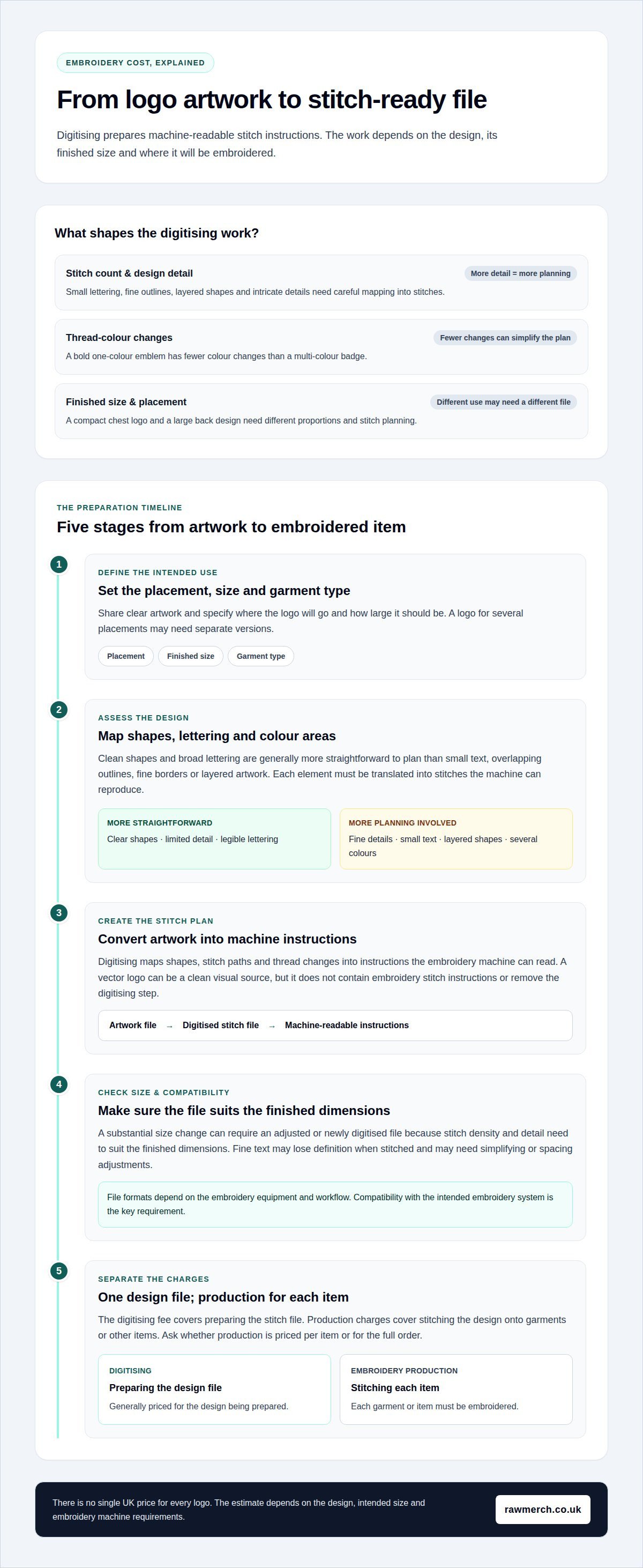
Digitizing fees versus embroidery production costs
A logo order can involve two separate charges: preparing the stitch file and embroidering each item. The digitising fee covers converting artwork into instructions an embroidery machine can read. Production charges cover stitching the design onto garments or other items. Keeping the costs separate makes a quote easier to understand.
A vector file is useful artwork, but it isn’t a ready-to-run embroidery file. Digitising maps shapes, stitch paths and thread changes. Once prepared, the file guides the machine. Production then applies those instructions to each item, so the design fee and garment work cover different parts of the job.
For example, a business ordering embroidered shirts may pay for one logo file, then production charges for the shirts embroidered. File preparation isn’t the same as stitching each garment. Ask for the quote to separate digitising from production, and specify whether production is priced per item or for the full order.
Quantity affects production costs because each garment must be embroidered. It doesn’t automatically change the work already done to digitise the logo. However, if the logo’s placement or size changes, the stitch file may need adjustment, adding digitising work. Don’t assume a left-chest version and a substantially larger back version use identical instructions.
When reviewing a quote, separate these elements:
- Digitising: preparation of the machine-readable logo file.
- Embroidery production: stitching the design onto each specified item.
- Changes: revisions to artwork, placement or size that may require file adjustments.
This breakdown helps you compare like with like. A quote that combines file preparation and stitching into one figure can obscure what’s included. Clarify the number of designs, placements and items covered, then ask whether later size changes require a revised file. This gives you a more accurate view of the total project cost without confusing a one-off preparation task with production for each garment.
Digitising a logo for embroidery cost
There isn’t one UK figure for every logo. The cost depends on the stitch plan, design detail and intended fabric. Price the actual artwork and placement, not just the image file.
Digitising a logo turns artwork into stitch instructions. A basic emblem with broad shapes needs fewer decisions than a crest with fine lettering, borders and several thread colours. More detail can mean more stitch paths and adjustments, affecting the preparation charge before any garment is embroidered.
Fabric matters because the same design can behave differently across materials. A logo intended for firm, stable fabric may need different stitch planning from one going onto a softer or stretchier garment. The digitising work must suit the item and placement, not just reproduce the artwork on screen.
Keep the file preparation charge separate from embroidery production. Digitising prepares the design file; production applies it to each item. If a logo will appear in different sizes or placements, a substantially changed version may need adjustment. That can add preparation work, while the production charge relates to the items being stitched.
To make a quote useful, define the project details together:
- Artwork: provide the clearest available logo file.
- Placement: identify where the logo will sit on the garment.
- Finished size: give the intended dimensions for each version.
- Fabric and quantity: specify the material and number of items for production.
These details help distinguish the required stitch work from the production scope. A vector file can show clean shapes, but it still needs embroidery-specific conversion. A change to size, placement or fabric can alter the file preparation required. Keep the artwork and specifications consistent across the order to avoid unnecessary revisions.
Planning embroidered clothing? Discuss your custom clothing project and share the logo’s intended size, placement and fabric.
RAW Merch
RAW Merch helps you consider embroidery costs alongside the wider choice of branded clothing and merchandise. If you’re planning custom T-shirts, hoodies, headwear or promotional items, consider the garment and intended logo placement alongside the digitised design. These choices shape how the finished branding fits the item and its purpose.
Bring together your artwork, planned placement and product requirements when discussing a project. This gives you a clear starting point for considering how embroidery fits your merchandise plans, without confusing file preparation with production costs. RAW Merch also offers laser engraving for suitable promotional items.
Contact RAW Merch to discuss your branded clothing or merchandise project.
Plan your next branded run
Treat the logo as part of a consistent branding decision, not an isolated file. Before placing an order, decide how the mark should appear across the items you have in mind. A clear visual standard helps keep future uses aligned, even when the finished products differ.
The cost of digitising a logo for embroidery is easier to assess when the design has a defined purpose. Choose the version you want to use, then consider how it supports your wider identity. This gives your next conversation a practical starting point and keeps decisions focused on the result you want.
RAW Merch can help you explore how branded merchandise fits your plans. Contact RAW Merch about embroidery to discuss your project and take the next step with confidence.
Frequently Asked Questions
Can the Same Digitized File Be Reused?
Yes, a digitised file can often be reused when the logo, size, placement and fabric remain suitable. For example, repeating the same left-chest design on the same type of garment may use the existing file. A different garment position or substantially different size can require adjustments. Keep the approved file and its intended specifications together for future orders.
Does a Cheaper File Always Save Money?
No. A low-cost file may not suit the design’s lettering, placement or intended garment, leading to revisions before production. For example, small wording that loses clarity when stitched may need changes to the stitch plan. Compare what the quote covers, including the design version and any adjustments, rather than judging the fee alone.
How Much Does It Cost to Digitize a Logo?
The cost of digitising a logo for embroidery depends on its stitch count, detail, thread colours, finished size and placement. A simple mark and a detailed crest require different preparation. For a useful UK estimate, describe the design and intended use together. Don’t assume that a price for one placement also covers a different size or garment position.
What Should Be Included in a Digitizing Quote?
A useful quote should identify the design being digitised, its intended size and placement, and the machine-readable file being prepared. It should also clarify whether revisions or additional versions are included. For example, a quote for a chest logo may not cover a larger back version. These details make the scope easier to compare with your production plan.
Why Does a Large Jacket-Back Design Cost More?
A large jacket-back design covers a wider area and can require more stitch planning than a compact emblem. The digitiser must map the artwork to its full dimensions, preserving the relationship between shapes and lettering. Fine details may need adapting for the finished scale. A major size change can also require a revised file, rather than simple enlargement.
Is Embroidery Logo Digitising Charged Separately from Embroidery Stitching?
Yes. Digitising prepares the design file, while embroidery stitching applies that design to the selected items. For example, an order may include a one-off file-preparation charge and production charges for the garments. Ask for the quote to show those parts separately, and clarify whether production is listed per item or as a total for the order.