
Artwork is only half the collaboration. Artist collaboration merchandise brings an artist and a brand together to turn creative work into physical products, with clear roles and permission for using the artwork. T-shirts, hoodies, headwear and accessories can all carry a shared creative idea.
The appeal is clear: a product gives artwork a new form and introduces it to people who might not otherwise encounter it. But a successful project needs more than a striking image. Both sides should agree who creates or adapts the artwork, how it can be reproduced and how the artist will be credited.
This guide explains what artist collaborations involve and how to turn one into merchandise. You’ll explore product choices, ways to agree on the creative vision and responsibilities, and practical considerations for translating artwork onto clothing and accessories. From a bold T-shirt graphic to a smaller design on headwear, the right format helps the artwork remain recognisable while making the finished piece useful to wear or carry.
Key Takeaways
- Understand how artist collaborations bring creative work onto physical products, and what makes the partnership work for both sides.
- Match the artwork to a suitable format, from wearable pieces to accessories that give smaller designs room to stand out.
- Set clear creative roles, usage permissions and artist credit before production begins.
- Explore how placement, scale and colour can help artwork translate effectively onto clothing and accessories.
1. What are artist collaborations?
Artist collaborations bring an artist and a brand together to combine distinct creative identities. The result might be original artwork, an adapted print or a graphic applied to fashion and merchandise. The artist contributes a recognisable visual perspective; the brand brings a product, audience or platform that gives the work a new canvas.
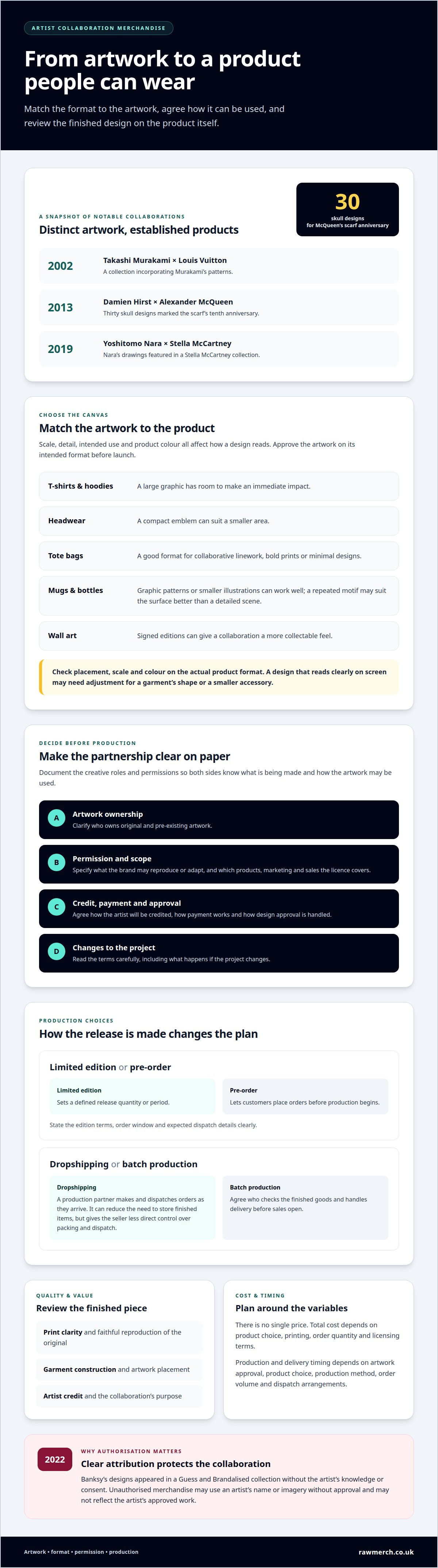
Luxury fashion has made these partnerships visible. In 2002, Takashi Murakami and Louis Vuitton created a collection incorporating Murakami’s patterns. In 2013, Damien Hirst and Alexander McQueen marked the scarf’s tenth anniversary with 30 skull designs. Yoshitomo Nara’s drawings featured in a Stella McCartney collection in 2019. These projects show how an artist’s existing visual language can shape a brand’s products.
What are some well-known artist merchandise collaborations? Murakami and Louis Vuitton, Hirst and McQueen, and Nara and Stella McCartney are notable examples. Each paired identifiable artwork with a fashion brand’s established products.
A clear agreement makes the creative partnership workable. Before production, document who owns original and pre-existing artwork, what the brand may reproduce or adapt, and which products, marketing and sales the licence covers. Agree on artist credit, payment and design approval. Read the terms carefully, including what happens if the project changes.
Artists pitching a collaboration should build a focused portfolio. Choose work that demonstrates a consistent style, include examples suited to the brand’s products, and explain why the partnership fits. A clear proposal helps the brand see how the artwork could attract attention while remaining true to the artist’s practice.
How can you compare quality and value? Assess print clarity, garment construction, artwork placement and how faithfully the finished design represents the original. Consider artist credit and the purpose of the collaboration alongside the physical product.
How much does artist collaboration merchandise cost in the UK? There’s no single price: product choice, printing, order quantity and licensing terms all affect the total.
Where can you buy it in the UK? Look for releases through the artist’s or brand’s official sales channels, where product details and artist attribution are clear. Organisations can also use collaborative artwork on promotional merchandise for their own projects.
What are the risks of counterfeit or unauthorised artist merchandise? The artist’s name or imagery may be used without their knowledge or consent, and the product may not reflect their approved work. In 2022, Banksy’s designs appeared in a Guess and Brandalised collection without the artist’s knowledge or consent, showing why clear attribution and an authorised release matter.
2. Suitable products for artist collaborations
Choose products that suit the artwork’s scale, detail and intended use. A T-shirt or hoodie gives a large graphic room to make an immediate impact, while headwear can suit a compact emblem. Tote bags work well for collaborative linework, bold prints or minimal designs. Match the product to the artwork, not just the launch theme.
Mugs and bottles offer another format for graphic patterns or smaller illustrations. Their usable surface can make a repeated motif more effective than a detailed scene. For wall art, signed editions can give a collaboration a more collectable feel, similar to how design curators like Attica House showcase handcrafted artwork alongside contemporary decor. A focused collection can combine clothing and accessories while keeping one shared visual identity.
How do limited editions and pre-orders work? A limited edition sets a defined release quantity or period, while pre-orders let customers place orders before production begins. State the edition terms, order window and expected dispatch details clearly, so the community knows what to expect.
Production choices affect how artwork translates onto each item. Detailed prints may need a different approach from simple, bold graphics; placement and product colour also affect visibility. In high-volume production, commercial specialists such as printitza.co.za demonstrate how advanced litho and digital reproduction maintain visual fidelity across diverse physical products. Approve the artwork on the intended product format before launch. A design that reads clearly on screen may need adjustment for a garment’s shape or a smaller accessory.
With dropshipping, a production partner makes and dispatches orders as they arrive, rather than the seller holding stock. This can reduce the need to store finished items, but the seller has less direct control over packing and dispatch. For batch production, agree who checks the finished goods and handles delivery before sales open.
Production and delivery times depend on artwork approval, product choice, production method, order volume and dispatch arrangements. Set a realistic launch schedule around these steps, leaving time for review and any necessary adjustments. For damaged or defective items, keep the order details and clear photographs, then follow the seller’s published returns process.
Planning printed clothing or promotional pieces? Plan a merchandise launch around the artwork, product format and production route.
3. Agreeing the creative vision and roles
Start with the creative purpose: decide what the partnership should express and who it should reach. An artist and fashion brand may share an interest, but their audiences and identities can differ. Write a short project brief covering the connection, intended audience, product formats and visual direction. For example, a playful illustration may suit casual shirts better than a luxury label’s minimal styling.
Agree whether the artist will create original artwork or adapt an existing piece. This choice affects the design process, permissions and how the collaboration is presented. An original graphic can respond directly to a collection’s theme. An adapted print can bring the artist’s established style to a new canvas while preserving its recognisable character.
Define everyone’s role before production. The artist might supply artwork and guide its use; the brand might prepare product mock-ups, manage manufacturing and plan the launch. Set out who reviews colour, placement, scale and final proofs. A small graphic on a shirt sleeve calls for different decisions from a large front print. Clear responsibilities prevent feedback from becoming scattered across email and social channels.
Treat the artist as a creative partner, not an employee. Agree where the artist retains control, such as changes to signature imagery or the use of their name. Also record how the brand can reproduce, modify and promote the approved work. These terms help protect the artist’s identity while giving the brand a practical route to production.
Plan the public story together. Decide how the collaboration will be credited on products and online, and whether the artist will contribute interviews, previews or social posts. A consistent explanation helps the audience understand why the partnership exists. Before launch, both sides should approve the final artwork, product presentation and credit wording. This review connects the creative idea to the item customers will see.
4. Art-inspired clothing and accessories
Art becomes wearable when its strongest visual features suit the product’s shape. Piet Mondrian’s grids inspired Yves Saint Laurent couture dresses in the 1960s, translating geometric patterns into clothing silhouettes. For a modern project, identify the artwork’s defining marks first. Then decide whether they work best as a large print, a repeated pattern or a small detail.
Consider how the design changes across different products. A detailed illustration may need simplifying for a small chest graphic, while bold shapes can extend across a larger garment. A sleeve, pocket or back panel offers different placement options. Review each mock-up at its intended size so the artwork remains readable without losing its original character.
Accessories can carry the same story in a more compact format. A tote bag gives linework room to breathe; headwear can suit a clear emblem or short motif. Keep the collection visually connected through consistent colour, scale or recurring patterns. This shared approach helps separate products feel like part of one creative release.
Rights matter as much as design. In 2022, Banksy’s designs appeared in a Guess and Brandalised collection without the artist’s knowledge or consent. This illustrates why an artist’s work and name shouldn’t be used as though inspiration alone grants permission. Agree who owns the artwork and exactly how it can be reproduced, adapted and promoted before production.
For a cohesive range, select the artwork, choose suitable clothing or accessories, then adapt the design to each product’s silhouette. Review the final artwork against its physical format before approving production. This keeps the pieces recognisably inspired by the artist while making them practical to wear and use. Turn your approved artwork into printed clothing or promotional items with customise clothing and merchandise.
RAW Merch: Custom T-Shirts & Hoodies
RAW Merch can turn approved artwork into custom T-shirts and hoodies for a shared creative project. Choose clothing printing for wearable designs, or extend the collection with promotional merchandise and headwear. Custom laser engraving offers another option for suitable merchandise.
When you’re ready to plan production, bring your finished artwork and product ideas. Placement, visual detail and product choice all shape how the design translates onto the final piece. This is a practical next step once the creative direction and usage permissions are agreed, and you’re ready to move from concept to printed merchandise.
To discuss your project, contact RAW Merch or visit rawmerch.co.uk.
Take your creative idea into production
The strongest artist collaboration merchandise projects have a clear next step: turn the approved concept into a production-ready plan. Bring together the artwork, agreed permissions and intended product formats. Then consider how the finished pieces should look and feel, and how they’ll connect with the people who wear or use them.
That plan gives your collaboration a practical foundation. It keeps the artist’s creative identity visible while shaping a coherent collection across its products. Focus on the key decisions: artwork, placement, format and the details that make the release recognisably yours.
When you’re ready to develop your idea, contact RAW Merch to discuss your project. Share the direction you’ve agreed and the products you have in mind. A considered first step can bring a shared creative vision closer to a finished collection. Start shaping yours with confidence.
Frequently Asked Questions
What are artist collaborations?
Artist collaborations bring an artist and another creative partner together to combine their skills. The artist may contribute imagery, while the partner brings a platform, product or audience. Before starting, agree how decisions will be made and how each contribution will be recognised. A simple written record helps keep expectations clear if the project changes.
🛍 What Kind of Products Work Best?
The best products suit both the artwork and how people will use them. Headwear can work for a compact mark, while promotional items can carry a design beyond clothing. Consider where the image will sit, how much detail it needs and whether it remains recognisable at a smaller scale. Choose a connected product range rather than adding items without a clear purpose.
What is artist collaboration merchandise?
Artist collaboration merchandise is a product range featuring artwork made or approved through a partnership between an artist and another party. It gives an existing creative practice a physical format while helping a brand express a distinct visual identity. Before production, clarify how the design may be used and how the artist will be credited, so the finished products reflect the agreed collaboration.
How do artists and brands collaborate on merchandise?
Artists and brands collaborate by aligning a creative idea with a practical product plan. They can start by agreeing on the intended audience and choosing artwork suited to the product. Then they establish who supplies files, prepares product proofs and approves the final version. A shared schedule for feedback and launch planning helps everyone understand what must happen before items go on sale.
How are royalties and licensing fees agreed for artist collaborations?
Royalties and licensing fees are negotiated between the parties and recorded in their agreement. The terms can specify whether payment is a fixed fee, a share of sales or a combination, and how sales are calculated and reported. Also define the products, sales channels, territory and licence period covered. Clear wording helps both sides understand payment triggers and permitted uses of the artwork.
How can independent artists find and pitch merchandise partners?
Independent artists can identify partners whose products and audiences suit their work, then make a focused pitch. Include a concise portfolio, a short explanation of the creative fit and examples of how the artwork could translate onto a product. State what you bring to the project and the partnership you’re proposing. Contact a relevant decision-maker with a tailored message rather than a generic mass pitch.