
What if the lowest unit price is actually the most expensive mistake you'll make this year? You've likely felt that frustration when a "budget" order arrives with cracking prints or a final invoice loaded with hidden setup fees. It's a common trap in a market worth $62.55 billion where 1 in 3 consumers now demand personalized products but won't tolerate low-quality finishes. Whether you're building a brand focused on themed matching sets like Adorb Custom Tees or ordering for a one-off event, you deserve a partner who values your creative vision and your budget. We know what you want; you want your custom clothing to look professional and arrive on schedule.
Identifying the right questions to ask your merch printer is the only way to protect your investment and avoid logistical nightmares. This 2026 guide provides 15 expert-level questions to ensure your merchandise is durable, retail-ready, and priced transparently. We'll show you how to vet production times, confirm garment availability, and eliminate the risk of late deliveries. From screen printing costs to rush order fees, you're about to get the clarity you need to order with total confidence. You want it, we create it, and we make sure it's done right the first time.
Key Takeaways
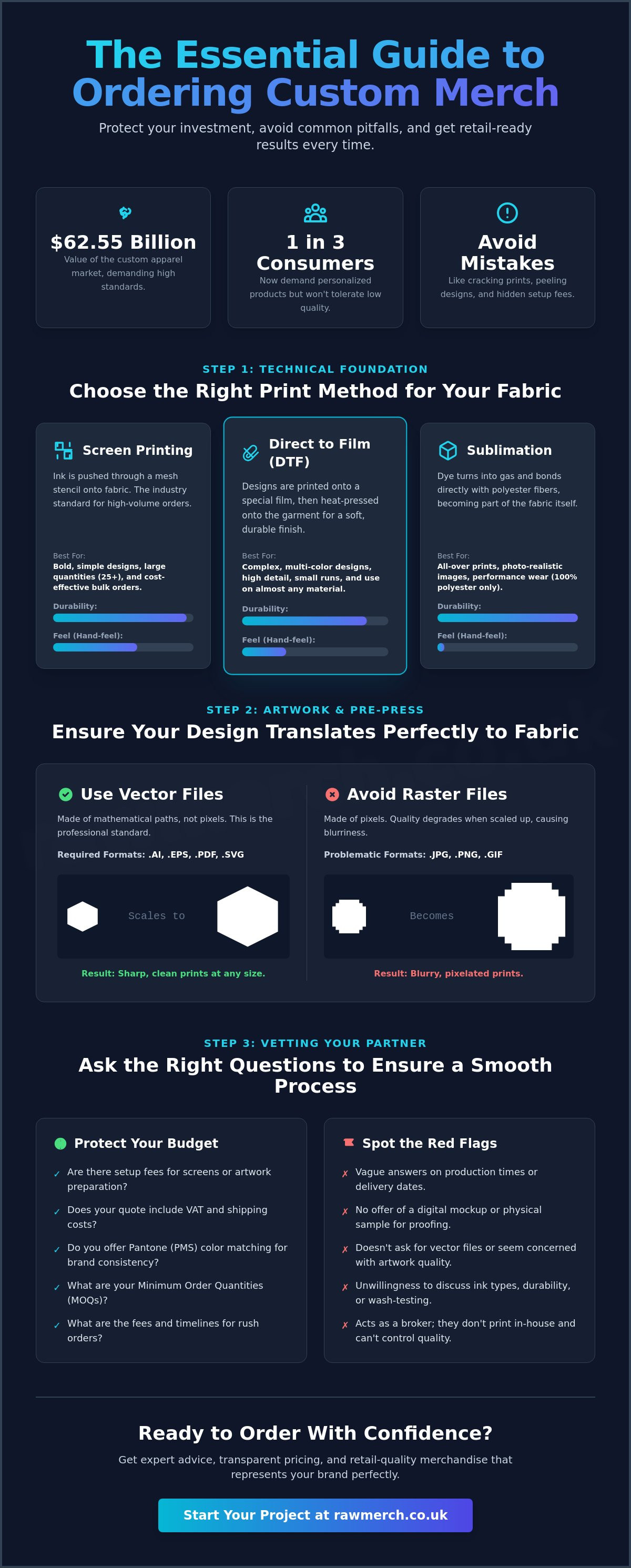
- Choose the right print method for your fabric. Learn why the choice between screen printing and DTF determines the durability and feel of your custom clothing.
- Stop production delays with press-ready artwork. Understand the technical difference between vector and raster files to ensure your logos stay sharp at any size.
- Protect your budget with the essential questions to ask your merch printer. Uncover hidden setup fees and ensure your final invoice matches your initial quote.
- Identify a reliable long-term partner. Spot the red flags that separate professional, experienced printers from unreliable brokers and fly-by-night operations.
The Technical Foundation: Questions About Print Methods and Quality
Your merchandise reflects your brand's reputation. If the print fails, your brand fails. One of the first questions to ask your merch printer should focus on the technical compatibility between your artwork and their machinery. You want it, we create it; but we do it using the right method for the job. Choosing the wrong technique leads to prints that crack, peel, or feel heavy and uncomfortable. Professional results start with understanding how your design interacts with the fabric.
Don't settle for a "one size fits all" approach. Understanding how screen printing works is the first step for anyone ordering in bulk. This method is the industry standard for high-volume orders because it's cost-effective and incredibly durable. However, modern Direct to Film (DTF) technology has changed the game for complex, multi-color designs on smaller runs. Unlike older transfers, DTF provides a soft finish that bonds tightly to the fibers. It's the best choice for intricate artwork that requires high detail without the heavy "hand-feel" of thick ink layers.
Screen Printing vs. DTF vs. Sublimation
- Screen Printing: Pushing ink through a mesh stencil onto fabric for bold, long-lasting bulk orders.
- DTF (Direct to Film): Printing designs onto a special film then heat-pressing them onto garments; perfect for detailed art on almost any material.
- Sublimation: Turning dye into gas to bond directly with polyester fibers for "all-over" prints that never fade.
For a premium, textured look on headwear, embroidery is often the superior choice. It adds a physical dimension to your logo that printing cannot match. Check our guide on custom bobble hats to see how this technique elevates your brand for winter merchandise or event giveaways.
Ink Durability and Pantones
"Will this crack after three washes?" is a question you must ask. Low-quality plastisol inks often crack because they aren't cured properly or they sit too heavily on the garment surface. High-quality printers use premium inks and specific curing temperatures to ensure retail-grade longevity. Cheap inks are a false economy; they save pennies now but cost you customers later when the shirts look worn out after a month.
Consistency is vital for repeat orders. Ask your printer if they offer Pantone matching. Without this, your "brand red" might look like "faded pink" when you reorder next season. We know what you want; you want your colors to stay sharp and your prints to stay intact. We deliver on time everytime, ensuring your custom products meet the highest industry standards.
Artwork and Pre-Press: Ensuring Your Design Translates to Fabric
High-quality merchandise starts with high-quality files. You can't expect a retail-grade hoodie from a low-resolution screenshot or a grainy photo. One of the most vital questions to ask your merch printer is which file formats they require to get the job done right. Most professional setups demand vector files to ensure every line and curve stays sharp. If your files aren't ready, ask if they offer technical artwork cleanup. This isn't the same as a full design service; it's a technical step to ensure your logo is "press-ready" so the final product looks exactly like your vision.
You also need to confirm the proofing process before the machines start running. Ask if you'll receive a digital mockup or a physical sample. While digital proofs are standard for checking placement, they don't always show how the ink interacts with the specific fabric texture. Getting the technical details right at this stage prevents expensive errors during the full run. We know what you want; you want a finished product that matches your screen. We deliver on time everytime by catching these details during the pre-press stage. This ensures your brand is represented perfectly across every garment in your order.
The Vector Requirement
A vector image is a mathematical path rather than a collection of pixels. This means you can scale it to the size of a billboard or shrink it for a sleeve print without losing any quality. If you send a raster file like a JPEG or PNG, it will likely look blurry or pixelated when enlarged for a large back print. This is why professional printers insist on specific file types. We provide a deep dive into this in our guide on What is a Vector Image?. Always provide .AI, .EPS, or high-resolution PDF files to prevent production delays. YOU WANT IT, WE CREATE IT! But we need the right tools to make it happen.
Sizing and Placement
Placement is where many orders go wrong. You must ask about the maximum print areas for different garments. A standard print area is typically around 35cm x 45cm, but hoodies have pockets and seams that can limit where the ink goes. If you're unsure about your file quality or placement, contact us for a no-obligation quote and we'll help you navigate the specs. We ensure your design sits exactly where it should for a professional, retail-quality finish.
- Scaling: Ask if the print size stays the same across all garment sizes. A 30cm wide print looks huge on a Small shirt but might look lost on a 3XL. Professional printers often suggest two different screen sizes for very wide size ranges.
- Oversized Prints: Clarify if "jumbo" or "all-over" prints incur extra costs. These often require specialized screens or different machinery to maintain the level of detail you expect.
- Seams and Zippers: Ask how the printer handles designs that go over seams. This usually requires DTF or specific screen setups to avoid ink buildup and ensure the print doesn't crack at the junction.
Turnaround, MOQs, and the "Hidden" Costs of Printing
Price transparency is the difference between a successful launch and a financial headache. Many first-time buyers focus strictly on the per-unit cost while ignoring the "hidden" fees that appear on the final invoice. One of the most critical questions to ask your merch printer is for a full breakdown of setup, screen, and delivery charges. We know what you want; you want a clear number that doesn't change once the work begins. At RAW Merch, we believe in straightforward pricing because your creative vision shouldn't be sidelined by unexpected VAT or shipping surcharges.
Understanding Turnaround Times
Standard production for custom apparel in 2026 averages 7 to 14 business days from the moment your artwork is approved. You must ask if this timeframe includes shipping or if that is an additional three to five days on top. For bands on tour or event organizers, a missed deadline is a disaster. If the merch isn't at the venue, you can't sell it. If you're in a bind, expect to pay a premium. A 5-business day rush order typically adds 20% to your total, while a "Super Rush" 3-day turnaround can jump to 25%. Plan ahead to keep that money in your pocket instead of paying for speed.
Volume Discounts and Re-orders
The math of printing is simple: the more you buy, the less you pay per shirt. For a 100-piece order with a 1-color logo, you can expect to pay between $5.50 and $7.50 per shirt. Compare that to a 50-piece order which often sits between $8 and $12. Always ask your printer if they keep your screens on file for future re-runs. If they do, you should save on setup fees for your next order. We deliver on time everytime, ensuring that whether it is your first 12-piece run or a 500-unit restock, the quality remains consistent and the pricing stays fair. YOU WANT IT, WE CREATE IT!
- Screen Fees: Ask if these are one-time charges or per-order.
- Setup Fees: Clarify if this covers the physical labor of aligning the machines.
- Deadstock: Ask about the policy for misprints or garments that don't meet quality checks.
Logistics and Fulfillment: What Happens After the Print?
Receiving 50 boxes of custom t-shirts is exciting until you realize you have no place to put them. One of the most overlooked questions to ask your merch printer involves the "post-print" phase. You need to know if they can handle fulfillment and distribution directly from their facility. We know what you want; you want your fans to get their gear without you spending every weekend at the post office. If you're building an e-commerce brand, a printer who can store and ship your stock is a game-changer for your workflow.
Logistics become even more complex when you hit the road. For touring bands, getting boxes across borders can be a nightmare of paperwork and unexpected fees. Ask your printer how they manage international shipping and customs clearance. You don't want your tour hoodies stuck in a warehouse in another country while you're playing to a sold-out crowd. For a deeper look at how to move your products effectively, check out our Band Merchandise Guide for a complete selling strategy.
Warehousing and Inventory Management
Storing 500 heavy hoodies in a spare room is a bad idea. It's cramped, disorganized, and makes tracking sales nearly impossible. Ask your printer if they integrate with platforms like Shopify to automate the process. You should also demand monthly inventory reports to see exactly what is moving and what is sitting. This data allows you to plan your next restock before you run out of popular sizes. We deliver on time everytime, which means your inventory stays topped up and ready for the next surge in orders.
Ethical Sourcing and Certifications
In 2026, where your clothes come from is just as important as the design on the front. Ask: "Where are your blank garments sourced from?" Brands like Gildan or Stanley/Stella are industry leaders for a reason. You should look for WRAP or Sedex certifications to ensure fair labor practices. This isn't just about ethics; it's about profit. Statistics from May 2026 show that 73% of Gen Z consumers are willing to pay more for sustainable merchandise. Additionally, 45% of European consumers and 40% of US consumers now state that sustainability influences their purchasing decisions. Sustainable merch sells better at higher price points because fans value transparency. YOU WANT IT, WE CREATE IT! But we do it responsibly.
Ready to scale your brand without the logistical headache? Contact us for all enquiries and a no-obligation quote today.
The Red Flag Checklist: When to Walk Away from a Printer
Trusting a new partner with your brand's reputation is a big step. Even after you've prepared the perfect vector file and picked your garments, the wrong printer can still ruin the project. You must stay alert for warning signs during your initial consultation. Vague pricing is the first major red flag. If a quote doesn't explicitly include VAT, setup fees, and delivery costs, you're likely looking at a "low" price that will balloon once the work is done. We know what you want; you want transparency from the first click to the final delivery.
Communication speed is another reliable indicator of future performance. If a company takes three business days to answer basic questions to ask your merch printer, they'll likely be even slower when you have a production emergency. A professional outfit should be responsive and direct. You should also verify their physical presence. Fly-by-night brokers often hide behind a slick website without a listed physical address or "about us" information. If they don't have a workshop you can theoretically visit, they probably don't have control over your order.
In-House vs. Subcontracted
One of the most revealing questions you can ask is whether the work is done in-house. Many online "printers" are actually middle-man brokers who subcontract your order to the cheapest available factory. This is a recipe for disaster. When a printer owns their machinery, they have total quality control. They can touch the fabric, check the ink consistency, and verify the cure temperature personally. RAW Merch relies on over 25 years of industry experience to manage every print under our own roof. This seasoned expertise ensures we deliver on time everytime. Don't risk your money on a broker who has never actually seen your design on a shirt.
The "No Obligation" Test
A reputable business won't pressure you into an immediate commitment. Use the "no obligation" test to see how they handle your enquiries. A professional printer should be happy to answer all 15 questions in this guide without frustration. They should treat your small run of 12 shirts with the same technical respect as a 500-unit bulk order. This stage is your chance to vet their industry knowledge and helpfulness before any money changes hands. YOU WANT IT, WE CREATE IT! But we only do it after you're 100% comfortable with the process.
Ready to work with a partner who values quality as much as you do? Contact RAW Merch for a no-obligation quote today and see the difference that 25 years of experience makes for your custom products.
Launch Your Next Merch Run with Confidence
Success in the custom apparel industry doesn't happen by accident. It requires a mix of high-quality vector artwork, the right printing technique, and a partner who values transparency. By using these 15 questions to ask your merch printer, you've removed the guesswork from your production cycle. You now know how to spot hidden fees and meet the expectations of the 1 in 3 consumers who now demand a personalized shopping experience. This knowledge protects your budget and your brand's reputation.
RAW Merch is here to turn that knowledge into retail-ready reality. With over 25 years of industry experience and 100% in-house production for total quality control, we are a trusted partner for bands and businesses across the UK. We know what you want; you want professional products that arrive on schedule. YOU WANT IT, WE CREATE IT!
Don't leave your merchandise to chance with a middle-man broker. Get a No-Obligation Quote from RAW Merch Today and let's get your project moving. We deliver on time everytime, ensuring your creative vision reaches your fans exactly as you intended. Let's make your next launch your most successful yet.
Frequently Asked Questions
What is the most important question to ask a merch printer?
The most important thing to ask is for a comprehensive, all-inclusive quote that covers VAT, setup fees, and delivery costs. This is one of the top questions to ask your merch printer to avoid the hidden fees that often surprise beginners. You want total transparency so your budget stays on track. We know what you want; you want the final bill to match the first estimate every single time.
Can I provide my own garments for printing?
You can provide your own garments, but it is rarely the most cost-effective choice for your brand. Printers get wholesale trade rates from suppliers like Gildan and Stanley/Stella that individuals cannot access. Plus, if a mistake happens on a supplied garment, the printer cannot easily replace it. Stick to the printer's stock to ensure total quality control and better unit pricing for your custom products.
How long does custom merch printing usually take in the UK?
Standard production in the UK takes between 7 and 14 business days from the moment you approve your artwork. This timeframe is the industry average for 2026, though shipping can add another 24 to 48 hours to the total wait. If you have a firm deadline for a tour or event, always confirm the "delivery by" date in writing. We deliver on time everytime because we understand that late merch is useless merch.
What happens if my printed shirts arrive with a mistake?
You should receive a reprint or a credit if the final product doesn't match your approved digital proof. Mistakes like misspellings or wrong ink colors are rare with experienced printers, but a clear returns policy is your safety net. Always inspect your boxes immediately upon arrival. Most professional shops require you to report any issues within 48 to 72 hours of receiving the shipment to qualify for a resolution.
Do I need to pay for a new screen every time I re-order?
You typically don't pay for new screens if you re-order the exact same design within a specific timeframe. Most printers keep your physical screens or digital files on hand for 6 to 12 months. This is one of the essential questions to ask your merch printer before you place your first order. Saving on screen fees makes restocks significantly more profitable for your business or band. YOU WANT IT, WE CREATE IT!
What is the difference between a screen charge and a setup fee?
A screen charge is for the physical stencil used in the printing process, while a setup fee covers the labor of calibrating the machinery. You pay a screen charge for every color in your design because each color needs its own mesh. The setup fee is the time spent by the technician to align those screens perfectly. Understanding this distinction helps you design artwork that fits your specific budget without overspending.
Can I mix different t-shirt sizes and colours in one bulk order?
You can absolutely mix different garment colors and sizes within a single bulk order. As long as the design and the ink color remain identical, the printer doesn't need to clean the screens or change the setup. This is a smart way to hit the 50 or 100-piece price breaks to lower your unit cost. Mixing hoodies and t-shirts is a standard practice for professional merch runs and helps you cater to all your fans.
Is there a minimum order quantity for embroidery vs printing?
Minimum order quantities vary significantly between embroidery and screen printing. Screen printing usually requires at least 12 pieces to offset the labor-intensive setup process. Embroidery often has much lower minimums, sometimes even allowing for single items, because it is a digital process. Check the specific requirements for headwear and uniforms, as these often have different rules than standard clothing printing. We provide 25 years of experience to help you choose the right volume for your needs.