
Navigating the world of hi vis workwear can be a headache. EN ISO 20471? Class 2 or Class 3? And the biggest question: can you put your company logo on it without breaking the rules? It’s enough to make anyone’s head spin when all you want is to keep your team safe, visible, and fully compliant with UK law. You need workwear that works, without the hassle.
We get it. That’s why we’ve created the ultimate guide to high-visibility clothing. Forget the jargon and confusion. We deliver straight answers. In this guide, you’ll learn everything you need to know about UK safety standards, how to choose the perfect class of garment for any job, and the right way to add your branding for a professional look that’s 100% compliant. It's time to get your team seen, safe, and sorted. Let’s get it done.
What is Hi Vis Clothing and Why Is It Non-Negotiable?
In any hazardous work environment, being seen isn't just an advantage-it's a lifesaver. That’s where hi vis clothing comes in. Put simply, it’s workwear engineered from the ground up to make you highly conspicuous, ensuring you stand out clearly against any background, in any light. These aren't just bright clothes; they are a critical piece of Personal Protective Equipment (PPE).
The core principle of High-visibility clothing is to use a specific combination of fluorescent materials and retroreflective tapes to drastically reduce accidents, particularly in low-light conditions or near moving traffic. In the United Kingdom, wearing appropriate hi vis gear isn't just a recommendation. For many roles, it's a legal requirement mandated by the Health and Safety Executive (HSE) to protect workers from serious injury or death. It is a non-negotiable part of on-site safety.
The Science of Being Seen: Fluorescent vs. Reflective
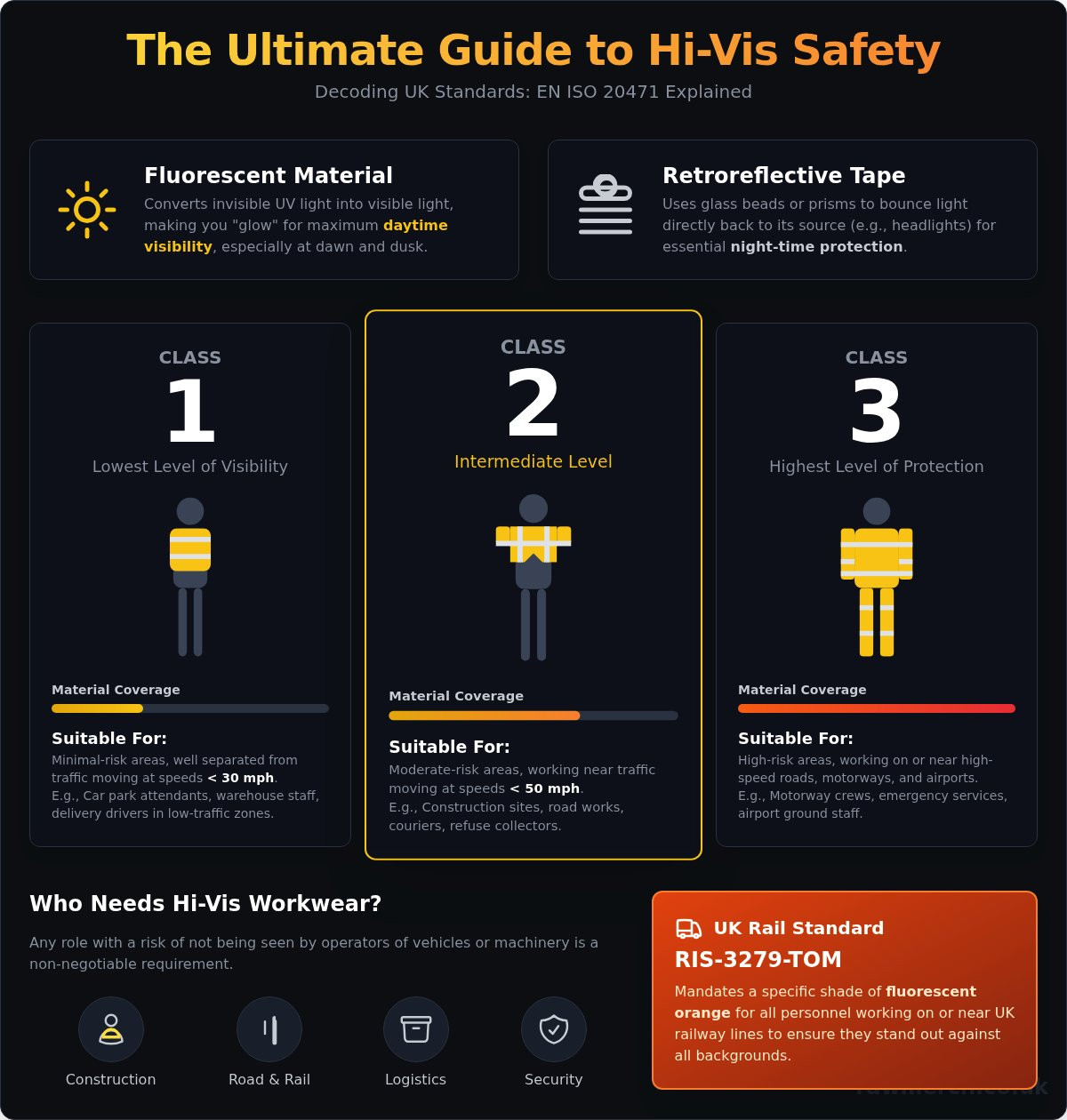
The power of this workwear lies in its two-part system. Fluorescent material works by converting invisible UV light into visible light, making the fabric appear to glow. This effect is strongest during the day and at dawn or dusk, providing exceptional daytime visibility. When darkness falls, retroreflective tape takes over. It uses glass beads or microprisms to bounce light directly back to its source, like a vehicle’s headlights, making the wearer instantly visible to the driver. This combination delivers essential, 24-hour protection.
Who Needs Hi Vis Workwear?
If your job puts you anywhere near moving vehicles, equipment, or machinery, you need to be wearing hi vis. It is that simple. The range of professions is extensive, covering anyone who must be seen to stay safe. Key industries and roles include:
- Construction: Site managers, groundworkers, crane signalers, and road workers.
- Road & Rail: Highway maintenance crews, traffic marshals, and railway engineers.
- Warehousing & Logistics: Forklift operators, delivery drivers, and distribution yard staff.
- Events & Security: Stewards at concerts or festivals, parking attendants, and emergency services personnel.
Essentially, if there's a risk of not being seen by someone operating equipment, this apparel is your first and most important line of defence.
This principle of safety isn't limited to professional job sites. It's also a key consideration for ambitious DIY projects, like installing a new garage door, where you might be working near public thoroughfares or with heavy equipment. For those interested in this area, you can learn more about Door Supply, an online retailer that supports the DIY market with custom-made solutions.
Decoding UK Hi Vis Standards: EN ISO 20471 Explained
Not all high visibility clothing is created equal. To guarantee your safety, you need gear that meets specific, rigorous standards. In the UK and Europe, the benchmark is EN ISO 20471. This isn't just a label; it's a legal requirement for workplace safety, ensuring your clothing provides the necessary conspicuity to keep you seen and safe.
The standard assesses three critical components of any hi vis garment:
- Fluorescent Material: The brightly coloured fabric (like yellow or orange) that makes you highly visible during daylight hours.
- Reflective Material: The silver strips or tape that reflect light back to its source, making you visible in low-light conditions and at night when illuminated by headlights.
- Placement: The strategic positioning of these materials to provide 360-degree visibility and outline the human form.
The performance of these materials is vital, and their effectiveness relies on proper Care and Maintenance to prevent degradation. It's also important to note that specific roles, like those on UK railways, must adhere to the RIS-3279-TOM standard, which mandates a particular shade of orange.
Hi Vis Class 1: The Lowest Level of Visibility
This is the entry-level class, offering the minimum required amount of fluorescent and reflective material. It's designed for minimal-risk environments where workers are separated from traffic, or where traffic speeds do not exceed 30 mph. Think of car park attendants, delivery drivers making drops in low-traffic zones, or warehouse staff.
Hi Vis Class 2: The Intermediate Level
Hi Vis Class 3: The Highest Level of Protection
When you need maximum visibility, you need Class 3. This class demands the largest area of high-visibility materials, covering the torso and including full-length sleeves and/or trousers. It is mandatory for anyone working in high-risk environments, such as on motorways, near high-speed traffic, or at airports. Emergency services and all high-speed road maintenance crews rely on Class 3 for ultimate protection.
Choosing the Right Hi Vis Garment for Your Team
Understanding the standards is the first step. Now, it's time to select the right gear. The best choice isn't a one-size-fits-all solution; it depends entirely on the job, the environment, and the British weather. The goal is to balance maximum protection with everyday practicality. If the hi vis clothing is uncomfortable or ill-fitting, your team simply won't wear it correctly, defeating the entire purpose.
Vests, Jackets, Trousers, and More
Your choice of garment directly impacts your team's safety and comfort. Here’s a quick breakdown of the core options:
- Vests & Waistcoats: The most common choice. Lightweight and perfect for temporary use or wearing over existing clothes, like for site visitors.
- Jackets & Fleeces: Essential for outdoor work in colder, wetter months. They provide warmth while ensuring your team remains fully visible.
- T-Shirts & Polos: A comfortable solution for warmer weather, typically meeting Class 2 standards for tasks away from high-speed traffic.
- Trousers & Coveralls: Crucial for achieving the highest level of protection (Class 3). When combined with a long-sleeved top, they offer full-body visibility.
Colour Significance: Yellow vs. Orange
Both fluorescent yellow and orange are fully compliant with the EN ISO 20471 standard. The critical difference comes down to your specific work environment. Orange is a legal requirement for anyone working on or near UK railway lines, as specified by the RIS-3279-TOM standard. For other industries, consider the background. Yellow often provides superior contrast in urban settings, while orange stands out more effectively against natural, green, or snowy landscapes.
Material and Durability Considerations
A quality hi vis garment is a long-term investment in safety. Look for durable fabrics like polyester, which holds its fluorescent colour well after repeated washing. Features like breathable panels or waterproof coatings add significant value, keeping your team comfortable and focused. Don’t overlook the details-strong, reinforced stitching ensures the garment withstands the rigours of daily work and lasts longer.
Branding Your Hi Vis: Custom Printing Without Compromise
Your team’s safety is non-negotiable. But so is their professional appearance. Branded workwear transforms your crew into a unified, recognisable force, acting as a mobile advertisement for your business. The key question is: can you add logos to high-visibility clothing without compromising its safety rating?
The answer is a resounding yes-when it's done correctly. Customising your hi vis gear is a specialist job. To maintain EN ISO 20471 compliance, you need to work with an expert printer who understands the strict rules governing these essential garments. It’s about smart branding that keeps your team safe and visible.
Best Printing Methods for Hi Vis Fabrics
The synthetic polyester fabrics used in high-visibility clothing require specific printing techniques to ensure a durable and vibrant finish. We recommend two primary methods:
- Screen Printing: A classic and highly cost-effective solution for simple, one or two-colour logos. It’s perfect for large-volume orders and delivers a bold, long-lasting result.
- DTF (Direct to Film): This modern technique is the ultimate choice for complex, multi-colour, or highly detailed logos. DTF transfers produce a sharp, flexible finish that won’t crack or fade easily, even with frequent washing.
Rules for Logo Placement and Sizing
Compliance is everything. The placement and size of your logo are restricted to ensure the garment’s fluorescent and reflective properties are not significantly reduced. The most critical rule is to never print over the retroreflective tape, as this instantly voids its certification.
The total size of any logos can also impact the garment's classification, as it reduces the overall area of fluorescent material. An expert will advise on the maximum logo size to keep your gear compliant. Common and approved locations include:
- Left or Right Chest
- Across the Upper Back (below the collar)
- Sleeves (on long-sleeved garments)
The Benefits of a Uniform, Branded Look
A consistent, branded uniform reinforces your company’s identity on and off the worksite. It makes your team easily identifiable to clients, site managers, and the public, projecting an image of professionalism and reliability. Ready to get it done right? Let's create a professional look for your team. Get a quote!
Care and Maintenance: Keeping Your Hi Vis Effective
Your high-visibility clothing is a critical piece of personal protective equipment (PPE), but it doesn't last forever. Its ability to keep you safe depends directly on its condition. Dirt, grease, damage, and improper washing can severely reduce the fluorescent and reflective properties, making the garment non-compliant and putting you at risk. Proper care is not just about looking smart-it’s about staying seen and staying safe.
Follow these essential guidelines to maximise the lifespan and effectiveness of your gear.
Washing Instructions for Hi Vis Garments
The single most important rule is to always check the manufacturer’s care label. However, most hi vis garments follow similar best practices to protect their specialist materials. Harsh chemicals and high heat are the biggest enemies of high-visibility fabrics and reflective tapes.
- Wash at lower temperatures: Stick to a maximum of 40°C. High heat can damage the glass beads in reflective tape.
- Avoid harsh chemicals: Do not use biological detergents, fabric softeners, or bleach. These chemicals can degrade the fluorescent dyes and strip the reflective tape of its coating.
- Wash inside out: This helps protect the delicate reflective strips from abrasion during the wash cycle.
- Do not overload the machine: Give the garments space to wash properly without excessive friction.
How to Know When to Replace Your Workwear
Even with perfect care, all high-visibility clothing has a limited service life. It must be replaced as soon as it shows signs of wear and tear. A faded or damaged garment is a failed garment.
Look for these clear signs that it's time for a replacement:
- The fluorescent background material is faded, torn, or heavily soiled with grease or dirt that won't wash out.
- The reflective tape is cracked, peeling, worn away, or has missing sections.
- The garment has reached its maximum recommended wash cycles, which is often stated on the label (typically between 25-50 washes).
The rule is simple: if in doubt, replace it. Your visibility on the job is not something to take chances on. Ensuring your team is equipped with effective, compliant gear is a fundamental part of workplace safety and a responsibility we take seriously.
Your Partner in Hi Vis Safety and Branding
Effective workwear is far more than just bright clothing; it's a critical safety system for your team. Understanding UK standards like EN ISO 20471 is non-negotiable for compliance, and choosing the right customisation ensures your brand stands out without compromising protection. You don't have to choose between being seen and being recognised.
Ready to get it right? With over 25 years of printing experience, we provide expert advice on compliance and branding. Our fast, reliable UK-based production ensures your team gets the high-quality, custom hi vis gear they need to stay safe on the job. We know what you want, and we deliver.
Get a No-Obligation Quote for Your Custom Hi Vis Workwear!
Let's make your team visible, professional, and protected.
Frequently Asked Questions
Is hi vis clothing a legal requirement in the UK?
Yes, in many occupational settings it is a legal requirement. Under UK Health and Safety regulations, employers must provide hi vis clothing when a risk assessment identifies a need. This is crucial for anyone working near moving vehicles, on construction sites, or in low-light conditions. Failing to provide adequate PPE, including compliant hi vis gear, can result in significant penalties. For employers that need assistance with health and safety compliance, Rebox HR provides expert outsourced support. Always check your specific workplace requirements to ensure full compliance and on-the-job safety.
What is the main difference between yellow and orange hi vis?
The primary difference relates to specific UK industry standards. Fluorescent yellow is the most visible colour against the widest range of backgrounds, making it the default choice for general use. However, fluorescent orange is specifically mandated by Network Rail for trackside work. This is because orange provides a strong contrast against the natural green and earthy tones of the countryside, ensuring workers are never mistaken for a green 'go' signal. Your work environment dictates the correct choice.
How many times can you wash hi vis clothing before it needs replacing?
There isn't a magic number, but most hi vis garments are rated to last for around 25 washes before their visibility is compromised. Always check the manufacturer's care label for specific guidance. Each wash cycle slightly degrades the fluorescent fabric and the retro-reflective tape. You should regularly inspect your garments for fading, permanent stains, or damaged reflective strips. If it looks dull or worn out, it’s time for a replacement to ensure you remain seen and safe.
Can I print a logo over the reflective stripes on a hi vis jacket?
No, you must never print over the reflective stripes. Covering any part of the reflective tape invalidates the garment's safety certification (EN ISO 20471) and severely reduces its effectiveness. The tape is designed to reflect light directly back to the source, and any obstruction compromises this vital safety feature. We print company logos and branding on the fluorescent background material only, ensuring your team stays both visible and compliant with all safety standards.
What class of hi vis do I need for working on a construction site?
For most UK construction sites, Class 2 hi vis is the minimum requirement. This ensures sufficient fluorescent material and reflective tape for visibility around site traffic and machinery. However, for roles involving work on or near high-speed roads (over 50 mph) or in very poor visibility conditions, the higher-specification Class 3 is mandatory. Always confirm the specific requirements outlined in your site's health and safety risk assessment to ensure you are correctly protected.
Do you offer bulk discounts for custom printed hi vis orders?
Yes, we absolutely do. We specialise in providing high-quality, custom printed workwear for entire teams and businesses. We offer excellent bulk discounts for larger orders to ensure your crew looks professional while staying safe on site. Get in touch with our team today for a fast, no-obligation quote. We know what you want, and we deliver on time, every time. Let us handle your custom branding needs and get the job done right.