

The heavier shirt isn’t automatically the better choice. For your team, event or merchandise run, the right pick depends on how the garment should feel, how it will be worn and how your design needs to look. That’s the practical difference behind heavy cotton vs softstyle shirts, and it’s easy to miss when product descriptions focus on fabric names rather than wear.
You may already know you want a sturdy, classic tee or a softer, lighter feel. The next step is matching that preference to the people who’ll wear it, then checking that the fabric works with your custom print. A shirt that feels out of place for its audience can undermine an otherwise strong design.
This guide explains what “Heavy Cotton” and “Softstyle” usually mean, compares weight, feel and fit, and shows how each may suit different projects. You’ll also find practical checks for print suitability before settling on a garment and order quantity. RAW Merch offers custom clothing printing using methods including screen printing, DTF and sublimation. Consider the garment and decoration together so your choice fits the people, purpose and design.
Key Takeaways
- “Heavy Cotton” and “Softstyle” aren’t universal weight standards, so check each garment’s supplier specifications before comparing.
- Use the feel, drape and structure you want for your audience to guide your choice in the heavy cotton vs softstyle shirts decision.
- Match the shirt to its purpose, whether it’s for staff clothing, event giveaways, everyday wear or retail merchandise.
- Assess composition, colour, design and print method together; fabric weight alone won’t determine print suitability.
- Before ordering, compare fit, sizes and care instructions, then confirm the garment and decoration choices work together.
Heavy Cotton vs Softstyle Shirts: What Do the Labels Actually Mean?
In short: “Heavy Cotton” and “Softstyle” describe different garment qualities, but exact fabric weight, composition and feel depend on the supplier. Neither label is a universal textile standard. Compare the garment specifications rather than relying on the name alone.
Fabric weight measures how much fabric weighs per unit of area, usually shown in GSM (grams per square metre) or oz/yd². It can help you compare how substantial two shirts may feel. Softness is different: it describes how fabric feels against the skin and can be influenced by fibre, yarn, knit and finishing. Cotton, a most widely used natural fiber, can be made into fabrics with varied weights and hand-feels. Weight or softness alone won’t tell you whether a shirt is well made or suitable for your project.
| Label | Likely feel | Possible use | Check before choosing |
|---|---|---|---|
| Heavy Cotton | More substantial or structured | When you want a classic, weightier feel | Listed weight, composition, fit and care |
| Softstyle | Intended to feel softer; exact feel varies | When a softer hand-feel is a priority | Composition, weight, fit and care |
What does heavy cotton mean on a shirt listing?
“Heavy cotton” commonly signals a weightier cotton garment, but the words don’t give you its exact GSM or construction. Look for the listed fabric weight and composition, then compare those details with the other shirt. A heavier fabric may feel more substantial on the body, although the result varies between suppliers and garments. Weight isn’t a durability rating: construction, frequency of wear and care all affect a shirt’s lifespan.
What does Softstyle mean, and is it a fabric standard?
Softstyle is a style label used by some manufacturers, not a universal fabric category. It generally signals an intention to create a softer hand-feel, but it doesn’t guarantee a specific weight, fibre content or fit across brands. Read the individual garment’s specifications and care instructions before comparing it with another option.
Style names alone don’t replace garment specifications. For a reliable heavy cotton vs softstyle shirts comparison, check the listed weight, composition and fit, then consider how the shirt will be worn and decorated.
Heavy Cotton vs Softstyle: How Feel, Fit and Construction Compare
Labels offer a starting point, not a reliable prediction of exactly how a shirt will feel or fit. In the heavy cotton vs softstyle shirts comparison, treat these descriptions as common tendencies, then check the specifications for the particular garment you’re considering.
| Quality | Heavy Cotton, commonly | Softstyle, commonly |
|---|---|---|
| Hand-feel | May feel more substantial or firm | Intended to feel softer against the skin |
| Perceived weight | May feel weightier, depending on fabric weight and construction | May feel lighter, but check the listed weight |
| Drape and structure | Can hold a more structured shape | May fall closer to the body, depending on cut and fabric |
| Specification check | Compare composition, weight, fit and garment measurements | Compare composition, weight, fit and garment measurements |
Which shirt feels heavier, softer or more structured?
A heavier-weight fabric may feel more substantial, while a garment described as Softstyle is intended to offer a softer hand-feel. These are expectations, not guarantees across manufacturers. Fibre composition, knit, yarn and finishing all contribute to the final feel. The stages involved in making yarn, including the spinning process, are part of how fibres become fabric. A softer feel doesn’t automatically mean a lighter or less durable shirt. If touch is central to your choice, assess the actual garment or request a sample before committing to a large order.
How can fit and fabric affect the finished look?
Fabric drape and the garment’s cut affect how a printed design sits on the body. A more structured fabric may hold its shape differently from a shirt that drapes closer. A loose or close cut can also change the design’s position and proportions when worn. Compare size charts and garment measurements, not just style names, especially when you need a consistent look across a team order.
Fabric weight describes the material; fit describes how the garment is cut and sized; perceived comfort depends on both, plus the wearer’s preference. Neither label is consistently better. Choose based on the intended feel and look, then verify the supplier’s current specifications.
Planning custom clothing? Consider the garment and decoration together before ordering. You can discuss your custom clothing project with RAW Merch.
Which Shirt Works Best for Printing, Workwear or Band Merch?
Start with the person wearing the shirt and the job it needs to do. A team uniform may need a consistent fit across the group, while an event giveaway needs to suit a broader range of wearers. Retail merchandise also has to meet audience expectations for feel and appearance; to see how dedicated sports apparel brands balance wearable comfort with graphic prints, check out is my life. The best choice in the heavy cotton vs softstyle shirts debate depends on that purpose, not the label by itself.
- Everyday wear: Consider the feel people will be comfortable wearing regularly, along with fit and care instructions.
- Staff clothing: Check size availability, garment measurements and how the shirt will work with the intended decoration.
- Event giveaways: Think about who will receive the shirts and whether the garment suits a varied audience.
Choosing a shirt for bands, events and promotional orders
For band merchandise, consider whether the shirt reflects the band’s style, feels right for its audience and has the presentation you want at a show or in a merch range. Plan the garment and print together. This band merchandise planning guide can help you think through the wider order.
For promotional orders, balance wearer comfort with how and where the shirts will be distributed. Clothing for a specific staff team may call for a different feel from a general event giveaway. In either case, check the actual garment details rather than assuming a label guarantees a particular experience.
Does heavy cotton or Softstyle print better?
Neither name determines print quality or compatibility on its own. The result depends on the garment’s fibre composition and colour, the artwork, and the decoration method. A printer should assess those elements together, including the finish you want and how the design will sit on the fabric.
Screen printing and DTF are options to discuss with your printer for the specific garment and artwork. RAW Merch offers both methods, as well as sublimation for apparel. Ask which approach suits the garment’s composition and design requirements; don’t choose based on weight alone. If you’re preparing artwork for production, this guide to vector artwork for merch printing explains why file format can matter.
Before confirming a bulk order, share the artwork and garment specifications with the printer. Verify the available colour, composition and sizes against current supplier information, then confirm that the proposed decoration method fits the project. This helps align the shirt’s feel and purpose with the finished print.
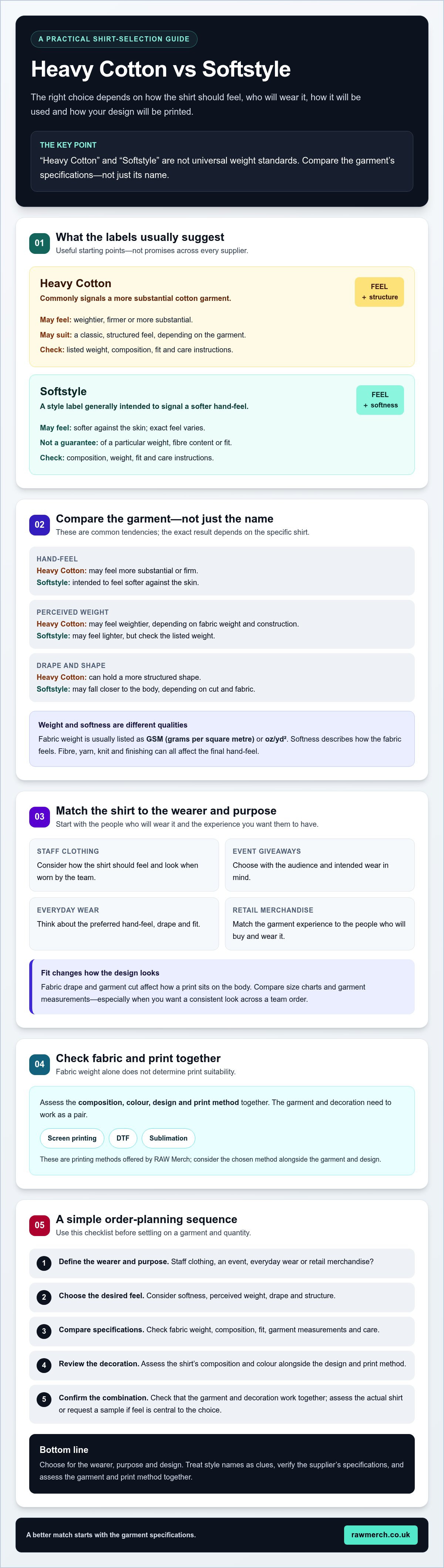
How to Choose Between Heavy Cotton and Softstyle for Your Order
Make the decision in a clear order: start with the people wearing the shirts, then check the garment details and decoration plan. This keeps a familiar label from taking priority over the actual requirements of your order.
- Define the use. Decide whether the shirts are for staff, an event, everyday wear or merchandise. Consider how often they’ll be worn and the look you want.
- Set wearer expectations. Think about whether your audience prefers a more substantial feel or a softer hand-feel, and what fit they’re likely to find comfortable.
- Compare specifications. Check composition, listed fabric weight, fit, garment measurements, available sizes, colours and care instructions for each option.
- Confirm the decoration. Share the garment details and artwork with your printer. Agree on a suitable method and finish for the specific fabric and design.
- Assess a sample. For a bulk order, review a sample if feel, fit, colour or print appearance could affect the final decision.
What should you check on a shirt specification sheet?
Compare each supplier’s stated fibre composition and fabric weight, using the units and terminology provided. Don’t assume similar style labels mean matching specifications. Check the fit, size range and colour options for the specific garment, along with its care guidance. If details are missing, unclear or inconsistent across listings, ask for confirmation before committing to the order.
For the heavy cotton vs softstyle shirts decision, keep the comparison practical. A name can help you narrow the options, but the specification sheet gives you the details to judge whether a particular garment suits your wearers and intended decoration.
When should you request a sample before a bulk order?
Consider a sample if the garment’s feel, fit or colour is central to buyer satisfaction, or if you need to check how the planned decoration looks on the fabric. A sample lets you assess the actual garment instead of relying on a style label or product description. Before production begins, confirm the approved garment specification and artwork with your printer so everyone is working to the same choices.
For a custom clothing project, consider garment and printing options together. Discuss your shirt order with RAW Merch before settling on the blank and decoration for a bulk run.
Plan Your Custom Shirt Order with RAW Merch
The best choice in the heavy cotton vs softstyle shirts comparison comes down to the wearer and the job the shirt needs to do. Check the exact garment specifications, then agree on decoration that suits both the fabric and artwork. A clear brief helps bring those decisions together before production.
RAW Merch is a UK-based custom clothing and merchandise printer. Its clothing printing methods include screen printing, DTF and sublimation across apparel. The right option depends on the garment and project, so discuss the specifications rather than assuming a method or style label will suit every order.
What to share when asking for a custom shirt quote
Give the printer enough detail to assess the job. Include:
- The intended use and audience, such as staff clothing, an event or band merchandise.
- Your order quantity and preferred garment feel, such as a more substantial or softer hand-feel.
- Artwork, design colours and preferred print placement.
- Any required garment details, including composition, weight, fit, sizes or colours.
Ask which available garment and printing method best match those requirements. If you don’t have a specific blank in mind, describing how the shirts should feel and be used gives the printer a practical starting point. Check current supplier specifications before settling on a garment, as weights, compositions, colours and sizes can vary.
Make the final choice with production details in view
Before production begins, confirm the selected garment’s specifications and sizes, the artwork being used, and the agreed decoration details. If a sample is part of your order planning, review and approve it against those choices. This final check can help catch differences in fit, colour or print appearance before the full run proceeds.
Also clarify how the finished shirts need to reach their recipients. If fulfilment or distribution is part of your plan, confirm who is responsible and what arrangements are required. Don’t assume those details are included in a clothing print order.
Have a custom shirt order to plan? Share your garment preferences, artwork and project requirements with RAW Merch to discuss suitable clothing and printing options. Discuss your custom clothing project.
Make the Right Shirt Choice for Your Project
The best choice isn’t decided by softness or weight alone. In the heavy cotton vs softstyle shirts comparison, start with who’ll wear the shirt and how it’ll be used. Then check the exact garment’s composition, weight, fit and care details, since style labels don’t guarantee identical specifications across suppliers.
Consider decoration at the same time. Print suitability depends on the garment, artwork and chosen method, so confirm these details together before placing a bulk order. If feel, fit, colour or finished appearance matters to your audience, review a sample and approve the garment and artwork before production.
RAW Merch provides custom clothing and merchandise printing, including screen printing, DTF and sublimation. Discuss how garment choice and decoration can work together for your team, event or merchandise run. Discuss your custom clothing project.
Frequently Asked Questions
Is heavy cotton better than Softstyle?
Neither is universally better. The right choice depends on the feel you want, intended use, fit, garment specifications and wearer preference. A more substantial-feeling shirt may suit one project, while a softer hand-feel may suit another. Labels can vary between manufacturers, so don’t assume they guarantee the same fabric or fit. Before ordering, check the exact product’s composition, listed weight, measurements and care instructions.
What is the difference between heavy cotton and Softstyle shirts?
“Heavy cotton” is generally a weight-related description, while Softstyle is a manufacturer’s style label that may signal a softer hand-feel. Neither name defines one standardised fabric category across all suppliers. Composition, fabric weight and construction can differ from garment to garment, affecting how a shirt feels and fits. Compare the supplier’s specifications for each option rather than relying on the names alone.
Are Softstyle shirts lighter than heavy cotton shirts?
They may be lighter in some specific product comparisons, but you can’t assume that from the labels alone. Check the listed fabric weight and composition for both garments, using the supplier’s stated measurements. Fit and knit also affect how a shirt feels when worn, so weight won’t tell you the whole story. If the difference matters to your order, compare the exact specifications or assess a sample.
Which shirt is best for screen printing: heavy cotton or Softstyle?
Neither label guarantees better screen-printing results. Suitability depends on the particular garment, its composition and colour, the artwork, and the production requirements. Share these details with your printer and confirm that the proposed garment and decoration are suitable together. If the finished appearance is important, request and approve a sample before committing to a larger order. The right choice is the one that meets your project’s requirements.
Can you use DTF printing on heavy cotton and Softstyle shirts?
DTF suitability should be confirmed for the exact garment and production setup, rather than assumed from a style name. Ask the printer to consider the shirt’s fabric composition and colour, your artwork, and the finish you want. These details help determine whether the garment and method are a suitable match. If the result matters for a bulk run, agree on the specification and review a sample before production.
How do I choose a shirt for a bulk custom order?
Start with the people who’ll wear the shirts and the order’s purpose, then compare garment specifications, fit and available sizes. Check that the planned decoration suits the fabric and artwork. If feel, colour or appearance could affect satisfaction, request and approve a sample. Before production, confirm the exact garment and print details with your printer so the order is based on agreed specifications, not just a style label.