

Your custom apparel should be a long-term investment, not a disposable item. You've likely felt that flash of anxiety when pulling a fresh shirt out of the dryer, hoping the graphic hasn't started to crack or peel. It is frustrating to spend money on bulk orders only to have them ruined by a single aggressive laundry cycle. We understand that confusion over conflicting care symbols can make even a simple wash feel like a high-stakes gamble.
This guide provides the definitive care instructions for dtf prints to keep your merchandise looking retail-ready for over 100 washes. DTF technology is industrial-grade and incredibly durable, but it requires a specific professional touch to maintain its finish. You don't need a degree in textile science to get this right. You just need a reliable, repeatable routine that protects both the ink and the fabric.
We are going to break down the exact washing, drying, and ironing steps used by industry experts. You will gain the confidence to handle your own gear and the knowledge to educate your customers. Let's ensure your prints stay vibrant and intact for the entire life of the garment.
Key Takeaways
- Learn how the mechanical bond of heat-activated adhesive creates a flexible, industrial-grade finish on your garments.
- Master the essential care instructions for dtf prints to prevent abrasion and keep your graphics looking sharp.
- Discover why air drying is the gold standard for protecting your custom apparel from heat and UV damage.
- Identify the common causes of fatigue cracking and pilling to maximize your garment's lifespan.
- Understand how professional "Double-Press" techniques provide the durability needed to withstand over 100 washes.
Understanding DTF Durability and the Science of the Bond
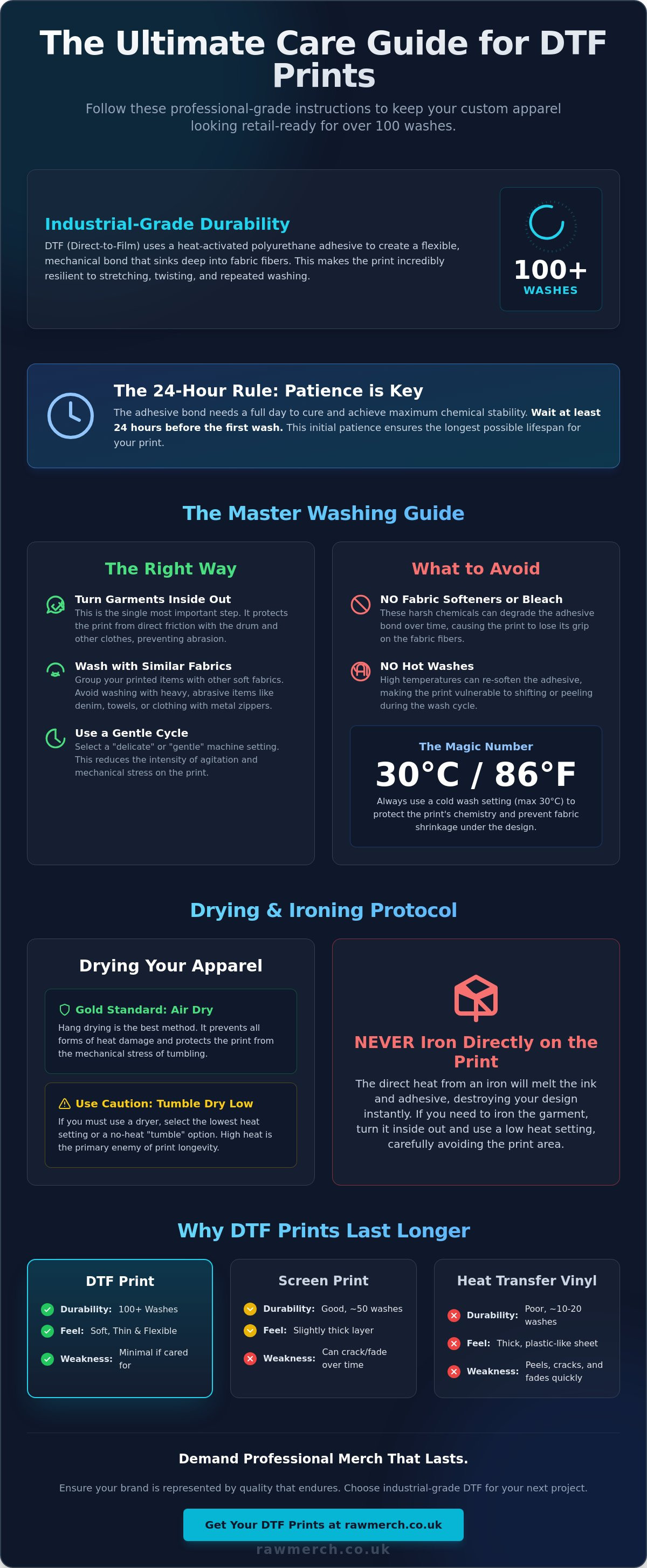
DTF printing is not a surface-level sticker. It is a high-flex, polyurethane-based transfer method that creates a permanent connection with the fabric. If you are new to this technology, you might ask, What is DTF Printing? and why does it last so long? The secret lies in the adhesive. During production, a heat-activated powder is applied to the wet ink. This powder melts and creates a "mechanical bond" that sinks deep into the fibers of the garment. When you follow the correct care instructions for dtf prints, this bond becomes nearly inseparable from the textile.
The chemistry of the ink is specifically designed for movement. Polyurethane is known for its elasticity and toughness. This allows the print to survive the intense agitation of a washing machine without breaking apart. Compared to traditional methods, DTF offers superior performance. Screen printing uses plastisol inks that can eventually dry out and crack over time. Vinyl transfers often feel like a heavy plastic sheet that peels at the corners after a few cycles. DTF provides a soft, thin layer that moves with the wearer. We expect our prints to survive over 100 washes without losing their retail-ready look. This industrial-grade durability is why DTF is now the primary choice for professional custom apparel.
THE 24-HOUR RULE: WHY PATIENCE IS KEY
The bonding process does not finish the moment the heat press opens. The adhesive needs a final "set" period to reach maximum chemical stability. We recommend waiting at least 24 hours before you attempt the first wash. Resist the temptation to throw a fresh shirt in the machine immediately. Keep the garment laid flat during this initial curing window. This prevents the ink from shifting or distorting while the polyurethane layer reaches its final, hardened state. Proper patience here ensures the longest possible lifespan for your gear.
HOW DTF FLEXES WITH YOUR FABRIC
The Master Washing Guide for DTF-Printed Apparel
The washing machine is a battlefield for custom garments. Friction and heat are the primary enemies of print longevity. To protect your investment, you must follow established proper laundry practices tailored specifically for transfers. Following the correct care instructions for dtf prints ensures your designs remain as crisp as the day they were pressed. Start by turning every garment inside out. This simple step eliminates direct drum friction. It's the easiest way to prevent other clothes from rubbing against the print surface during the cycle.
Mechanical stress is a major cause of premature wear. Use a gentle or "delicate" machine setting to reduce the intensity of the agitation. You should also be strategic about what goes into the drum. Wash your printed items with similar colours and soft fabrics. Avoid heavy items like denim or hoodies with thick, metal zips. These heavy materials act like sandpaper against the polyurethane layer of the print. Most importantly, skip the fabric softener. Softeners coat the fibers in chemicals that can interfere with the integrity of the adhesive bond over time.
- Turn garments inside out to stop surface abrasion.
- Use a cold wash cycle to protect the adhesive chemistry.
- Select gentle settings to minimize mechanical pull on the print.
- Wash with similar fabrics to prevent heavy-duty friction.
- Avoid fabric softeners which can degrade the print's "grip" on the fabric.
TEMPERATURE CONTROL: WHY 30°C IS THE MAGIC NUMBER
Heat is the most common cause of print failure. We recommend a maximum temperature of 30°C. High heat can re-soften the adhesive powder bond that holds the print to the fabric. If that bond softens while the machine's spinning, the print can shift or lift. Hot water also causes fabric shrinkage. When the cotton fibers underneath the print shrink, the print itself can't follow. This leads to unsightly puckering or distortion. For high-value or limited-edition items, hand-washing in cool water is the safest way to guarantee durability.
DETERGENTS AND ADDITIVES TO AVOID
The chemicals in your cupboard matter. Avoid "Bio" detergents that contain aggressive enzymes. These are designed to break down organic matter, but they can also attack the polyurethane base of the print. Bleach and oxygen-based whiteners are equally destructive. They strip the vibrancy from the ink and weaken the bond. Stick to mild, pH-neutral liquid detergents for the best results. You don't need aggressive chemicals to get a good clean. If you are looking for clothing printing that is built to survive these conditions, starting with a professional-grade transfer is your best defense.
Drying and Ironing: Protecting Your Merch from Heat Damage
Washing your custom apparel correctly is only half the battle. How you handle the drying process determines whether your design stays flexible or turns into a cracked, brittle mess. Heat is the ultimate enemy of print longevity. Air drying is the gold standard for all DTF-printed merchandise. It completely eliminates the mechanical stress and high temperatures that degrade the adhesive bond. When you hang your items, make sure to avoid direct sunlight. Intense UV rays can lead to photodegradation, which causes ink fading and weakens the polyurethane layer. This is a vital part of the care instructions for dtf prints that many people ignore until the damage is already done.
If you find yourself in a rush and must use a machine, you have to be disciplined with the settings. Never use the high-heat cycle. Stick strictly to a "Low Heat" or "Synthetic" setting. These lower temperatures are usually around 40 to 50 degrees, which is far safer for the print. Even on low heat, the mechanical action of the dryer can still take a toll. Following professional care instructions for dtf prints means being proactive about how much time your clothes spend in the drum. Your goal is to protect the physical structure of the transfer at every stage of the process.
The Dangers of High-Heat Tumble Drying
Tumble dryers combine intense heat with aggressive mechanical agitation. This creates a recipe for disaster. The constant tossing causes the fabric fibers to stretch and pull in multiple directions. This leads to micro-cracking in the ink layer that eventually becomes visible to the naked eye. Over-drying is another silent killer for your merch. It sucks the residual moisture out of the adhesive powder, making the print brittle and prone to peeling at the edges. We recommend removing your garments while they are still slightly damp. Let them finish drying naturally on a flat rack to preserve the print's elasticity and grip.
Safe Ironing Techniques for a Crisp Finish
Never let a hot iron touch the printed design area directly. The heat will instantly melt the polyurethane base and ruin the garment. If you need to remove wrinkles, always iron on the reverse side while the shirt is inside out. Keep your iron on its lowest possible heat setting. Steam is the enemy here. Excessive moisture and heat can penetrate the fabric and cause the edges of the transfer to lift or bubble. If you must touch up the front side, use a sheet of parchment paper or a Teflon sheet as a protective barrier. Never use wax paper, as the wax will transfer to your print and destroy the finish.
Troubleshooting and Extending the Life of Your Prints
Even with perfect washing and drying, how you treat your gear between wears matters. Fatigue cracking is the most common issue you will face. It appears as tiny vertical lines in the ink layer. This usually happens when the print is repeatedly stressed or stretched in the same spot. You can prevent this by rotating your wardrobe and avoiding heavy bags that rub against the graphic. Following these care instructions for dtf prints will stop minor wear from turning into a total print failure. Don't mistake fabric pilling for a bad print. Small balls of fiber on the shirt surface scatter light and make the ink look dull. Use a fabric shaver to clear the pilling and restore the original vibrancy of your design.
In the UK, hard water is a silent factor in garment longevity. High mineral content can make fabric fibers stiff and brittle over time. This stiffness reduces the natural flex of the garment, which puts extra tension on the polyurethane bond. If you live in a hard water area, using a water softener in your machine can help maintain the soft "hand feel" of the print. After the first wash, run through this quality checklist. Check for edge lifting, colour bleeding, or any new texture changes. A professional-grade print should look identical to its pre-wash state. If you want results that remain retail-ready, invest in high-quality clothing printing that is built for the long haul.
Storage Secrets: Avoiding Fold-Line Fatigue
Storage is where many businesses and bands fail. Never fold a garment directly through the centre of a large DTF print. This creates a permanent stress point that will eventually lead to a visible crack. If you are managing bulk stock or taking merch on tour, roll your shirts instead. Rolling prevents deep creases and saves significant space in transit cases. For hoodies and heavy garments, hanging is the best option. It allows the fabric to breathe and prevents the weight of the garment from compressing the print during long-term storage.
Dealing with Edge Lifting
Edges might lift if the initial industrial press was slightly insufficient. You don't have to retire the shirt immediately. You can often perform a "home fix" using a dry iron and parchment paper. Place the paper over the lifted area and apply firm, even pressure for 10 to 15 seconds on a medium heat setting. This can re-activate the adhesive powder and secure the bond. However, if the print is flaking or the adhesive has completely dried out, it is time to repurpose the garment. A print that has reached the end of its life will no longer respond to heat resets.
Professional Merch Solutions: Why RAW Merch DTF Lasts Longer
RAW Merch brings over 25 years of industry experience to every custom order. We don't just print shirts; we engineer professional-grade durability. Our signature "Double-Press" technique is the secret to our longevity. By pressing the garment twice under industrial conditions, we ensure the heat-activated adhesive penetrates the fabric fibers at a deeper level. This creates a mechanical bond that hobbyist setups simply cannot replicate. We use premium OEKO-TEX certified inks and powders to guarantee safety, sustainability, and vibrancy. Even the most detailed care instructions for dtf prints won't save a sub-par transfer. Start with a professional foundation to ensure your brand remains retail-ready for the long haul.
Our Industrial Pressing Standards
Precision is the cornerstone of our production process. We use high-end pneumatic heat presses that provide consistent, calibrated pressure across the entire surface of the print. Manual irons and cheap hobbyist presses often leave "cold spots" or uneven patches that lead to premature peeling. We eliminate that risk entirely. Our team tests every production batch for wash-fastness before shipping to ensure it meets our strict durability benchmarks. This commitment to quality control is why world-class brands trust us with their bulk orders. For a deeper look at the production process, read our Band Merchandise Guide.
Ordering Bulk DTF with Confidence
DTF technology is the ideal choice for complex, multi-colour designs that require photographic detail. It handles intricate gradients and fine lines with a level of clarity that traditional screen printing often struggles to match. This versatility makes it perfect for modern band merch and promotional items. We provide comprehensive fulfillment services for clients who need their stock managed with professional care. We understand the logistical pressures of touring and business growth. You focus on the creative vision while we handle the execution. Our process makes following the care instructions for dtf prints easy because the print is already industrial-grade. Get a quote for your next custom merch run today.
MAXIMISE THE LIFE OF YOUR CUSTOM MERCHANDISE
Consistency is the key to retail-ready durability. You now have the professional secrets to protect your prints from the common pitfalls of laundry day. Remember to stick to a cold 30°C wash and always turn your garments inside out to stop drum friction. Air drying remains the gold standard for preserving the elasticity of the polyurethane bond. By following these care instructions for dtf prints, you ensure your designs stay vibrant for the long haul.
Don't settle for sub-par transfers that peel after a single cycle. RAW Merch brings 25+ years of industry experience and industrial-grade DTF technology to every order. Our UK-based production and fulfillment team ensures every batch meets the highest standards for wash-fastness. We provide the reliability you need to grow your brand with confidence. Ready to create durable, high-quality merch? Get a quote from RAW Merch today!
Your creative vision deserves a product that lasts as long as the memories attached to it. Start your next project with the experts who prioritize quality and logistical consistency.
Frequently Asked Questions
Can I tumble dry DTF-printed t-shirts?
No, you should avoid tumble drying whenever possible. Air drying is the gold standard because it prevents the mechanical stress and high heat that lead to cracking. If you must use a dryer, stick to the lowest heat setting and remove the item while it's still slightly damp to finish on a rack. This protects the polyurethane layer from becoming brittle.
Why is my DTF print cracking after washing?
Cracking usually happens because of excessive heat or over-drying in a machine. High temperatures make the polyurethane layer brittle, causing it to snap under tension. Following the correct care instructions for dtf prints helps prevent this "fatigue cracking" and keeps the graphic flexible for over 100 washes. Always stick to cool temperatures to maintain the print's elasticity.
Do I need to wash DTF shirts inside out every time?
Yes, you should turn your garments inside out for every single wash. This simple habit protects the print surface from direct abrasion against the washing machine drum and other clothes. It is the easiest way to prevent surface scratches and keep the design looking retail-ready for years. It also helps preserve the vibrancy of the ink by reducing friction.
What is the best temperature for washing DTF prints?
The best temperature for washing DTF prints is 30°C or lower. High heat can re-soften the adhesive bond and cause the print to shift or distort. Cold water is safer for both the ink and the fabric fibers, ensuring the mechanical bond remains intact throughout the garment's life. Avoid hot water cycles at all costs to prevent puckering.
Can I use fabric softener on DTF transfers?
No, you should avoid fabric softeners entirely. These products contain chemicals that coat the fabric fibers and can eventually weaken the adhesive bond between the print and the shirt. Stick to mild, pH-neutral liquid detergents to maintain the structural integrity of the transfer. Avoiding these additives ensures the print stays firmly attached to the textile for its entire lifespan.
Is it safe to iron over a DTF design?
Never iron directly over a DTF design. The intense heat will melt the polyurethane base and ruin the garment instantly. Always iron on the reverse side with the shirt inside out. Use a low heat setting and avoid steam to prevent the edges of the print from lifting or bubbling. If you must iron the front, use a protective parchment paper sheet.
How long should I wait to wash a new DTF shirt?
Wait at least 24 hours before washing a brand-new DTF shirt. The adhesive needs this time to fully cure and reach its maximum chemical stability after the initial heat press. Washing too early can compromise the bond and lead to premature peeling or edge lifting. Patience during this initial window is critical for long-term durability and print performance.
Does DTF printing last longer than screen printing?
Modern DTF prints are often more durable and flexible than traditional screen printing. While screen print ink can dry out and crack over time, DTF's polyurethane base stretches with the fabric. When you follow professional care instructions for dtf prints, these transfers can easily outlast the garment itself. They provide an industrial-grade finish that handles repeat washing better than most other methods.