
The safest choice isn’t to assume everyone’s usual size will fit the same way. Finding the best fit for custom tees starts with the garment’s actual cut and measurements, not just the label on the tag. A relaxed fit for band merchandise may not suit a team uniform or a promotional tee people will wear regularly.
Choosing sizes can feel uncertain because labels vary between garments, and one style may not feel comfortable for a mixed audience. Guesswork can leave you with tees that don’t get worn or sizes that are harder to distribute.
This guide offers a practical process for matching fit to the wearer, purpose and design before production. You’ll learn which measurements to compare, how to account for different preferences and how to plan a size breakdown using more than assumptions. With over 25 years of custom clothing production experience, RAW Merch understands that garment choice is part of getting an order right. The aim is to choose tees people feel comfortable wearing.
Key Takeaways
- Start with who will wear the tees and where they’ll be used to narrow down suitable fit options.
- Check garment measurements and fabric details that can affect how a tee feels and sits.
- Compare garments using the same measurement points, rather than relying on size labels alone.
- Use a tee that already fits well as a reference when checking size charts and planning your order.
- Prepare a brief covering your audience, intended use and fit priorities to help RAW Merch discuss garment choices for your order.
Why finding the best fit for custom tees starts with the wearer
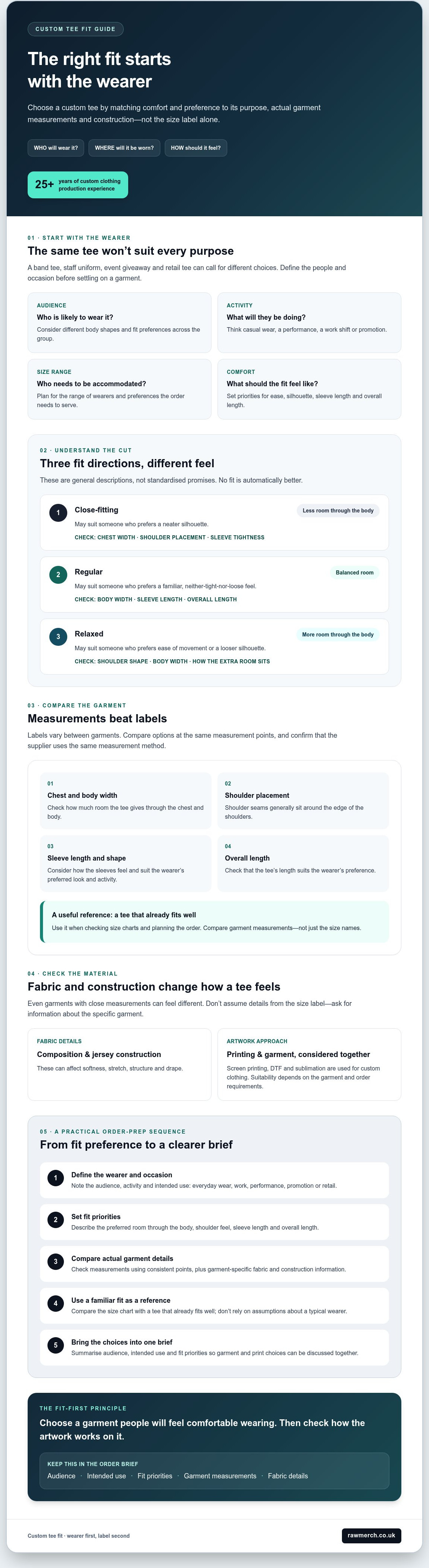
Finding the best fit for custom tees means matching the wearer’s comfort and preferences with the garment’s purpose and actual measurements. A size label alone can’t tell you how a tee will sit on the shoulders or feel through the body. A band tee worn for hours at a gig, a staff tee worn throughout a shift and an event giveaway may all call for different choices. Consider the people receiving the tees before settling on a garment.
What does a good fit mean for a custom tee?
A good custom tee fit feels comfortable on the intended wearer, sits well at the shoulders and provides the body ease, sleeve length and overall length they prefer. Shoulder seams generally sit around the edge of the shoulders. The body shouldn’t feel uncomfortably tight or excessively loose, and the sleeves and hem should suit the wearer’s activities and preferred look.
A close fit follows the body more closely, while a regular or relaxed fit leaves more room. Neither is automatically better. Traditionally, it has short sleeves and a round neckline, but fit also depends on a tee’s cut and construction. Choose a garment people will want to wear first, then check how the artwork will work on it.
Who will wear the tees, and where?
Decide whether the tees are for everyday use, work, performance, promotion or retail. Then consider:
- Audience: Who is likely to wear them, and what fit might feel comfortable to that group?
- Activity: Will wearers move around, work a shift or wear the tee casually?
- Size range: Does the order need to accommodate different body shapes and fit preferences?
These answers establish fit priorities before you compare garments. They also give a production partner a clear brief, rather than leaving the decision to assumptions about what a typical wearer wants.
How tee cuts, measurements and fabrics change the fit
Fit descriptions are useful starting points, not standardised promises. A regular, relaxed or close-fitting tee can differ between garments because labels don’t specify the exact width, shoulder shape, sleeve proportions or length. When finding the best fit for custom tees, compare garment measurements and construction details, not just the size name.
Regular, relaxed and close-fitting cuts
Body width affects how much room a tee gives through the chest and waist. Shoulder seams that sit further out can make a tee feel roomier, while sleeve length and shape also affect how the cut feels. The categories below are general descriptions, not specific RAW Merch product names.
| Fit category | Typical feel | May suit wearers who prefer | What to check |
|---|---|---|---|
| Close-fitting | Less room through the body | A neater silhouette | Chest width, shoulder placement and sleeve tightness |
| Regular | A balanced amount of room | A familiar, neither-tight-nor-loose feel | Body width, sleeve length and overall length |
| Relaxed | More room through the body, sometimes with broader proportions | Ease of movement or a looser silhouette | Shoulder shape, body width and how the extra room sits |
These are preferences, not rules. Before comparing options, check the supplier’s garment measurements and confirm they use the same measurement points and method. Body dimensions for apparel are one part of how sizing systems are developed, but the garment’s own measurements show what you’re ordering.
How fabric and construction affect how a tee feels
Composition and jersey construction can affect a tee’s softness, stretch, structure and drape. Two garments in the same labelled size may therefore feel different, even when their measurements are close. Don’t assume the fibre content, fabric weight or fit of a particular tee. Ask for garment-specific details and confirm what information is available for the option you’re considering.
Consider printing alongside garment choice. RAW Merch uses screen printing, DTF and sublimation for custom clothing. The suitable approach depends on the garment and the order requirements, so discuss both together.
Once you know which measurements and fabric details matter, discuss your custom tee requirements with RAW Merch.
How to compare custom tee fits for your order
Use the same checklist for each garment you’re considering. This keeps the decision focused on how the tee will work for its intended wearers, rather than on a size label or a description such as “relaxed”. It also makes your priorities easier to explain when discussing options with a supplier.
- Audience: Who is likely to wear or buy the tee? Consider differing preferences and the size range the order needs to cover.
- Occasion: Is it for a performance, a working day, everyday wear or a one-off event?
- Preferred silhouette: Do you want a closer, regular or roomier feel?
- Measurements: Compare chest or body width, shoulder width, sleeve length and garment length, where those details are provided.
Compare like with like. If one size chart measures the garment flat and another gives body measurements, the figures aren’t directly equivalent. Confirm how each measurement is taken, then compare the same points across the exact garments under consideration. To see how clothing labels publish precise garment charts to guide buyers, discover Sasshole® | Premium Graphic Apparel for Women with Attitude.
Which fit suits merchandise, teams or events?
Fit priorities depend on the order. For a band retail tee, consider the silhouette fans may expect and whether the garment will feel comfortable for regular wear. For more band-specific planning, see Band Merchandise: A Complete Guide to Creating & Selling Merch.
For staff or team clothing, consider movement during work, repeated wear and whether a consistent appearance across the group matters. Event giveaways call for a different balance: aim for broad appeal and make size information easy to understand when people choose or receive a tee. One fit won’t necessarily suit every context.
Which questions should you ask before choosing?
Ask the supplier for measurements for each size and how they’re taken. Check that the information applies to the exact garment being considered, not just a similar style or general size guide. If you’re comparing several options, request the same measurement points for each.
- Are garment measurements available for the sizes in this order?
- Do the measurements refer to the garment itself or the wearer’s body?
- What fabric and construction details are confirmed for this specific option?
- Which garment options and size details are currently available for the brief?
Confirm details directly instead of assuming a particular cut, size range or garment option is available. A clear comparison turns “we need a comfortable tee” into practical fit criteria, making the choice more informed.
How to get custom tee sizing right before placing a bulk order
A reliable size plan starts with evidence, not a guess based on what people usually wear. Before placing a bulk order, define who the tees are for, compare a familiar garment with the supplier’s measurements and gather preferences consistently. This makes finding the best fit for custom tees a process you can check before confirming quantities.
A practical measurement and sample-check process
- Define the audience and use. Note who will wear the tees, what they’ll be used for and whether you’re aiming for a close, regular or roomier feel.
- Choose a well-fitting reference tee. Lay it flat on a level surface and smooth it without stretching. Measure across the body at a consistent point, such as the chest, then measure the length from the highest shoulder point to the hem. Record where you measured so you can compare like with like.
- Compare supplier measurements. Ask for measurements for the exact garment and sizes being considered. Check how the supplier measures width and length, then compare those points with your reference tee. Don’t rely on memory or assume the same label means the same fit.
- Check a sample if available. Confirm availability with the supplier. If you can assess a sample, check comfort, movement and proportions through the shoulders, body and sleeves on intended wearers.
Plan a size mix without relying on guesswork
For a team, share the same clear size information with everyone and ask them to choose from it, rather than asking only for their usual size. For tees intended for sale, collect preferences or pre-orders where practical, and record each requested size against the specific garment and fit description. This gives you useful information about demand before confirming quantities.
Organise responses in a simple table with the size, number requested and any fit notes. Treat preferences as planning evidence, not a guarantee of final demand. Before production, confirm the size breakdown, garment details and production requirements with your supplier.
Keep artwork handover separate from sizing, but include the required file format and production details in the order brief. For background on print-ready artwork, see What is a Vector Image? A Simple Guide for Merch Printing. RAW Merch has over 25 years of experience in custom clothing production and can discuss the brief and garment choice. Discuss your custom tee sizing requirements before finalising your order.
Choose a custom tee fit with RAW Merch's production experience
A clear supplier brief turns fit preferences into practical garment and production questions. Share who will wear the tees, how they’ll be used and which measurements matter to you. RAW Merch has over 25 years of experience in custom clothing production, working with bands, businesses and promotional clients. That experience can inform a discussion about how the brief, garment choice and printing requirements fit together.
What to include in a custom tee enquiry
Give the supplier enough detail to understand the order without relying on assumptions. Include:
- Audience and use: For example, band merchandise for sale, staff clothing or tees for an event.
- Fit priorities: Describe the preferred feel and share measurements from a comparable tee, if you have them.
- Order information: Provide estimated quantities and size preferences once they’ve been confirmed by the buyer or group.
- Questions to resolve: Ask which garment specifications and measurement information apply to the option being considered, and whether sample options are available.
RAW Merch offers screen printing, DTF and sublimation for custom clothing. The right method depends on the job and garment, so ask which options suit your chosen tee and requirements. A specific brief with fit preferences, reference measurements and confirmed quantities makes it easier to discuss the order clearly.
From fit choice to fulfilment
Before production, make sure the garment details, size breakdown and print requirements are recorded together. This helps distinguish a preferred fit from the actual garment being ordered. If measurements, fabric details or sample availability haven’t been confirmed, ask before signing off the brief. Finding the best fit for custom tees also means making sure the information guiding production is accurate.
For orders that need logistics support after production, RAW Merch also offers fulfilment and distribution. Discuss what your order requires and confirm the arrangements directly, including any details that affect how the goods will be handled. Don’t assume timelines or availability until they’ve been agreed.
Bring your audience, use case and measurement requirements together in one brief. Talk to RAW Merch about your custom tee brief.
Make your next custom tee order count
Finding the best fit for custom tees means matching the garment to its intended wearers, use and actual measurements. Compare the same points across size charts, and use a well-fitting tee as a reference instead of relying on labels or memory. A clear size plan helps you make decisions with fewer assumptions before production.
Include those fit priorities in a supplier brief alongside confirmed quantities and printing requirements. RAW Merch has over 25 years of custom clothing and merchandise printing experience, with screen printing, DTF and sublimation capabilities. Fulfilment and distribution services are also available when an order needs logistics support. Confirm garment and printing suitability, specifications and arrangements directly with the supplier.
Ready to put your brief together? Talk to RAW Merch about your custom tee requirements. With the right questions and measurements in hand, you can move forward with greater confidence and choose custom tees people will be comfortable wearing.
Frequently Asked Questions
How do I find the best fit for custom tees?
Start with the people who’ll wear the tees, then match the intended use to the garment’s actual measurements. Decide whether a close, regular or roomier feel makes sense, and compare chest width, shoulder width, sleeve length and overall length across options. Use a well-fitting tee as a reference rather than relying on memory or size labels. The best fit depends on the wearer, purpose and garment.
Should I size up when ordering custom t-shirts?
Not automatically. Sizing up may create the roomier feel someone wants, but it can also make the shoulders, sleeves or overall length too large. Check the measurements for the specific garment and compare them with a tee that fits as intended. If the fabric, cut or garment details are unclear, ask the supplier before deciding. A size label alone can’t confirm how the tee will fit.
How do custom t-shirt sizes differ between garments?
Size labels aren’t consistent measurements across every garment. Cut, body width, shoulder shape, sleeve proportions, length, fabric composition and construction can all affect how a tee fits and feels. Two garments labelled the same size may sit differently. Compare garment-specific size information using the same measurement points, and check that the chart applies to the exact tee you’re considering.
What measurements should I check before ordering custom tees?
Check chest or body width, shoulder width, sleeve length and overall garment length where measurements are available. Ask whether the figures describe the garment or the wearer, and how each measurement is taken. Lay a tee that fits well flat and measure it consistently, then compare it with the supplier’s information for the intended garment. This gives you a practical reference for assessing proportions.
Can I order sample tees before placing a bulk order?
Possibly, but sample availability depends on the supplier and garment. Ask whether a sample of the exact option you’re considering is available, and confirm any relevant arrangements before relying on one for your decision. If you can assess a sample, check comfort, movement and proportions on intended wearers. If not, use garment-specific measurements and verified specifications to compare the tee with a familiar one.
What is the best fit for band merchandise or staff tees?
There isn’t one best fit for every order. For band merchandise, consider what fans may expect from a tee intended for sale and whether they’ll want to wear it regularly. For staff clothing, prioritise comfort during work, freedom of movement and the appearance you want across the group. Define the audience and use first, then compare garment measurements and fit preferences.
How do I choose a size mix for a group order?
Use confirmed preferences from the intended wearers wherever possible. Share clear garment-specific size information, collect each person’s preferred size and record it against the exact tee being considered. For merchandise, use confirmed buyer preferences or pre-orders if available. Review the results before agreeing quantities, then confirm the final size breakdown and garment details with the supplier. Avoid using a generic size ratio instead of audience information.